
Water Habits That Add Up All Day Long
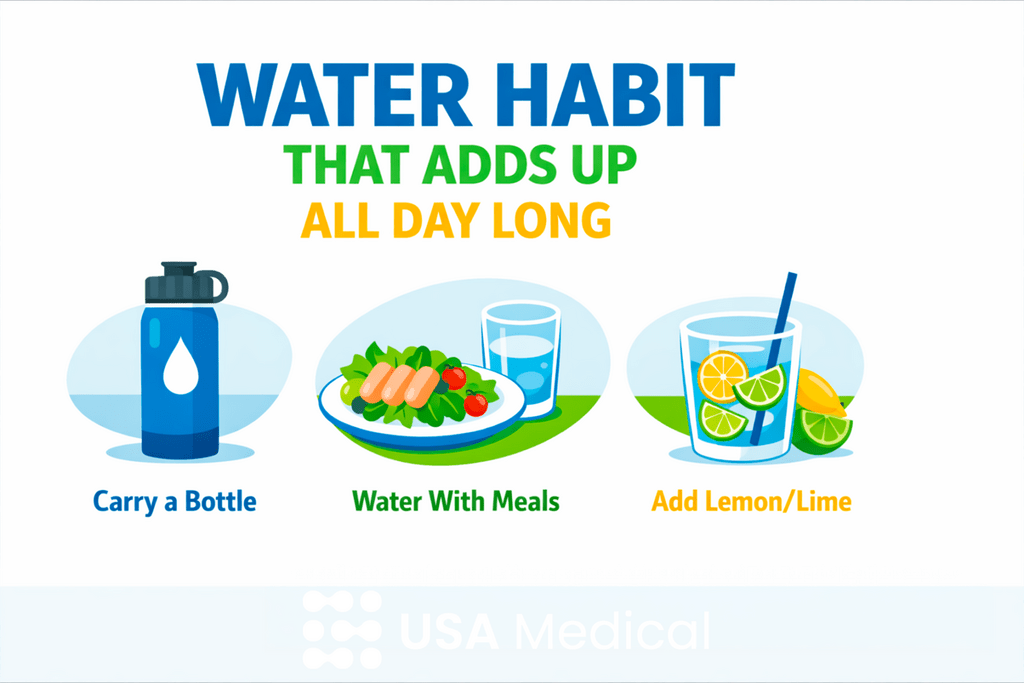
Breaking news: A simple water habit may be one of the easiest ways to support better health, without complicated plans or pricey products. According to the Centers for Disease Control and Prevention (CDC), choosing water and healthier drinks instead of sugary beverages can reduce added sugar intake and support weight and metabolic health. This new push, summarized under “Water & healthier drinks,” highlights small actions that add up across the day.
In this long-form guide, we break down why this water habit matters, what the science says, and how to make it work in real life.
Table of Contents
- Why This Water Habit Is Breaking News
- The Science Behind Choosing Water
- Three Simple Actions That Add Up
- Health Benefits of a Daily Water Habit
- Who May Need Extra Hydration
- Practical Tips to Stay on Track
- Frequently Asked Questions
- Works Cited
Why This Water Habit Is Breaking News
The CDC’s “Water & healthier drinks” messaging focuses on three simple actions:
- Carry a bottle
- Choose water with meals
- Add lemon or lime for flavor
These aren’t trendy hacks, they’re sustainable, everyday behaviors. When repeated consistently, this water habit reduces sugar intake, supports hydration, and may help lower risk for chronic conditions linked to sugary drink consumption.
Sugary beverages remain a leading source of added sugars in the American diet. Replacing even one soda per day with water can significantly reduce daily calorie and sugar intake over time. Small swaps, repeated daily, truly add up.
Takeaway: This isn’t about a miracle solution. It’s about consistency.
The Science Behind Choosing Water
Water is essential for nearly every system in the body. Proper hydration supports:
- Circulation and oxygen delivery
- Temperature regulation
- Kidney function
- Cognitive performance
- Digestion
When sugary drinks are replaced with water, benefits extend beyond hydration. Research shows that reducing sugar-sweetened beverage intake is associated with:
- Lower risk of weight gain
- Reduced risk of type 2 diabetes
- Better dental health
- Improved heart health markers
The CDC emphasizes water as the healthiest beverage choice because it contains no calories, no added sugars, and no artificial additives.
Takeaway: The science supports a daily water habit as a foundational health behavior, not a trend.
Three Simple Actions That Add Up
1. CARRY A BOTTLE
Carrying a reusable bottle makes hydration convenient. People drink more water when it’s easily accessible. Choose stainless steel or BPA-free options, and keep it visible at work, in your car, or in your gym bag.
When water is within reach, you’re less likely to grab a sugary alternative.
2. WATER WITH MEALS
Replacing soda, sweet tea, or juice with water during meals can significantly cut added sugars. Over weeks and months, this small change reduces total calorie intake without requiring strict dieting.
Drinking water before and during meals may also support satiety, helping some individuals feel satisfied sooner.
3. ADD LEMON/LIME
If plain water feels boring, citrus can add flavor without sugar. Lemon and lime provide a fresh taste and a small amount of vitamin C.
For variety, consider:
- Cucumber slices
- Fresh mint
- Berries
- Sparkling water with citrus
These options help maintain your water habit without relying on sweetened drinks.
Takeaway: The formula is simple. Carry, choose, flavor.
Health Benefits of a Daily Water Habit
Consistently choosing water may support:
- Weight management
- Blood sugar control
- Heart health
- Kidney function
- Dental health
Dehydration, even mild, can contribute to fatigue, headaches, and decreased concentration. Making water your default beverage helps prevent these subtle but impactful effects.
While individual hydration needs vary based on age, climate, and activity level, most adults benefit from regular water intake throughout the day.
Who May Need Extra Hydration?
Certain groups should pay special attention to hydration:
- Older adults
- Pregnant or breastfeeding individuals
- Athletes
- People living in hot climates
- Those with certain medical conditions
If you experience signs of severe dehydration, confusion, rapid heartbeat, dizziness, or very dark urine, seek medical care promptly.
Practical Tips to Stay on Track
Building a consistent water habit works best when anchored to daily routines. For example:
- Drink water after brushing your teeth
- Fill your bottle before leaving home
- Pair meals automatically with water
- Set gentle phone reminders
Behavior change doesn’t require perfection, just repetition.
Frequently Asked Questions
How much water should I drink per day?
Needs vary. A common general guideline is about 8 cups daily, but factors like body size, activity level, and climate matter.
Does coffee count toward hydration?
Yes. While mildly diuretic, coffee and tea still contribute to total fluid intake.
Is sparkling water as healthy as still water?
Yes, if it contains no added sugars. Check labels carefully.
What about sports drinks?
They may be helpful during prolonged, intense exercise. For most people, water is sufficient.
Can drinking more water help with weight loss?
Replacing sugary beverages with water can reduce calorie intake, which may support weight management.
Is lemon water better than plain water?
Nutritionally similar. Lemon adds flavor and a small amount of vitamin C but isn’t necessary for benefits.
The Bottom Line
The CDC’s reminder about water and healthier drinks reinforces a powerful truth: small daily habits shape long-term health. Carrying a bottle, choosing water with meals, and adding citrus for flavor are practical strategies anyone can implement.
Works Cited
- Centers for Disease Control and Prevention. Water & Healthier Drinks.
- National Institutes of Health. Hydration and Health.
- Mayo Clinic. Water: How much should you drink every day?
- American Heart Association. Sugary Drinks and Heart Health.
- World Health Organization. Guideline: Sugars intake for adults and children.