Last updated April 25, 2026
Visceral fat is not just a cosmetic concern. This deep abdominal fat surrounds internal organs and actively drives metabolic changes that influence hormones, inflammation, and insulin signaling. Unlike subcutaneous fat under the skin, visceral fat acts like an endocrine organ, releasing compounds that shift how the body regulates energy, blood sugar, and cardiovascular function. Understanding why belly fat behaves differently helps explain its strong link to metabolic risk and chronic disease.
Table of Contents
- What Makes Visceral Fat Different
- Hormonal Effects of Visceral Fat
- Inflammation and Immune Activation
- Insulin Signaling and Blood Sugar Control
- Why Visceral Fat Increases Metabolic Risk
- How to Reduce Visceral Fat
- FAQ
- Works Cited
What Makes Visceral Fat Different
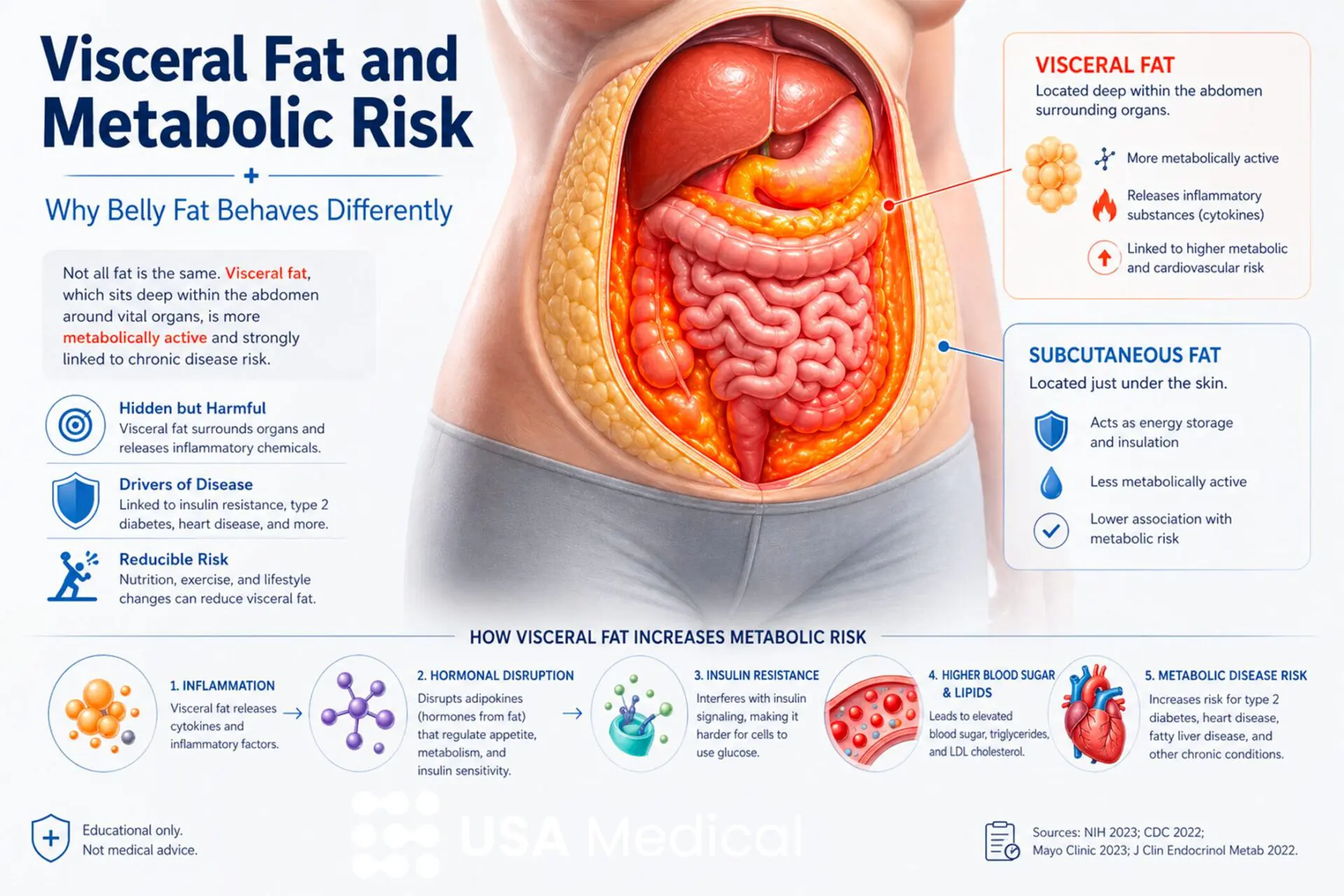
Visceral fat sits deep within the abdominal cavity and wraps around organs such as the liver and intestines. This location allows it to release fatty acids and signaling molecules directly into the portal circulation, which feeds into the liver. Because of this direct pathway, visceral fat has a stronger metabolic impact than subcutaneous fat.
Visceral fat produces bioactive substances known as adipokines. These molecules influence appetite, metabolism, and inflammation. In contrast, subcutaneous fat is more passive and primarily stores energy.
Takeaway:
Visceral fat acts like an active organ rather than simple storage
Its location allows direct influence on liver metabolism
It releases signaling molecules that affect the entire body
Hormonal Effects of Visceral Fat
Visceral fat disrupts hormone balance by altering key metabolic hormones. It increases cortisol activity within fat tissue, which promotes further fat accumulation in the abdomen. Elevated cortisol also contributes to higher blood sugar and increased appetite.
Leptin and adiponectin are two critical hormones affected by visceral fat. Leptin regulates hunger signals, but excess visceral fat leads to leptin resistance, meaning the brain does not respond properly to fullness cues. At the same time, adiponectin levels decrease. This hormone normally improves insulin sensitivity and supports fat metabolism.
Visceral fat also influences sex hormones. In men, it is associated with lower testosterone levels. In women, it can alter estrogen balance. These hormonal shifts further promote fat storage and metabolic dysfunction.
Takeaway:
Visceral fat increases cortisol activity and drives fat storage
It causes leptin resistance and lowers adiponectin levels
Hormonal imbalances worsen metabolic control
Inflammation and Immune Activation
Visceral fat is a major source of chronic low grade inflammation. It releases inflammatory cytokines such as tumor necrosis factor and interleukin six. These compounds activate immune pathways that remain constantly switched on.
This ongoing inflammation affects blood vessels, liver function, and muscle tissue. It contributes to endothelial dysfunction, which impairs blood flow and raises cardiovascular risk. In the liver, inflammation promotes fat accumulation and disrupts normal metabolic processes.
Immune cells infiltrate visceral fat tissue, creating a cycle where inflammation feeds further fat expansion. This inflammatory environment also interferes with normal hormone signaling.
Takeaway:
Visceral fat produces inflammatory cytokines that affect the whole body
Chronic inflammation damages blood vessels and organs
Immune activity within fat tissue worsens metabolic imbalance
Insulin Signaling and Blood Sugar Control
One of the most significant effects of visceral fat is its impact on insulin signaling. Visceral fat releases free fatty acids directly into the liver, which disrupts how insulin regulates glucose production.
Under normal conditions, insulin signals the liver to reduce glucose output. With excess visceral fat, this signal becomes impaired, leading to increased blood sugar levels. Muscle cells also become less responsive to insulin, reducing glucose uptake.
This process is known as insulin resistance. It forces the pancreas to produce more insulin to maintain normal blood sugar. Over time, this increased demand strains pancreatic function and contributes to metabolic disorders.
Takeaway:
Visceral fat disrupts insulin signaling in the liver and muscles
It leads to insulin resistance and elevated blood sugar
Long term strain on the pancreas increases metabolic risk
Visceral fat combines hormonal disruption, inflammation, and insulin resistance into a powerful driver of metabolic disease. These mechanisms interact and reinforce each other.
Elevated inflammation worsens insulin resistance. Hormonal changes promote further fat accumulation. Impaired insulin signaling increases blood sugar and fat storage. Together, these effects raise the risk of conditions such as type 2 diabetes, cardiovascular disease, and fatty liver disease.
Waist circumference is a strong indicator of visceral fat and metabolic risk. Even individuals with a normal body weight can have high levels of visceral fat and associated health risks.
Takeaway:
Visceral fat drives multiple metabolic pathways simultaneously
Its effects compound and increase disease risk
Waist size is a key indicator of metabolic health
How to Reduce Visceral Fat
Reducing visceral fat requires consistent lifestyle strategies that target metabolic health.
Nutrition plays a central role. Diets rich in whole foods, fiber, lean protein, and healthy fats help regulate insulin and reduce inflammation. Limiting refined carbohydrates and added sugars supports better blood sugar control.
Physical activity is highly effective. Both aerobic exercise and resistance training reduce visceral fat and improve insulin sensitivity. Regular movement also lowers inflammation markers.
Sleep and stress management are equally important. Poor sleep and chronic stress elevate cortisol, which promotes visceral fat accumulation. Improving sleep quality and managing stress can directly impact hormone balance.
Takeaway:
Balanced nutrition supports insulin and inflammation control
Exercise reduces visceral fat and improves metabolism
Sleep and stress management influence hormone balance
FAQ
What is visceral fat
Visceral fat is fat stored deep in the abdomen around internal organs and has a strong impact on metabolic processes.
Why is belly fat more dangerous than other fat
Belly fat includes visceral fat, which actively affects hormones, inflammation, and insulin signaling.
How does visceral fat affect hormones
It increases cortisol activity, disrupts leptin signaling, and lowers adiponectin levels.
Can visceral fat cause insulin resistance
Yes, it directly interferes with insulin signaling and contributes to higher blood sugar levels.
Is inflammation linked to visceral fat
Visceral fat produces inflammatory cytokines that drive chronic inflammation.
How can I measure visceral fat
Waist circumference is a practical indicator, though imaging tests provide the most accurate measurement.
Can exercise reduce visceral fat
Regular aerobic and strength training significantly reduce visceral fat levels.
Does diet affect visceral fat
Yes, whole foods and balanced nutrition help reduce visceral fat and improve metabolic health.
Works Cited
National Institutes of Health. Visceral Fat and Metabolic Health
Centers for Disease Control and Prevention. Adult Obesity Facts
Mayo Clinic. Belly Fat in Men and Women
Harvard T H Chan School of Public Health. Abdominal Fat and Health Risks
American Heart Association. Inflammation and Heart Disease
Journal of Clinical Endocrinology and Metabolism. Adipokines and Metabolism
New England Journal of Medicine. Insulin Resistance Mechanisms