Last updated: April 26, 2026
Table of Contents
- Introduction
- Skeletal Muscle as a Glucose Reservoir
- How Muscle Controls Blood Sugar Levels
- Strength Training and Metabolic Health
- Muscle Mass and Insulin Sensitivity
- Practical Ways to Build Muscle for Blood Sugar Control
- FAQ
- Target Keywords Used
Introduction
Skeletal muscle plays a central role in maintaining healthy blood sugar levels. As the largest organ system in the human body, it serves as a powerful metabolic engine that directly influences how glucose is stored and used. Understanding the role of skeletal muscle in blood sugar regulation helps explain why building and maintaining muscle mass is essential for long term metabolic health. This article explores how skeletal muscle functions as a glucose reservoir and why strength training is a key strategy for improving insulin sensitivity and overall wellness.
Skeletal Muscle as a Glucose Reservoir
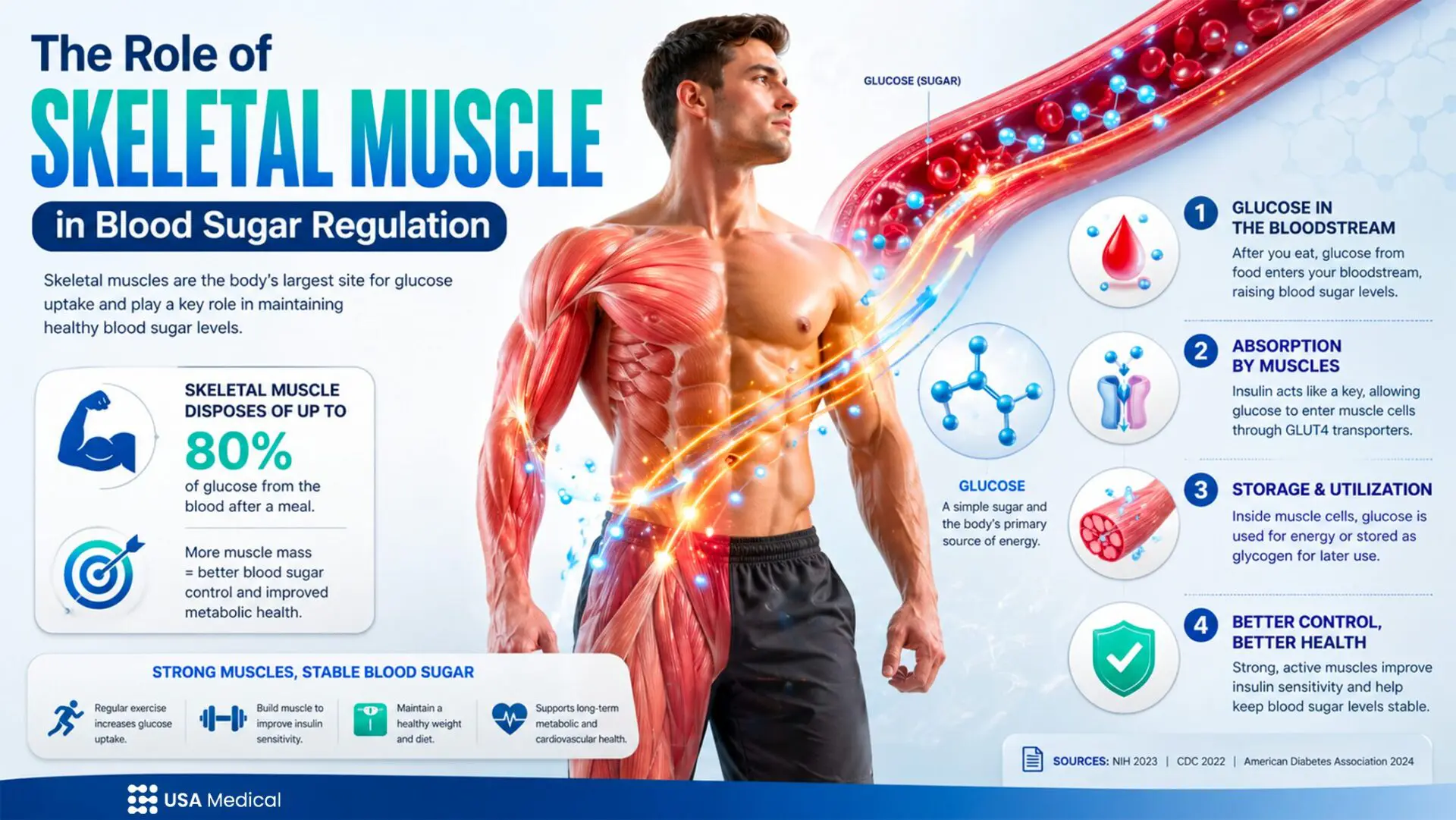
Skeletal muscle acts as the body’s primary storage site for glucose in the form of glycogen. After eating carbohydrates, blood sugar levels rise, and glucose enters muscle cells where it is stored for future energy needs. This process makes skeletal muscle a critical buffer against high blood sugar.
When muscle mass is higher, the body has a greater capacity to store glucose. This reduces the likelihood of excess glucose remaining in the bloodstream. In contrast, lower muscle mass limits storage capacity, which contributes to elevated blood sugar levels over time.
Key functions of skeletal muscle in glucose storage
Before diving deeper, it helps to understand how skeletal muscle supports blood sugar balance through several mechanisms:
- Absorbing glucose from the bloodstream after meals
- Converting glucose into glycogen for storage
- Releasing glucose during physical activity
- Supporting overall energy metabolism
These functions highlight why skeletal muscle is often described as a metabolic reservoir. A well developed muscle system ensures efficient glucose handling throughout the day.
Takeaway: Skeletal muscle serves as the body’s largest glucose reservoir, directly influencing blood sugar stability.
How Muscle Controls Blood Sugar Levels
Blood sugar regulation depends heavily on how effectively muscle tissue responds to insulin. Insulin is the hormone responsible for signaling cells to absorb glucose. Skeletal muscle contains a high concentration of insulin sensitive receptors, making it a major site for glucose uptake.
When insulin binds to muscle cells, it triggers the movement of glucose transporters to the cell surface. These transporters allow glucose to enter the cell and be used or stored. The more responsive muscle tissue is to insulin, the more efficiently this process occurs.
Physical activity enhances this system even further. During exercise, muscle contractions stimulate glucose uptake independently of insulin. This means that skeletal muscle can lower blood sugar levels both with and without insulin involvement.
Key mechanisms involved in blood sugar regulation
The role of skeletal muscle in blood sugar regulation includes several important processes:
- Increased glucose uptake during and after exercise
- Improved insulin signaling pathways
- Enhanced glycogen storage capacity
- Reduced circulating blood sugar levels
Together, these mechanisms make skeletal muscle one of the most important regulators of metabolic health.
Takeaway: Skeletal muscle actively controls blood sugar levels through insulin dependent and independent pathways.
Strength training is one of the most effective ways to improve the role of skeletal muscle in blood sugar regulation. By increasing muscle mass, strength training expands the body’s ability to store and utilize glucose.
Unlike aerobic exercise alone, strength training builds and preserves lean muscle tissue. This directly enhances metabolic function and supports long term blood sugar control. Each increase in muscle mass leads to greater glucose storage capacity and improved insulin sensitivity.
Benefits of strength training for blood sugar control
Strength training provides several direct benefits for metabolic health:
- Increases muscle mass and glucose storage capacity
- Improves insulin sensitivity in muscle cells
- Enhances resting metabolic rate
- Reduces blood sugar spikes after meals
These benefits make strength training a cornerstone of strategies aimed at improving metabolic health and preventing blood sugar imbalances.
Takeaway: Strength training strengthens skeletal muscle function, leading to better blood sugar regulation and metabolic health.
Muscle Mass and Insulin Sensitivity
Insulin sensitivity refers to how effectively the body responds to insulin. Skeletal muscle is the primary tissue responsible for insulin mediated glucose uptake, which makes muscle mass a key determinant of insulin sensitivity.
Higher muscle mass improves the body’s responsiveness to insulin, allowing glucose to be cleared from the bloodstream more efficiently. This reduces strain on the pancreas and supports stable blood sugar levels.
On the other hand, reduced muscle mass is associated with decreased insulin sensitivity. This condition leads to higher circulating blood sugar and increases the risk of metabolic disorders.
Factors that influence insulin sensitivity in muscle
Several factors affect how skeletal muscle responds to insulin:
- Muscle fiber composition
- Level of physical activity
- Nutrient availability
- Overall muscle mass
Maintaining healthy muscle tissue ensures that these factors work together to support optimal insulin function.
Takeaway: Greater muscle mass leads to improved insulin sensitivity and more effective blood sugar regulation.
Practical Ways to Build Muscle for Blood Sugar Control
Building skeletal muscle does not require extreme measures, but it does require consistency and proper strategy. Focusing on strength training and supportive lifestyle habits helps maximize the role of skeletal muscle in blood sugar regulation.
Effective strategies to support muscle growth
To improve metabolic health through muscle development, consider the following approaches:
- Engage in resistance training two to four times per week
- Prioritize compound movements such as squats and presses
- Consume adequate protein to support muscle repair
- Allow sufficient recovery between workouts
- Stay physically active throughout the day
Each of these strategies contributes to increased muscle mass and improved glucose handling.
Daily habits that enhance blood sugar regulation
In addition to exercise, daily habits play a role in supporting skeletal muscle function:
- Maintain consistent meal timing
- Include balanced macronutrients in meals
- Stay hydrated
- Get adequate sleep
These habits reinforce the benefits of strength training and help sustain long term metabolic health.
Takeaway: Consistent strength training and supportive lifestyle habits enhance skeletal muscle function and blood sugar control.
FAQ
How does skeletal muscle affect blood sugar regulation
Skeletal muscle absorbs and stores glucose, helping lower blood sugar levels and maintain balance.
Muscle mass increases the body’s ability to store glucose and improves insulin sensitivity.
Can strength training lower blood sugar levels
Yes, strength training enhances glucose uptake and improves insulin function in muscle tissue.
How quickly does exercise impact blood sugar
Exercise can lower blood sugar levels immediately by increasing glucose uptake in muscle cells.
Does more muscle mean better insulin sensitivity
Yes, higher muscle mass is directly linked to improved insulin sensitivity.
What type of exercise is best for blood sugar control
Strength training combined with regular physical activity provides the greatest benefit.
Training two to four times per week supports muscle growth and metabolic health.
Can skeletal muscle prevent high blood sugar
Skeletal muscle plays a major role in preventing elevated blood sugar by acting as a glucose reservoir.
Target Keywords Used
skeletal muscle blood sugar regulation, glucose reservoir, strength training metabolic health, insulin sensitivity muscle, muscle mass blood sugar, skeletal muscle glucose uptake, resistance training blood sugar, muscle and insulin function, metabolic health muscle, blood sugar control exercise