Last updated: March 1, 2026
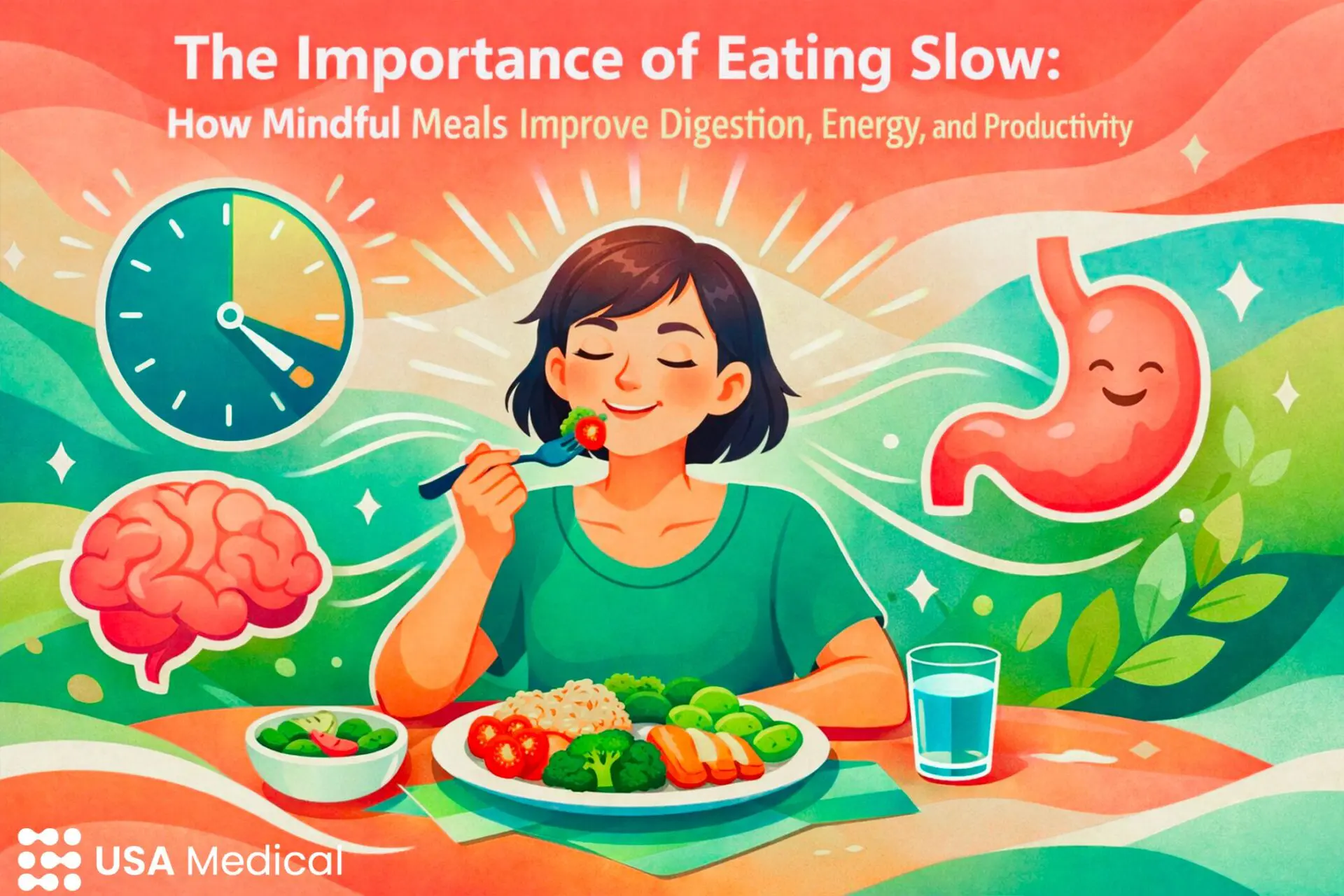
In a fast-paced world, eating has become just another task squeezed between emails, errands, and screen time. But how you eat matters just as much as what you eat. Choosing to eat slow can transform digestion, energy levels, and even your afternoon productivity.
When you practice mindful eating, you give your body the time it needs to recognize fullness cues, prevent discomfort, and support better overall health. Let’s explore why slowing down works, and how to make it a sustainable habit.
Table of Contents
- Why Eating Slow Matters
- The Science of Fullness Cues
- How Eating Speed Affects Digestion
- The Link Between Comfort and Productivity
- Practical Actions to Eat Slow
- Frequently Asked Questions
- Works Cited
Why Eating Slow Matters
Modern life encourages rushed meals, eating in the car, in front of a laptop, or while scrolling on your phone. But when you eat slow, you allow the body’s natural systems to function as designed.
Mindful eating promotes awareness of hunger and satisfaction. Instead of overeating and feeling heavy, you stop when you’re comfortably full. This reduces overeating prevention struggles and supports healthy digestion.
When you consistently eat slow, you may notice:
- Improved satisfaction with smaller portions
- Fewer post-meal energy crashes
- Reduced bloating or discomfort
Slowing down turns meals into intentional nourishment rather than mindless consumption.
Takeaway: Choosing to eat slow is a small behavioral shift with meaningful physiological benefits.
The Science of Fullness Cues
Your body doesn’t instantly recognize when it’s had enough. Hormonal signals such as leptin, ghrelin, and peptide YY help regulate hunger and satiety. These fullness cues take time, typically around 20 minutes, to register in the brain.
When meals are rushed, the stomach fills before the brain receives the “I’m satisfied” message. That’s why eating quickly often leads to discomfort.
Practicing mindful eating strengthens your awareness of hunger awareness and satisfaction signals. Over time, you become better at distinguishing:
- True physical hunger
- Emotional eating triggers
- Comfortable fullness vs. stuffed
This improved connection supports long-term overeating prevention and sustainable habits.
Takeaway: Respecting your body’s fullness cues helps regulate appetite naturally.
How Eating Speed Affects Digestion
Digestion begins in the mouth. Chewing thoroughly mixes food with enzymes in saliva, which supports digestive health and nutrient absorption.
When you eat slow, you:
- Break food down more effectively
- Reduce strain on the stomach
- Support smoother digestion
Rapid eating may contribute to bloating, reflux, and discomfort because larger pieces of food require more effort from the digestive system.
Slowing down also encourages better portion control, reinforcing portion control habits without strict dieting. Instead of external rules, you rely on internal signals, a core principle of healthy eating habits.
Takeaway: Eating slowly enhances digestive health from the first bite.
The Link Between Comfort and Productivity
Few people connect eating speed with workplace performance, but the relationship is clear. Feeling overly full diverts blood flow and energy toward digestion, often causing sluggishness.
When you eat slow and stop at comfortable fullness:
- You avoid post-meal fatigue
- You maintain steadier blood sugar levels
- You support better energy after meals
Comfort directly influences mental clarity. If you’ve ever felt sleepy after a heavy lunch, you’ve experienced the cost of ignoring fullness cues.
In contrast, practicing mindful eating and balanced portion control helps maintain productivity throughout the day.
Takeaway: Eating at a comfortable pace supports sustained energy after meals and sharper focus.
Practical Actions to Eat Slow
Slowing down is simple, but it requires intention. Here are actionable strategies to build healthy eating habits:
First, remove distractions. Put away your phone and turn off the TV. This strengthens hunger awareness and attention to fullness cues.
Next, aim for meals lasting at least 20 minutes. To support this:
- Put your fork down between bites
- Chew thoroughly before swallowing
- Take a sip of water and pause
Finally, check in halfway through your meal. Ask yourself: “Am I still hungry, or am I approaching comfortable fullness?”
These habits reinforce overeating prevention naturally and improve digestive health over time.
Takeaway: Consistency matters more than perfection. Start with one meal per day and gradually expand.
Frequently Asked Questions
1. How long should it take to eat a meal?
Most experts suggest around 20 minutes to allow fullness cues to register.
2. Does eating slow help with weight management?
Yes. Slower meals improve portion control and support overeating prevention.
3. Why do I feel tired after lunch?
Rapid eating and large portions may reduce energy after meals by increasing digestive demand.
4. Is mindful eating the same as dieting?
No. Mindful eating focuses on awareness and internal signals, not strict food rules.
5. Can eating slowly improve digestive health?
Yes. Thorough chewing and pacing support smoother digestion.
6. What if I’m always in a rush?
Start small. Practice eating slow during one meal daily and build from there.
Final Thoughts
Slowing down while eating is one of the most overlooked yet powerful health habits. By choosing to eat slow, you support digestive health, strengthen hunger awareness, honor fullness cues, and maintain steady energy after meals.
It’s not about restriction, it’s about awareness. Small pauses between bites can reshape your relationship with food and productivity for years to come.
Works Cited
- Harvard Health Publishing. “Mindful Eating.”
- National Institutes of Health (NIH). Appetite Regulation Research.
- Centers for Disease Control and Prevention (CDC). Healthy Eating for a Healthy Weight.
- Mayo Clinic. “Digestion: How It Works.”
- National Institute of Diabetes and Digestive and Kidney Diseases (NIDDK). Digestive System Overview.
- PubMed Central. Research on Eating Rate and Satiety Hormones.