
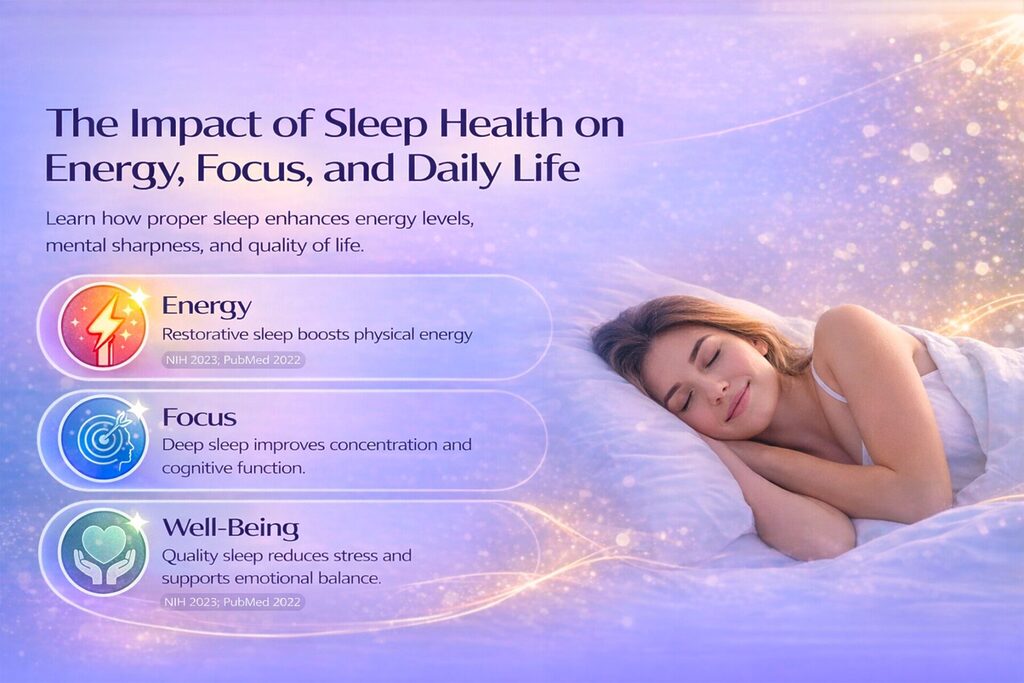
The Impact of Sleep Health on Energy, Focus, and Daily Life
Last updated: April 1, 2026
Sleep is one of the most powerful drivers of physical and mental health, yet it is often overlooked in daily routines. Many people focus on how many hours they sleep, but overlook an equally important factor which is timing. Sleep health is not just about quantity. It is also about consistency, rhythm, and alignment with your internal biological clock. When your sleep schedule shifts, even if you get the same number of hours, your body can feel out of sync, leaving you groggy, foggy, and unfocused.
In this guide, we will explore how circadian rhythm disruption affects energy and cognition, why a consistent sleep schedule matters, and how tools like magnesium glycinate and CBD can support relaxation and sleep onset.
Table of Contents
- Understanding Sleep Health
- Circadian Rhythm and Why Timing Matters
- Why You Can Feel Tired With the Same Amount of Sleep
- The Importance of a Consistent Sleep Schedule
- Supporting Sleep With Magnesium Glycinate
- Using CBD for Relaxation Before Bed
- Practical Tips to Improve Sleep Health
- FAQ
- Works Cited
Understanding Sleep Health
Sleep health refers to the overall quality, timing, and consistency of your sleep. It is not just about getting enough hours. It includes how quickly you fall asleep, how deeply you rest, and how refreshed you feel when you wake up.
When sleep health is optimized, you experience better focus, improved mood, stable energy levels, and stronger immune function. When it is disrupted, even slightly, the effects can ripple through every part of your day.
Sleep health depends on several factors:
- Consistency in sleep and wake times
- Alignment with your natural circadian rhythm
- Quality of sleep cycles throughout the night
- Ability to fall asleep without prolonged delay
Maintaining these factors is essential for long term wellbeing.
Takeaway: Sleep health is about quality, timing, and consistency, not just total hours.
Circadian Rhythm and Why Timing Matters
Your body operates on a natural internal clock known as the circadian rhythm. This rhythm regulates sleep and wake cycles, hormone release, body temperature, and even digestion.
The circadian rhythm is strongly influenced by light exposure and daily habits. When you wake up at the same time each day and go to sleep consistently, your body learns when to release sleep hormones like melatonin and when to promote alertness.
When this rhythm is disrupted, your body becomes confused. Even if you sleep for the same number of hours, the timing mismatch can lead to poor sleep quality and reduced restoration.
For example, going to bed at 10 pm one night and 3 am the next night forces your body to constantly reset. This creates internal misalignment that affects how rested you feel.
Takeaway: Your body depends on rhythm and consistency to regulate sleep effectively.
Why You Can Feel Tired With the Same Amount of Sleep
Many people assume that seven or eight hours of sleep will always leave them refreshed. In reality, the timing of those hours is just as important as the total duration.
When you flip your sleep schedule, such as staying up late one night and sleeping earlier the next, your circadian rhythm becomes misaligned. This leads to several effects:
- Reduced sleep efficiency
- Disrupted deep sleep cycles
- Poor hormone regulation
- Increased grogginess upon waking
Even if you sleep eight hours, your body may not enter the most restorative stages at the right times. This results in brain fog, slower thinking, and reduced energy.
This is why shift workers or people with irregular sleep schedules often feel persistently tired despite getting enough hours of sleep.
Takeaway: Sleep timing directly affects how restorative your sleep feels, regardless of duration.
The Importance of a Consistent Sleep Schedule
A consistent sleep schedule trains your body to fall asleep and wake up naturally. Over time, this creates a stable rhythm that improves both sleep quality and daytime performance.
When you go to bed and wake up at the same time every day, your body:
- Releases melatonin at predictable times
- Improves sleep onset speed
- Enhances deep and REM sleep cycles
- Reduces morning grogginess
Consistency also reduces stress on the nervous system. Instead of constantly adjusting, your body operates smoothly within a predictable pattern.
Even small shifts of one to two hours can disrupt this balance. That is why maintaining a regular schedule, even on weekends, is essential for optimal sleep health.
Takeaway: Consistency is one of the most powerful tools for improving sleep quality.
Supporting Sleep With Magnesium Glycinate
Falling asleep is often the hardest part of sleep health. Even when you are tired, your mind may remain active, making it difficult to relax.
Magnesium glycinate is a form of magnesium known for its calming properties. It supports the nervous system and helps promote relaxation before bedtime.
Magnesium glycinate works by:
- Supporting muscle relaxation
- Promoting calmness in the brain
- Helping regulate sleep related neurotransmitters
- Reducing nighttime restlessness
Because it is well absorbed and gentle on digestion, it is commonly used as part of a nighttime routine.
Taking magnesium glycinate in the evening can help signal to your body that it is time to wind down, making it easier to fall asleep naturally.
Takeaway: Magnesium glycinate helps calm the body and supports smoother sleep onset.
Using CBD for Relaxation Before Bed
Another challenge many people face is mental overstimulation at night. Stress, racing thoughts, and daily pressures can make it difficult to transition into sleep.
CBD is widely used to promote relaxation and help the mind unwind before bedtime. It interacts with the body’s endocannabinoid system, which plays a role in mood and stress regulation.
CBD supports sleep by:
- Promoting a sense of calm
- Reducing mental tension
- Helping the body relax before bed
- Supporting a smoother transition into sleep
Using CBD as part of a nighttime routine can make it easier to disconnect from the day and prepare for rest.
Takeaway: CBD helps relax the mind and body, making it easier to fall asleep.
Practical Tips to Improve Sleep Health
Improving sleep health does not require drastic changes. Small, consistent habits can make a significant difference over time.
To support better sleep:
- Go to bed and wake up at the same time every day
- Limit screen exposure before bedtime
- Create a calming nighttime routine
- Use magnesium glycinate to support relaxation
- Consider CBD to ease mental tension before sleep
- Keep your sleeping environment cool and dark
Consistency is key. The more predictable your routine, the easier it becomes for your body to fall asleep and stay asleep.
Takeaway: Simple habits practiced consistently can dramatically improve sleep quality.
FAQ
Why do I feel tired even after eight hours of sleep
Because your circadian rhythm may be misaligned. Sleep timing affects how restorative your sleep is.
What is the best time to go to bed
The best time is one you can maintain consistently every night while aligning with natural nighttime hours.
How does magnesium glycinate help sleep
It promotes relaxation in the nervous system and helps prepare the body for rest.
Can CBD help with falling asleep
Yes, CBD supports relaxation and reduces mental tension, making it easier to fall asleep.
How long does it take to fix a sleep schedule
It can take several days to a few weeks of consistent timing to fully reset your rhythm.
Is consistency more important than sleep duration
Both matter, but consistency plays a major role in how restorative your sleep feels.
Works Cited
- National Institutes of Health Sleep and Circadian Rhythm Research
- Centers for Disease Control and Prevention Sleep Health Guidelines
- Mayo Clinic Sleep Disorders and Sleep Hygiene
- MedlinePlus Sleep and Biological Clock Information
- Cleveland Clinic Sleep Quality and Circadian Rhythm
- Journal of Sleep Research Circadian Misalignment Studies
- Harvard Medical School Sleep and Health Education
- National Sleep Foundation Sleep Timing Research