Last updated: April 22, 2026
Stress does not only come from external events. It often builds quietly through repeated thought patterns, emotional habits, and mental loops that reinforce negativity. Many people experience the same internal narratives every day, which can make stress feel constant and unavoidable. The good news is that these patterns can be recognized, interrupted, and reshaped using holistic and practical approaches that support both the mind and body.
This guide explores how stress patterns form, how thought loops keep them active, and how to gently shift your mental landscape toward calm, clarity, and balance.
Table of Contents
- Understanding Stress Patterns in the Mind
- Breaking Thought Loops and Mental Repetition
- Releasing Negativity Through Holistic Practices
- New Ways to Think About Stress Relief
- Supporting Relaxation, Sleep, and Recovery
Understanding Stress Patterns in the Mind
Stress patterns are repeated emotional and mental responses that become automatic over time. When the brain encounters similar situations, it often replays the same reactions, even when they are no longer helpful.
These patterns form because the brain prefers efficiency. If a certain response has been used before, it becomes the default. Over time, this creates a cycle where stress reinforces itself.
Common stress patterns include:
- Overanalyzing past events
- Anticipating worst case scenarios
- Constant self criticism
- Difficulty relaxing even in safe environments
These patterns are not permanent. They are learned responses, which means they can be unlearned and replaced.
Takeaway: Stress patterns are habits of the mind, not fixed traits. Awareness is the first step to changing them.
Breaking Thought Loops and Mental Repetition
Thought loops are repetitive cycles where the same ideas play over and over again. These loops often involve worry, fear, or regret, and they can feel difficult to stop.
The key to breaking a thought loop is not force, but redirection.
Start by noticing when a loop begins. Instead of trying to suppress it, acknowledge it and shift your attention gently.
Effective ways to interrupt thought loops include:
- Sensory grounding
Focus on what you can see, hear, and feel in the present moment. This pulls attention away from repetitive thinking.
- Pattern labeling
Silently say, this is a thought loop. Naming it creates distance and reduces its intensity.
- Physical movement
Walking, stretching, or even changing posture signals the brain to shift states.
- Timed thinking
Give yourself a short window to think about the concern, then move on intentionally.
Thought loops lose power when they are not fed with constant attention.
Takeaway: You do not need to fight thought loops. You can step out of them by redirecting awareness.
Releasing Negativity Through Holistic Practices
Negativity often builds when the mind is overwhelmed or disconnected from the body. Holistic practices help restore balance by engaging both physical and mental systems.
Breathwork is one of the simplest and most effective tools. Slow, steady breathing signals safety to the nervous system and reduces mental tension.
Meditation supports awareness and helps create space between thoughts. Even a few minutes a day can reduce the intensity of negative thinking patterns.
Nutrition also plays a role. Balanced meals support stable energy levels, which helps regulate mood and mental clarity.
Other holistic approaches include:
- Spending time in natural environments
- Practicing gratitude through journaling
- Engaging in creative activities
- Maintaining consistent sleep routines
These practices work together to reduce the overall load on the mind, making it easier to let go of negativity.
Takeaway: Holistic practices support both the brain and body, creating a foundation for lasting stress relief.
New Ways to Think About Stress Relief
Shifting how you think about stress can change how it affects you. Instead of seeing stress as something to eliminate completely, it can be viewed as a signal.
Stress often points to areas that need attention, rest, or change.
One helpful perspective is to treat thoughts as passing events rather than facts. This reduces the emotional weight attached to them.
Another approach is to focus on mental flexibility instead of control. The goal is not to have a perfectly calm mind at all times, but to move through thoughts without getting stuck.
You can also experiment with:
- Curiosity instead of judgment
Ask why a thought is appearing rather than reacting to it
- Short mental resets throughout the day
Pause for a few moments to reset your focus
- Reframing challenges
View difficulties as temporary experiences rather than permanent problems
These ideas create a more adaptable mindset, which naturally reduces stress over time.
Takeaway: Changing your relationship with stress is often more powerful than trying to eliminate it.
Supporting Relaxation, Sleep, and Recovery
A calm mind is closely connected to physical relaxation and quality sleep. When stress patterns and thought loops are reduced, the body can return to a more restful state.
Creating a consistent wind down routine helps signal the brain that it is time to relax. This might include dim lighting, quiet activities, and limiting stimulation before bed.
For additional support, many people turn to natural options that promote relaxation.
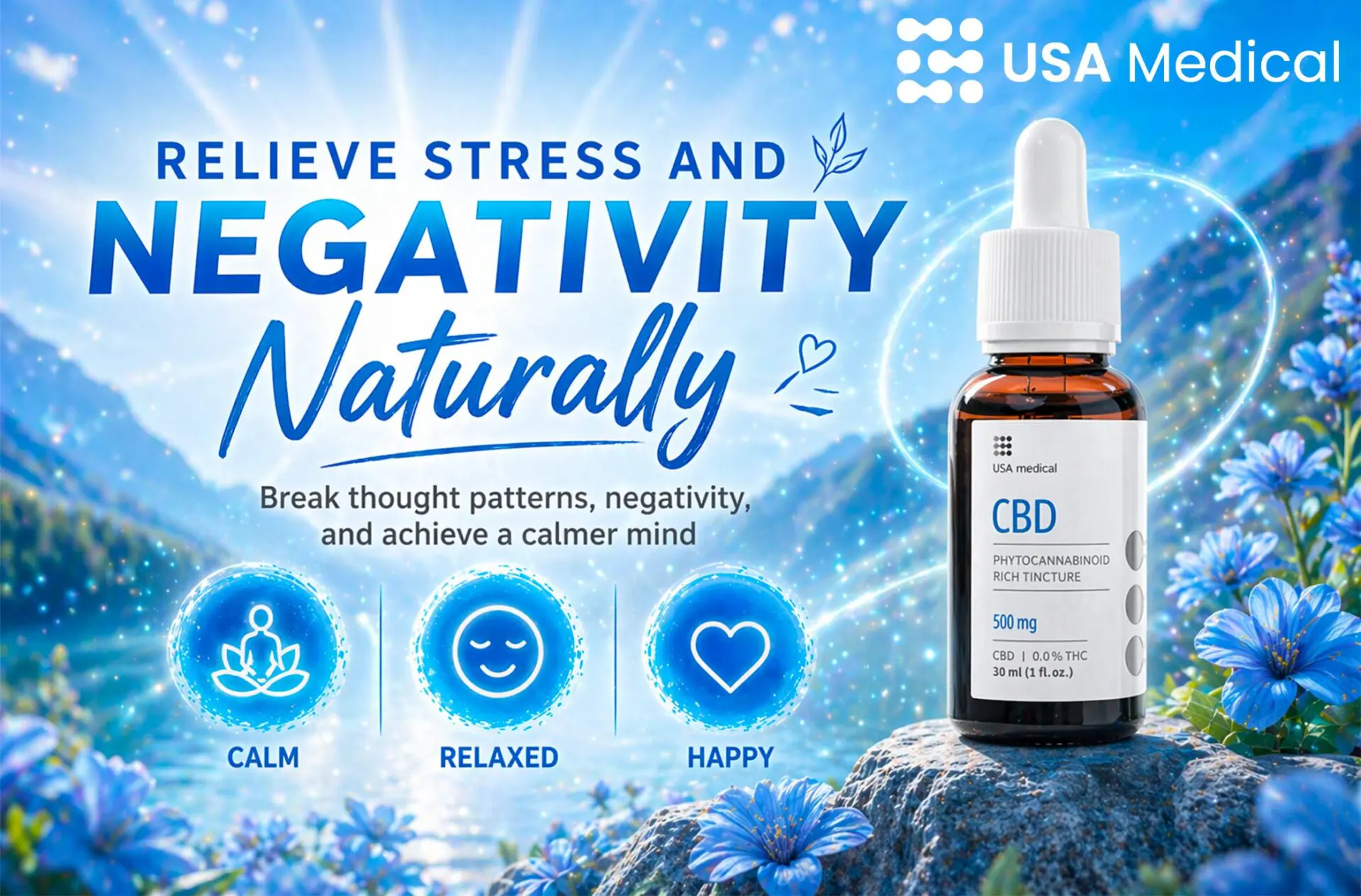
CBD has become a widely used option for calming the mind and body. It helps reduce mental tension, supports pain relief, and encourages a smoother transition into sleep. Many individuals find that it promotes easier sleep onset and contributes to deeper, more restorative sleep cycles.
CBD works by interacting with the body’s natural systems that regulate stress and relaxation, making it a helpful addition to a holistic approach.
Takeaway: Supporting the body through relaxation practices and natural options can enhance mental calm and improve sleep quality.
FAQ
What are stress patterns?
Stress patterns are repeated mental and emotional responses that become automatic over time.
How do thought loops affect stress?
Thought loops keep the mind focused on the same concerns, which increases tension and makes stress feel constant.
Can negativity be reduced naturally?
Yes, holistic practices such as breathwork, meditation, and lifestyle changes can reduce negativity.
How long does it take to break mental patterns?
With consistent practice, many people notice changes within a few weeks.
Does sleep affect stress levels?
Yes, quality sleep helps regulate mood and reduces overall stress.
How does CBD help with stress?
CBD promotes relaxation, supports pain relief, and helps improve sleep quality, which reduces stress.
Works Cited
- National Institutes of Health
- Centers for Disease Control and Prevention
- Mayo Clinic
- American Psychological Association
- MedlinePlus
- Cleveland Clinic
- Sleep Foundation
- National Institute of Mental Health
Target Keywords Used
stress patterns, thought loops, negativity, stress relief, mental stress, calming the mind, holistic stress relief, reduce negativity, break thought loops, natural stress relief