Last updated: January 16, 2026
Magnesium is one of those “quiet” nutrients that ends up doing a lot of heavy lifting. It’s involved in hundreds of enzyme systems tied to nerve function, muscle contraction and relaxation, energy production, blood glucose control, and blood vessel tone.
Because many Americans fall short of recommended intake, magnesium is a mineral I’m genuinely enthusiastic about people paying attention to, especially through food first. A magnesium supplement can also be a reasonable option for some adults who aren’t meeting needs through diet or who have higher risk of low intake.
Table of Contents
Use this table of contents to jump to the section you want most.
- Why magnesium matters
- Nervous system and brain support
- Muscles, tension, and recovery
- Sleep and circadian rhythm
- Heart, metabolism, and inflammation
- Food sources, supplements, and safety
- FAQ
- Works cited
Now, let’s get into what magnesium actually supports—day to day and night to night.
Why magnesium matters
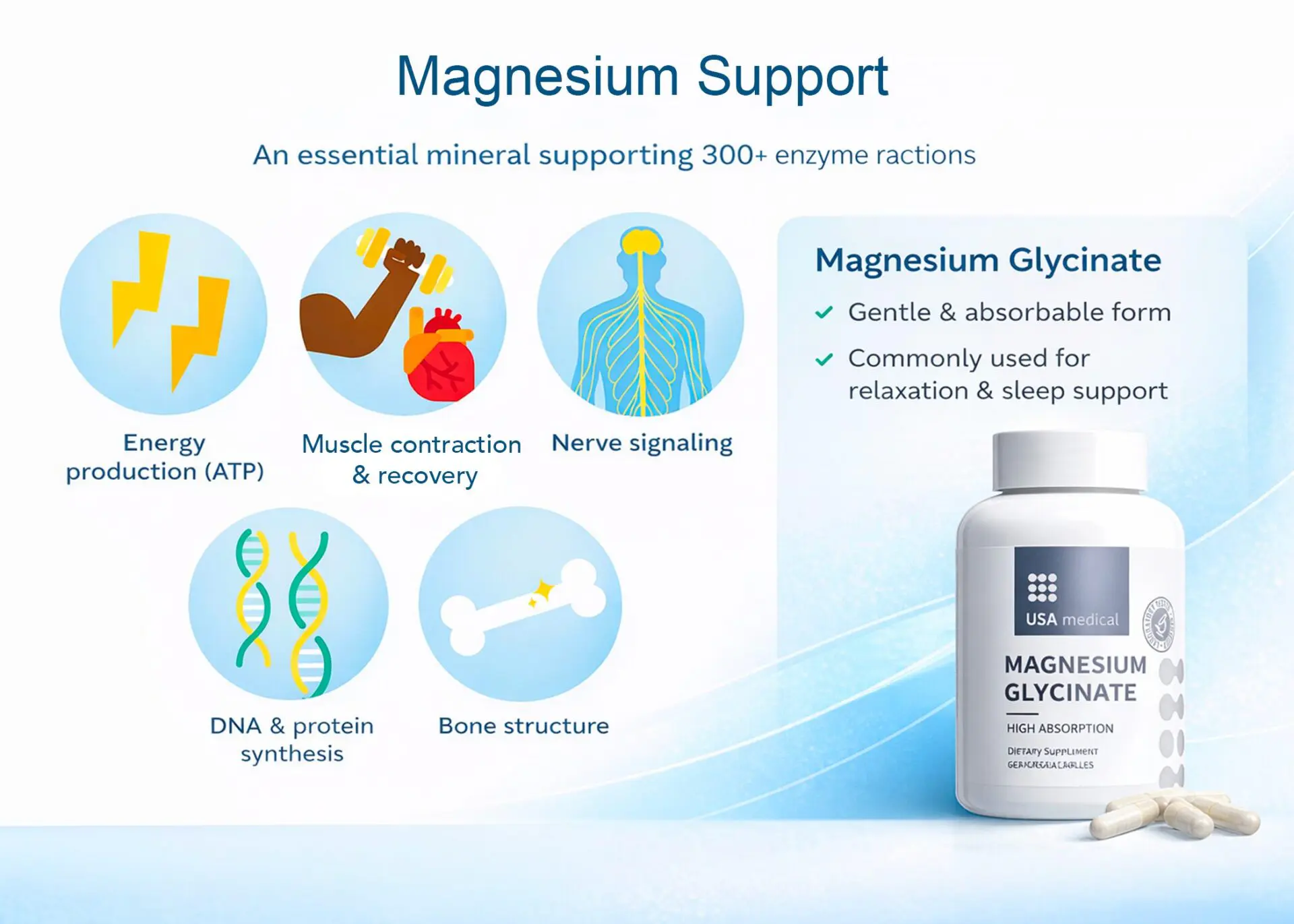
Magnesium is a cofactor in 300+ enzyme systems, and it’s required for core processes like energy production and the movement of calcium and potassium across cell membranes (important for nerve impulses, muscle contraction, and a steady heart rhythm).
When you consistently get enough, the “stacked” payoff can feel surprisingly practical: steadier nerves, looser muscles, better recovery, and more consistent energy. That’s why magnesium for energy often comes up when people describe fatigue that doesn’t match their calorie intake or sleep habits.
On the flip side, magnesium deficiency can show up as fatigue, weakness, muscle cramps or spasms, numbness/tingling, and, in severe cases, abnormal heart rhythms or seizures. It’s also one reason clinicians pay attention to magnesium and blood sugar and how it relates to insulin function and metabolic health.
Section takeaway: Magnesium is foundational, small gaps can matter, and consistent adequacy often supports multiple systems at once.
Nervous system and brain support
Magnesium helps regulate nerve signaling, think “volume control” for how easily your nervous system revs up. Mechanistically, it plays roles in nerve impulse conduction and the movement of electrolytes across membranes, which is part of why people associate it with a calmer baseline.
That doesn’t mean magnesium is a stand-alone fix for stress, mood disorders, or panic, but it does help explain why magnesium for anxiety is such a common conversation. Not because it “knocks you out,” but because some people feel less reactive when they’re no longer running low.
Here are a few daytime shifts people often notice when intake improves.
- Smoother focus (less “jittery” for some people, especially under stress).
- Less edge: magnesium for anxiety gets discussed because steadier nerve signaling can support stress resilience.
- Less tension during desk work or daily movement.
If these changes happen, they usually feel subtle, but meaningful.
Section takeaway: Magnesium supports the nervous system’s ability to stay steady, which can translate into calmer focus and better stress resilience.
Muscles, tension, and recovery
Magnesium is central to how muscles contract and relax. It helps regulate the ion flow involved in contraction and is part of the bigger electrolyte balance that keeps muscles from staying “stuck on.” That’s why low magnesium is often associated with cramps, twitching, jaw clenching, and general stiffness.
It’s also why magnesium for muscle cramps is heavily marketed, especially to people who train hard, sweat a lot, or carry stress in their body.
A key nuance: the evidence isn’t equally strong in every scenario. A Cochrane review (one of the more rigorous review sources) concluded that magnesium is unlikely to meaningfully prevent cramps in older adults with idiopathic rest cramps, while evidence in pregnancy-related cramps was mixed and less certain. In other words, magnesium for muscle cramps may help some people, particularly if low intake is part of the problem, but it isn’t a guaranteed “cramp cure” for everyone.
Section takeaway: Magnesium supports normal muscle function and recovery, but cramp results vary, especially depending on why cramps are happening.
Sleep and circadian rhythm
Magnesium is often described as a “bridge” into parasympathetic mode, your nervous system’s rest-and-digest state. It also plays roles in pathways connected to sleep regulation. That’s the basic reason magnesium for sleep is popular: it’s not a sedative, but it can support the conditions that make sleep easier.
What does research say? A 2021 systematic review and meta-analysis of randomized trials in older adults with insomnia found magnesium reduced sleep onset latency (time to fall asleep) by about 17 minutes compared with placebo, though the authors noted the overall evidence quality was low and trials had limitations. More recently, a randomized placebo-controlled trial in adults with poor sleep found modest improvement in insomnia severity with magnesium bisglycinate.
Many people who try magnesium for sleep pay attention to the “feel” of their body at night, less buzzing, fewer restless sensations, and a smoother wind-down. If you’re choosing a form aimed at tolerability, magnesium glycinate is commonly selected because it tends to be gentler on the stomach than some other forms.
Here are nighttime benefits people often report when magnesium supports their wind-down:
- Faster sleep onset (the headline reason magnesium for sleep gets attention).
- Deeper, more restorative sleep for some people.
- Less nighttime waking and fewer “wired” sensations.
These shifts, when they happen, usually build over days to a few weeks rather than appearing overnight.
Section takeaway: Magnesium can support sleep onset and sleep quality for some people, especially when low intake is part of the picture.
Magnesium supports normal heart rhythm, blood vessel relaxation, and blood glucose regulation—core “cardiometabolic” functions.
Blood pressure support
Research syntheses suggest magnesium supplementation can lead to small average reductions in systolic and diastolic blood pressure, though results vary by population and study design. An umbrella meta-analysis of randomized trials found an overall reduction in both systolic and diastolic blood pressure with supplementation, with larger effects reported in certain subgroups and higher-dose/longer-duration analyses. That’s the evidence backdrop behind why magnesium and blood pressure are often discussed together.
Blood sugar and insulin sensitivity
Magnesium is involved in insulin signaling and glucose metabolism, which is why magnesium and blood sugar comes up in conversations about energy crashes and metabolic health. Meta-analyses of randomized trials have reported improvements in some measures of insulin sensitivity and glucose control in certain groups.
At the same time, not every study finds a benefit in every population. For example, a small randomized crossover trial in insulin-treated type 2 diabetes with low magnesium levels found supplementation raised serum magnesium but did not improve insulin sensitivity as measured by glucose clamp testing. This is a good reminder: magnesium can be supportive, but it’s not a substitute for medical care, nutrition, activity, and (when needed) medication.
Inflammation and recovery
Magnesium also plays roles in antioxidant and inflammatory pathways (including involvement in glutathione synthesis and general tissue function), which can matter for recovery when you’re under stress, training, or healing.
Section takeaway: Magnesium supports heart rhythm, vascular tone, and metabolic function, with evidence suggesting modest benefits in some areas—but not universally for everyone.
Food sources, supplements, and safety
Food first (highly recommended)
For most people, the best “recommendation” is simply: make magnesium adequacy a priority through diet. Magnesium-rich foods include leafy greens, beans and lentils, nuts, seeds (like pumpkin and chia), whole grains, and some fortified foods.
The Recommended Dietary Allowance (RDA) for adults is generally in the 310–420 mg/day range depending on age and sex. If you’re consistently below that, improving intake can be a high-value move.
When is a supplement is needed?
A magnesium supplement can make sense for adults who:
- have low dietary intake,
- have higher needs (e.g., heavy sweating, restrictive diets),
- or have clinician-identified low levels or risk factors.
Section takeaway: I strongly recommend magnesium-rich foods for most people; supplements can be helpful, but they should be used thoughtfully and safely.
FAQ
1) Is a magnesium supplement safe to take long-term?
For many generally healthy adults, magnesium can be safe within recommended limits, but “safe” depends on kidney function, medication use, and total intake. Check the label for elemental magnesium and talk with a clinician if you have medical conditions or take prescriptions.
2) What are the most noticeable magnesium benefits?
People commonly notice changes in muscle tension, sleep quality, and stress resilience—especially if they were falling short before. The most consistent “benefit” is supporting normal physiology across multiple systems, not a dramatic one-time effect.
3) How quickly does magnesium for sleep work?
Some people notice a difference within days, but many report changes over 2–4 weeks. Research in insomnia suggests improvements in sleep onset for certain groups, though study quality varies.
4) Can magnesium for anxiety replace therapy or medication?
No—think of it as foundational support, not treatment. If anxiety is impairing daily life, working with a licensed clinician is the right move.
5) Does magnesium for muscle cramps help athletes?
We have limited high-quality trial data specifically in exercise-associated cramps, and a major review found little benefit for older adults with idiopathic cramps. That said, if you’re low on magnesium, correcting intake may still support normal muscle function and recovery.
6) Is magnesium glycinate “better” than other types?
“Better” depends on your goal and how your stomach handles it. Some forms are more bioavailable than others, and tolerability varies person to person.
7) What are common signs of magnesium deficiency?
Fatigue, muscle cramps/spasms, weakness, and numbness/tingling are common symptoms. Severe cases can be medically serious.
8) How do magnesium and blood pressure and magnesium and blood sugar fit into a healthy plan?
Magnesium supports normal vascular tone and glucose regulation, and research suggests modest average improvements in some groups—yet results vary, and it’s not a substitute for lifestyle measures or medical treatment.
9) Does magnesium for energy help with fatigue?
It can help if fatigue is related to low intake, since magnesium is required for energy production pathways. If fatigue is persistent, unexplained, or severe, it deserves a medical checkup.
Works Cited
Here are the main references used to support the information in this article.
- NIH Office of Dietary Supplements. Magnesium: Fact Sheet for Health Professionals (updated Jan 6, 2026).
- NIH Office of Dietary Supplements. Magnesium: Fact Sheet for Consumers.
- MedlinePlus Medical Encyclopedia. Magnesium Deficiency (reviewed May 19, 2025).
- Mah J, Pitre T. Oral magnesium supplementation for insomnia in older adults: a systematic review & meta-analysis(2021).
- Cochrane. Magnesium for muscle cramps (2020).
- Alharran AM, et al. Impact of magnesium supplementation on blood pressure: an umbrella meta-analysis of randomized controlled trials (2024).
- Simental-Mendía LE, et al. Magnesium supplementation on insulin sensitivity and glucose control: systematic review & meta-analysis (2016).
- Drenthen LCA, et al. Oral magnesium supplementation does not affect insulin sensitivity… (published 2023; in Diabetologia 2024).
If you want, I can also turn these into a shortened “patient-friendly” reference list for a handout.