Some days feel like your nervous system is “on” from the moment you wake up. The good news: small, repeatable choices can stack up into calmer days, and those same choices often support energy, comfort, and rest. Below are practical options you can mix and match for calmer days, with food, movement, and routines that also nudge your body toward better function and easier evenings.
Calmer Days Start With Nourishing Rhythms
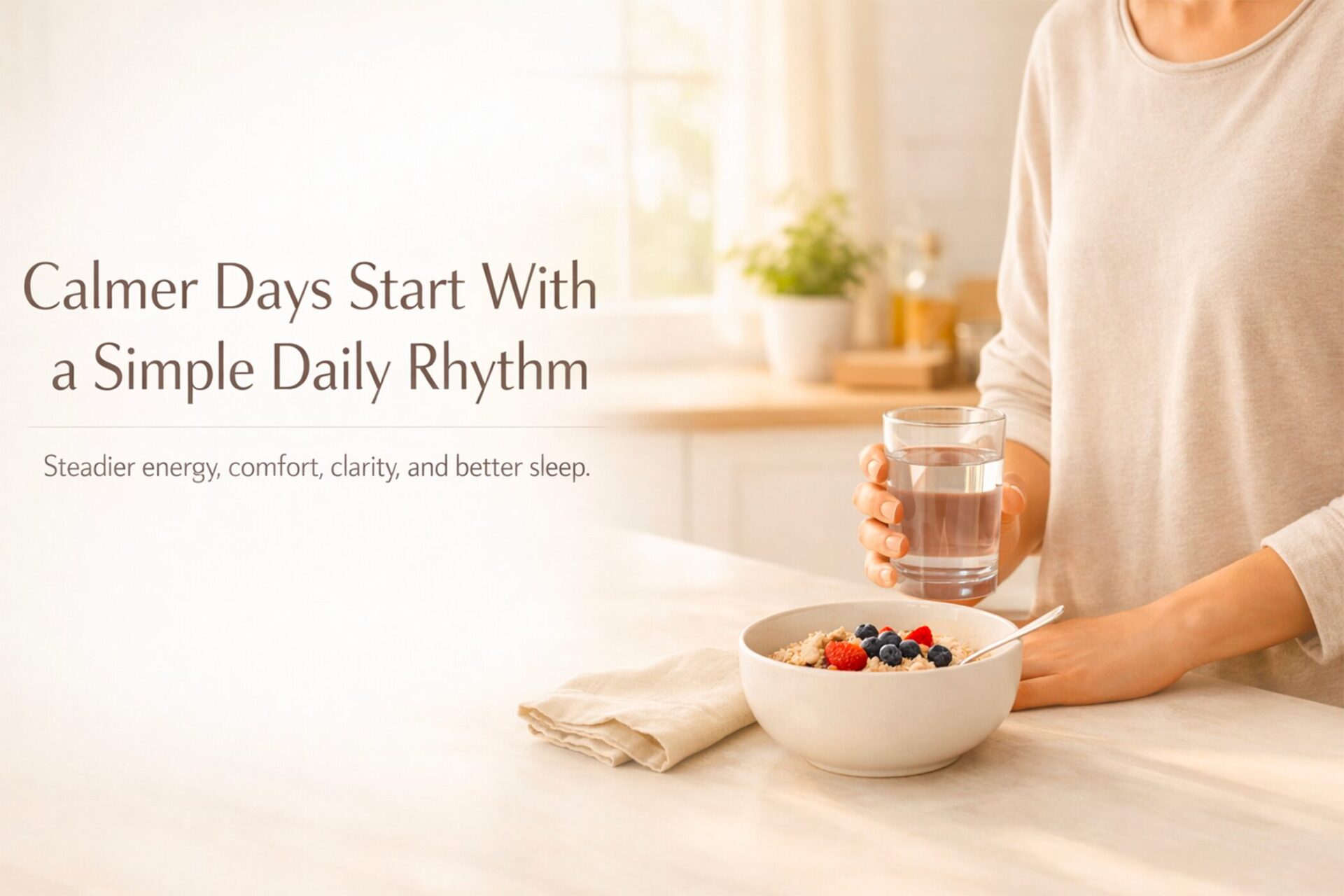
A steady routine and balanced meals can reduce the “spiky” feeling that makes stress harder to manage. Start with stress relief foods that help keep blood sugar more stable and support a calmer baseline, then anchor them with healthy habits you can repeat even on busy days.
Aim to build meals around stress relief foods like:
- Protein (eggs, Greek yogurt, beans, chicken, tofu)
- Fiber (berries, oats, lentils, vegetables)
- Healthy fats (avocado, olive oil, nuts, seeds)
To support healthy habits, try this simple daily rhythm:
- Morning: light exposure + water + protein-forward breakfast
- Midday: a real lunch + 10 minutes outside or near a window
- Afternoon: a short reset (breathing, walk, or stretch)
- Evening: dimmer lights + consistent wind-down
These healthy habits don’t need to be perfect, just consistent. Over time, pairing stress relief foods with repeatable routines makes it easier to protect your attention, patience, and mood, which is the foundation for truly calmer days.
Natural Pain Relief With Gentle Mobility and Better Recovery
Pain often increases when tissues are stiff, under-recovered, or stressed. A smart approach combines natural pain relief strategies with a sustainable stretching routine and intentional movement for recovery, all of which can improve better recovery day to day.
For natural pain relief, start with basics that reduce unnecessary load:
- Heat for tightness (warm shower, heating pad)
- Cold for “hot,” irritated areas (short, wrapped ice application)
- Hydration + balanced meals (tissues like consistency)
Next, keep a brief stretching routine that feels “easy enough” to do daily:
- Neck and upper back gentle range of motion
- Hip flexor stretch (supported, not painful)
- Calf stretch + ankle circles
- Slow, relaxed breathing during each stretch
Close your day with movement for recovery, not punishment: a 10–20 minute walk, easy cycling, or light yoga can help circulation and reduce that “stuck” sensation. Consistent movement for recovery plus a simple stretching routine supports better recovery by keeping joints moving and muscles less guarded. If your discomfort is persistent, building better recovery also means respecting rest days and gradually increasing activity rather than “pushing through.”
Mental Clarity and Better Sleep Without Overhauling Your Life
Focus is often a sleep-and-stress issue, not a willpower issue. To improve mental clarity, you want fewer energy crashes, fewer distractions, and a brain that feels safe enough to downshift at night. This is where sleep hygiene and daytime choices work together to deliver better sleep.
For sleep hygiene, prioritize a short checklist:
- Consistent wake time (even on weekends when possible)
- Caffeine cutoff that doesn’t sabotage bedtime
- Dim lights and fewer screens late evening
- A 10-minute wind-down routine (reading, shower, breathing)
To boost mental clarity during the day, keep your “inputs” simple: protein at breakfast, regular hydration, and a brief mid-day movement break. Those choices support fewer afternoon crashes and help your brain transition into better sleeplater. Good sleep hygiene also supports better recovery, because your body does a lot of repair work during deeper sleep stages.
If you want a single takeaway: protect mornings for light + nourishment, protect afternoons for a reset, and protect evenings for sleep hygiene, and your mental clarity and better sleep tend to follow.
Micro-FAQ
Which snacks count as stress relief foods?
Simple combos like yogurt + berries, apple + peanut butter, or hummus + carrots are stress relief foods that can keep energy steadier between meals.
What’s a safe starting point for natural pain relief at home?
Try gentle heat, hydration, and a brief walk before anything intense. Natural pain relief should feel supportive—not like you’re “fighting” your body.
How do I know if my movement is truly movement for recovery?
If you feel looser and calmer afterward (not wiped out), it’s likely movement for recovery. Pair it with steady sleep hygiene for stronger mental clarity the next day.
Red flags: Seek prompt medical care for chest pain, trouble breathing, sudden weakness/numbness, severe headache, fever with stiff neck, significant injury, or pain that rapidly worsens.