
Daily Habits For Clearer Thinking and Calmer Nights
Last updated: January 17, 2026
Table of Contents
- Why mental cloudiness happens
- Night routine + circadian cues
- Calming your nervous system
- Fluids, minerals, and “hidden” dehydration
- Meals that support steady attention
- Microbiome-friendly basics
- Move more without “working out”
- Designing your day for fewer dips
- When it’s time to get checked
- FAQ
When people say they feel brain fog, they usually mean some mix of sluggish thinking, low motivation, poor concentration, forgetfulness, or feeling “not fully online.” In real life, it’s rarely one magic fix, more often it’s a handful of small stressors (sleep debt, dehydration, blood sugar swings, nonstop notifications) stacking up.
This long-form guide takes a holistic lifestyle approach: simple daily practices that support clearer thinking, calmer mood, and better nights, without relying on magnesium glycinate as the main lever.
Sleep Hygiene: Build a Brain-First Night Routine
If you want a clearer mind tomorrow, tonight matters. Consistent sleep helps attention, mood regulation, and decision-making, while sleep deficiency can make those skills noticeably worse.
A solid sleep hygiene plan doesn’t need to be elaborate. Think of it as “making sleep easier to access”:
Before you try a checklist, start with one anchor: a consistent wake time (even on weekends when possible). That sets your internal clock, which makes sleepiness arrive more predictably.
Here are practical upgrades to try, in order of impact. Pick 2–3 and stay with them for two weeks:
- Keep bedtime and wake time as steady as your life allows.
- Make the bedroom cool, dark, and quiet.
- Power down screens at least 30 minutes before bed.
- Avoid caffeine later in the day if it affects you.
- Skip large meals and alcohol close to bedtime.
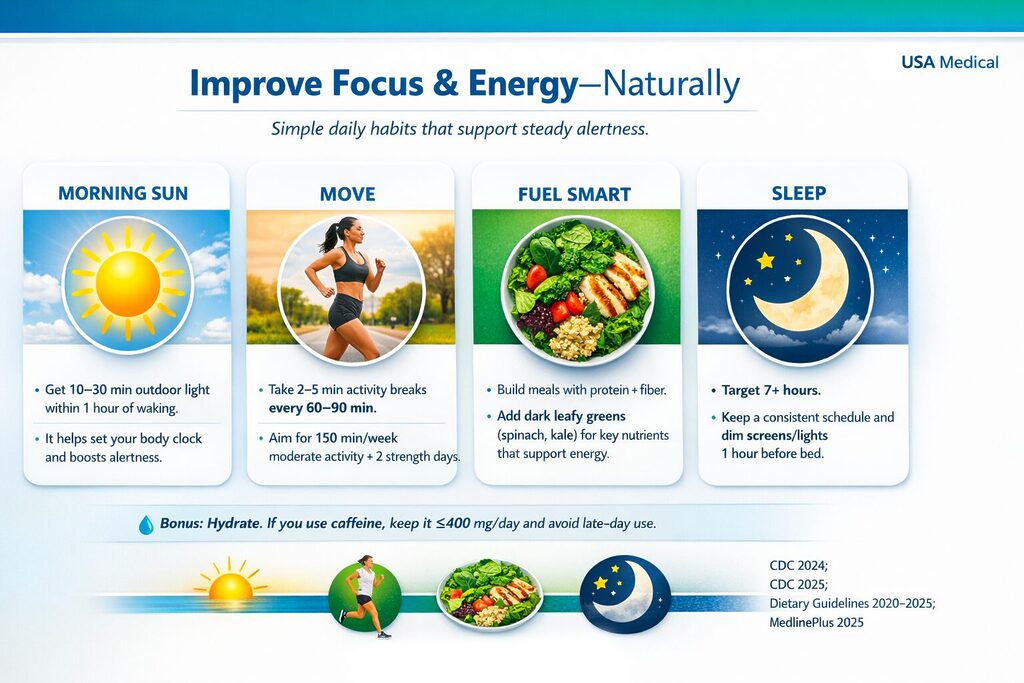
Close the loop by “protecting” the first hour of your day too: get outdoor light early, move a little, and eat something with protein if you can. Together, those signals strengthen your sleep-wake rhythm, which makes sleep hygiene easier to maintain.
Section takeaway: If you do nothing else, keep your wake time steady and reduce late-day caffeine/screens, two changes that often lift next-day clarity.
Stress Management: Calm the Nervous System All Day
A wired nervous system can look like mental “static”: trouble focusing, shallow sleep, and energy crashes. Effective stress management is less about never feeling stressed and more about giving your body frequent “downshifts” so it can return to baseline.
Start with tiny, repeatable resets that fit real schedules:
- Physiological sigh: two short inhales through the nose, one long exhale through the mouth, 3–5 times.
- Transition ritual: when you switch tasks, stand up, roll shoulders, and take 30 seconds of slow breathing.
- Nature + light: even 5–10 minutes outside can be a powerful “gear shift.”
Mindfulness Meditation: A 5-Minute Reset
mindfulness meditation is one of the most studied mind–body tools for easing stress and improving quality of life for many people. You don’t have to “empty your mind.” Try this instead:
- Set a timer for 5 minutes.
- Feel your feet on the floor and your hands resting.
- Breathe normally. When your mind wanders, label it “thinking,” and return to the breath.
Do it once daily for a week, then decide if it helps. If you like it, keep going. If not, swap it for a walking meditation, gentle yoga, prayer, or journaling, whatever reliably lowers your “inner volume.” This kind of stress management works best when it’s simple enough to actually repeat.
Section takeaway: The win is frequency, not intensity, small calm-down moments, many times a day.
Hydration and Electrolytes: Don’t Mistake Thirst for Fatigue
Mild dehydration can feel like low energy, headache, or fuzzy thinking, and severe dehydration can include confusion. That’s why hydration and electrolytes are worth addressing early when you’re trying to sharpen your day.
Instead of obsessing over a perfect number, use three practical indicators:
- Your urine is pale yellow most of the day.
- You’re not going long stretches without drinking.
- You feel steadier (fewer afternoon dips, fewer headaches).
General fluid needs vary, but authoritative guidance often references “adequate intake” ranges and reminds us that food counts too. If you sweat heavily, exercise, have vomiting/diarrhea, or work in heat, you may need more, sometimes with added sodium/potassium, depending on your situation.
A simple way to cover hydration and electrolytes without overcomplicating it:
- Drink water with meals.
- Add a glass between meals.
- After heavy sweating, consider a balanced electrolyte beverage if appropriate for you (and check with a clinician if you have heart, kidney, or blood pressure concerns).
Section takeaway: Many “I’m tired” days are quietly “I’m under-hydrated” days, fixing fluids can noticeably improve steadiness.
Balanced Blood Sugar: Eat for Steady Attention
A big carb-heavy meal (especially without protein/fiber) can create a spike-and-dip cycle that feels like sleepiness, irritability, and scattered thinking. Supporting balanced blood sugar is one of the most “everyday” ways to feel more stable.
Start with breakfast and lunch, because that’s where most people accidentally set up the afternoon crash:
- Build meals around protein + fiber (eggs + berries + nuts; chicken + beans + salad; tofu + vegetables + brown rice).
- Add healthy fats (olive oil, avocado, yogurt) for staying power.
- Keep sugary drinks and ultra-processed snacks as “sometimes” foods, not the base layer.
If you want a brain-friendly pattern without perfectionism, the MIND-style eating pattern (Mediterranean + DASH principles) is associated with lower risk of cognitive decline in observational research. At the same time, not every controlled trial finds clear cognitive improvements over a few years, which is a good reminder that food is supportive, not magic.
Section takeaway: The goal of balanced blood sugar isn’t restriction, it’s steadier fuel, fewer crashes, and better consistency.
Gut Health: Feed Your Microbiome, Support Your Mind
Your digestive system and your brain communicate through immune, metabolic, and nerve pathways, and many people notice that when digestion is off, mental clarity suffers too. Supporting gut health is a long game, but the basics are straightforward.
Start with three “most likely to help” habits:
- Fiber most days: beans, oats, berries, chia/flax, vegetables.
- Fermented foods if tolerated: yogurt/kefir, kimchi, sauerkraut, miso.
- Regular meals + sleep: your gut likes rhythms.
What about probiotics? Evidence varies by strain and condition, and safety matters, especially for people with significant health conditions or immune compromise. If you’re considering them, it’s worth discussing with a clinician and choosing reputable brands.
A simple gut-support routine that reinforces gut health: add one high-fiber food daily for two weeks (like beans or oats), drink more water alongside the extra fiber, and see what changes.
Section takeaway: Think “fiber + rhythm + tolerance.” Doable steps beat complicated stacks.
Movement Breaks: Small Bouts, Big Payoff
You don’t need a perfect workout plan to think better, your brain responds to movement right away. Physical activity supports thinking and emotional balance, and it can also help with sleep.
The most “holistic” option is to sprinkle movement breaks throughout the day, especially if you sit a lot:
- Every 30–60 minutes, stand and walk for 2–3 minutes.
- Do 10 bodyweight squats or wall push-ups.
- Take a short “outside lap” after lunch.
- Stretch hip flexors and upper back (desk posture fatigue is real).
Treat movement breaks like brushing your teeth: small, often, non-negotiable, and not dependent on motivation.
Section takeaway: Short, frequent movement can lift alertness without draining you, especially on low-energy days.
Focus and Energy: Design Your Day for Clarity
Sometimes the problem isn’t your willpower, it’s your environment. Supporting focus and energy can be as simple as reducing decision fatigue and interruption.
Try this “minimum effective” structure:
- One priority block: 25–45 minutes on one task, notifications off.
- One reset: stand up, breathe, sip water, quick light exposure.
Also look at your stimulants. Caffeine can be helpful, but later-day use can interfere with sleep for many people, so protecting nighttime rest often improves tomorrow’s focus and energy more than another cup today.
Section takeaway: Fewer interruptions + better timing often beats “trying harder.”
Supplements to Discuss With a Clinician
Supplements may be adjuncts, not the foundation. Consider discussing these with a clinician, especially if you take medications, are pregnant, or have chronic conditions:
- Magnesium Glycinate: may help stop brain fog, and improve sleep.
- Omega-3s (EPA/DHA): may support cardiovascular health and is widely studied; cognitive effects are mixed depending on population and baseline diet.
- Vitamin D, B12, iron: correcting a deficiency can meaningfully improve fatigue and concentration.
- Creatine or L-theanine: sometimes used for mental performance/relaxation; evidence varies.
FAQ
What are the most common everyday causes of brain fog?
Often it’s sleep debt, dehydration, stress overload, inconsistent meals, and nonstop multitasking. If it persists, consider medical causes too.
How fast can sleep hygiene improve daytime clarity?
Many people notice changes within 1–2 weeks when they keep wake time consistent and reduce late caffeine/screens. The CDC highlights practical habits that support better sleep.
What’s one stress management habit I can do anywhere?
A 30–60 second breathing reset (slow exhale) between tasks is simple, private, and repeatable, key ingredients for consistency.
Does mindfulness meditation actually help with stress and sleep?
For many people, yes, research suggests meditation and mindfulness practices may help with managing stress and may support sleep quality.
How do hydration and electrolytes affect focus?
Dehydration can cause tiredness and even confusion, and restoring fluids can improve how steady you feel.
What’s a simple way to support balanced blood sugar at lunch?
Aim for protein + fiber first (like beans, chicken, tofu, lentils, veggies) and add carbs as a side rather than the base.
Do gut health changes really affect mental clarity?
Some people notice a difference when digestion is calmer and fiber intake improves. If you’re considering probiotic supplements, safety and strain choice matter.
Are movement breaks enough if I don’t “work out”?
They’re a strong start. Physical activity supports brain health and emotional balance, and even small bouts can help you feel more alert.
How do I protect focus and energy without burning out?
Batch notifications, schedule one deep-work block, and prioritize sleep. Your best productivity tool is often a calmer nervous system.
Works Cited
- Centers for Disease Control and Prevention (CDC). “About Sleep.”
- National Heart, Lung, and Blood Institute (NHLBI). “How Sleep Affects Your Health.”
- National Center for Complementary and Integrative Health (NCCIH). “Meditation and Mindfulness: Effectiveness and Safety.”
- CDC. “Physical Activity Boosts Brain Health.”
- CDC. “Benefits of Physical Activity.”
- National Institutes of Health (NIH). “Healthful diet linked to reduced risk of cognitive decline.”
- Barnes et al. “Trial of the MIND Diet for Prevention of Cognitive Decline…” New England Journal of Medicine(2023).
- Mayo Clinic. “Dehydration, Symptoms & causes.”
- NCCIH. “Probiotics: Usefulness and Safety.”