Last updated: February 3, 2026
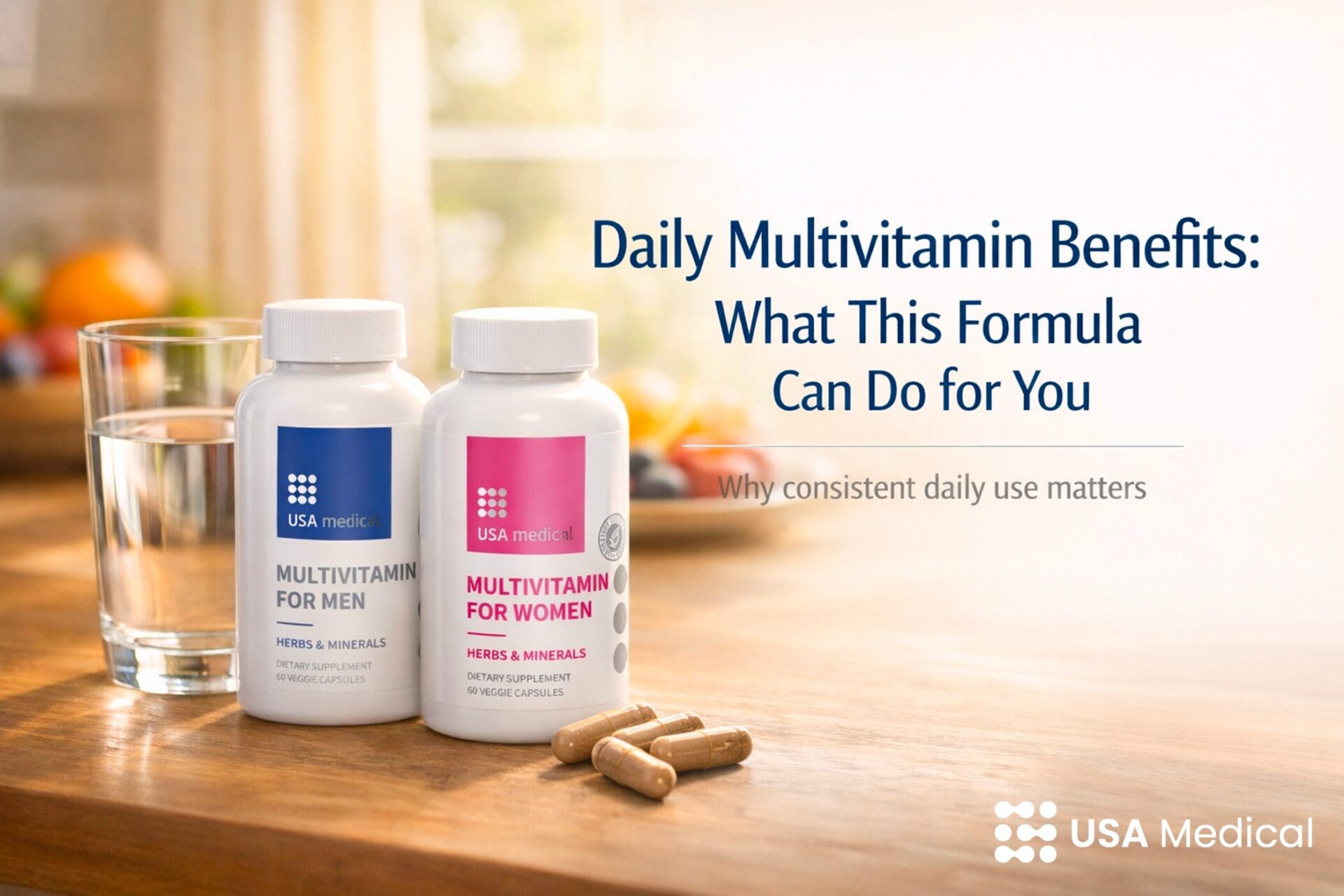
If you’re trying to eat well but your schedule (and grocery cart) isn’t always perfect, a daily multivitamin can be a practical “nutrition backstop.” The goal isn’t to replace healthy food, it’s to help cover routine shortfalls and support key body functions that depend on vitamins and minerals. In this article, we’ll break down the multivitamin benefits you can reasonably expect from the ingredient list you shared, why consistency matters, and what “building up in your system” really means.
Table of Contents
- Why a multivitamin can help (and what it can’t do)
- What’s in this formula at a glance
- Supporting immunity, energy, and antioxidant defenses
- Bone and muscle support (and why D matters)
- Why taking it consistently matters (without myths)
- Safety notes and who should check with a clinician
- FAQ
- Works Cited
Why a multivitamin can help (and what it can’t do)
A multivitamin is best thought of as a daily “coverage tool” that may help reduce micronutrient gaps, the small but meaningful shortfalls that can happen when your diet is inconsistent, restrictive, or simply low in certain food groups. The NIH Office of Dietary Supplements notes that multivitamin/mineral supplements are widely used, but research outcomes vary depending on what’s in the product and who’s taking it.
It’s also important to set expectations: major medical groups do not recommend multivitamins as a proven way to prevent heart disease or cancer in otherwise healthy adults. The U.S. Preventive Services Task Force (USPSTF) specifically recommends against beta-carotene and vitamin E supplements for that prevention purpose, and states evidence is insufficient for routine multivitamin use to prevent these outcomes.
So what are realistic multivitamin benefits? Supporting normal immune function, helping your body run energy pathways, and filling common micronutrient gaps, especially when you take a daily multivitamin consistently.
Takeaway: Use a multivitamin to support nutrition basics, not as a disease-prevention shortcut.
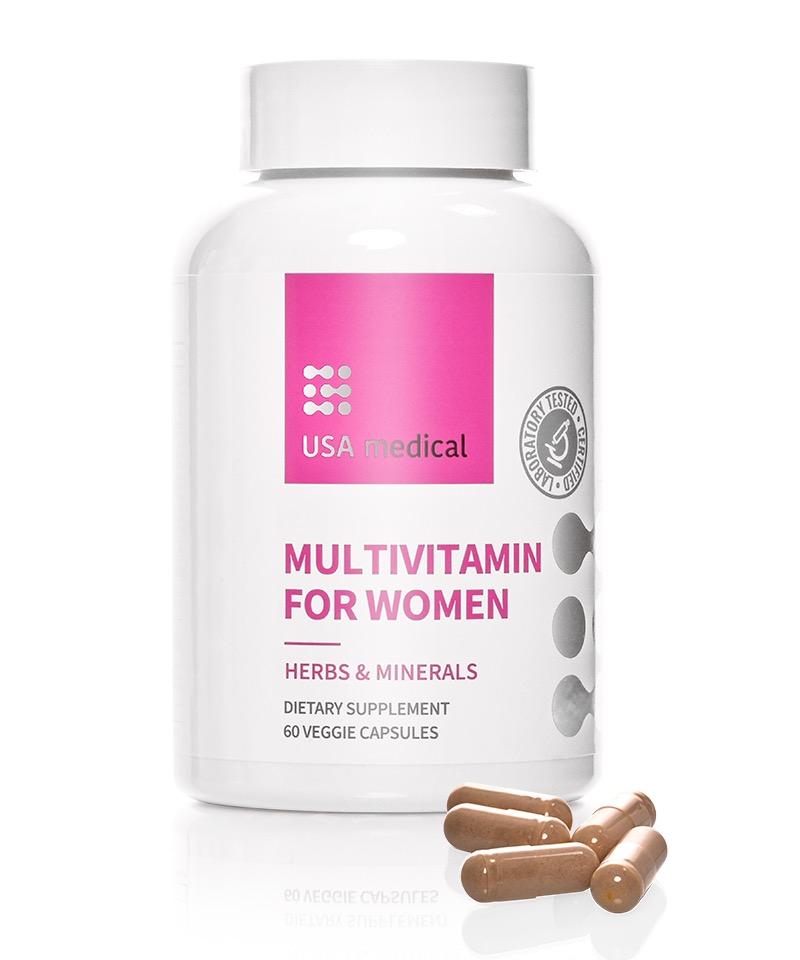
Your multivitamin includes a broad spread of vitamins (A, C, D, E, and a full B family) plus key minerals (including zinc, selenium, magnesium, and chromium). Highlights include:
- Vitamin A (beta-carotene) 600 mcg
- Vitamin C 150 mg
- Vitamin D (cholecalciferol) 10 mcg
- Vitamin E 25 mg
- B vitamins: B1, B2, B3, B5, B6, folic acid, B12, biotin
- Minerals: calcium, magnesium, zinc, selenium, copper, manganese, chromium, molybdenum
These nutrients map to a few “core lanes” in the body: immune activity, antioxidant protection, red blood cell support, nerve function, and energy metabolism, the step-by-step conversion of food into usable cellular energy.
Takeaway: This is a classic broad-coverage multi aimed at everyday nutritional support.
Immune and antioxidant support you can feel good about
People often buy a daily multivitamin for “immunity,” but immune health is more than one nutrient. Your formula includes several immune support vitamins, especially vitamin C, vitamin D, vitamin A (as beta-carotene), and zinc, that play roles in normal immune function. Vitamin C is also an antioxidant and supports immune cell functions.
You also have antioxidant vitamins (vitamin C, vitamin E, and beta-carotene). Antioxidants help protect cells from oxidative stress that occurs during normal metabolism and from exposures like pollution and UV light.
And then there’s the mineral side: zinc and selenium are frequently discussed for immune health because they’re involved in normal cell activity and defense systems. Zinc, in particular, is tied to hundreds of enzymes and supports immune function and wound healing. (Your label lists selenium too; while your sources above focus more on zinc details, selenium is commonly paired with zinc in multivitamins for overall micronutrient coverage.)
What this does not mean: taking more equals better. “Immune boosters” are often marketed aggressively, but immune function is about balance, sleep, nutrition, stress, and chronic conditions matter a lot.
Takeaway: This multi contains multiple immune support vitamins and antioxidant vitamins that support normal immune and cellular defense functions, especially helpful when diet quality varies.
Energy, nerves, and the role of B vitamins
If you’ve ever noticed that many multivitamins emphasize B vitamins, it’s because B-complex vitamins are involved in turning food into energy and supporting normal nerve and blood functions. They don’t provide “stimulant energy,” but they support the pathways behind energy metabolism.
Your formula includes:
- Thiamin (B1), riboflavin (B2), niacin (B3), pantothenic acid (B5), and B6, all common players in energy metabolism
- Folic acid and B12, important for DNA synthesis and red blood cell formation; vitamin B12 also supports nerve health
If someone is low in certain B-complex vitamins (or B12 in particular), correcting the deficiency may improve symptoms like fatigue, because deficiency can affect red blood cells and other systems. But in people who already get enough, extra-high amounts won’t necessarily translate into feeling more energetic.
Takeaway: B-complex vitamins help your body run energy metabolism and support blood and nerve function; they’re most noticeable when they correct a shortfall.
Bone and muscle support: why D is the “multivitamin MVP”
Many people think of calcium first for bones, but vitamin D is crucial because it helps the body absorb calcium and supports normal muscle and nerve function. The NIH ODS consumer fact sheet emphasizes vitamin D’s role in calcium absorption and bone health.
Your formula provides 10 mcg vitamin D, useful vitamin D support for everyday maintenance, especially in people who get limited sun exposure or have dietary gaps.
This product also includes a small amount of calcium and magnesium. Magnesium is involved in many processes, including making protein, bone, and DNA, and regulating muscle and nerve function. Together, these can be considered bone health nutrients, though the calcium amount here is modest compared with typical daily needs.
Takeaway: For many adults, vitamin D support is a meaningful reason to use a multi; it’s one of the most important bone health nutrients in a daily routine.
Does a multivitamin “build up in your system”? Here’s the real story
It’s smart to take a multivitamin consistently, but not because all nutrients “stack” indefinitely.
Here’s what consistency actually does:
- It helps close recurring micronutrient gaps. If your diet is low in certain nutrients on many days, taking a daily multivitamin can reduce the chance that those shortfalls keep repeating. This is one of the most practical multivitamin benefits, especially for busy or selective eaters.
- Some vitamins are stored, some are not.
- Water-soluble vitamins (most B vitamins and vitamin C) aren’t stored much; the body uses what it needs and excretes the rest. This is why regular intake matters for maintaining availability.
- Fat-soluble vitamins (A, D, E) can be stored to a greater extent. That does not mean “more is better”, it means you should avoid doubling up across multiple products without guidance.
- “Building” is really “maintaining.” The most accurate way to describe the habit is that a consistent multivitamin routine can help maintain steady nutrient intake, supporting long-term normal function in areas like immunity and energy metabolism, especially when your meals vary.
Takeaway: A multivitamin doesn’t act like a medicine that “accumulates until it works.” The real win is consistent coverage, fewer repeated micronutrient gaps over time.
FAQ
1) Who benefits most from a daily multivitamin?
People with restrictive diets, inconsistent meal patterns, limited food variety, or known micronutrient gaps often get the most practical value from a daily multivitamin.
2) Are multivitamins proven to prevent heart disease or cancer?
Not for most healthy adults. The USPSTF recommends against beta-carotene and vitamin E supplements for prevention, and finds insufficient evidence for multivitamins preventing cardiovascular disease or cancer.
3) Which ingredients help with immune support?
This formula includes several immune support vitamins like vitamin C and vitamin D, plus zinc and selenium as part of broad micronutrient coverage. Vitamin C has documented immune-related roles and antioxidant activity.
4) Will I feel more energy?
A multivitamin supports energy metabolism, largely through B-complex vitamins. It’s most noticeable if it corrects a deficiency; otherwise, effects may be subtle.
5) Is vitamin D really that important?
Vitamin D helps your body absorb calcium and supports normal bone and muscle function, key reasons people seek vitamin D support.
6) Can I take this “once in a while” and still get benefits?
Occasional use is better than none, but a daily multivitamin routine is more likely to reduce repeated micronutrient gaps and support steady intake of bone health nutrients like vitamin D over time.
7) What’s the role of antioxidant vitamins?
Antioxidant vitamins like C and E help protect cells from oxidative stress during normal metabolism and environmental exposures.
8) Should everyone take zinc year-round?
Zinc supports immune function and wound healing, but more isn’t always better. It’s smart to avoid stacking multiple zinc products unless advised, especially since zinc can interact with other nutrients.
Works Cited
- NIH Office of Dietary Supplements. Multivitamin/mineral Supplements—Health Professional Fact Sheet.
- NIH Office of Dietary Supplements. Multivitamin/mineral Supplements—Consumer Fact Sheet.
- NIH Office of Dietary Supplements. Vitamin D—Health Professional Fact Sheet.
- NIH Office of Dietary Supplements. Vitamin D—Consumer Fact Sheet.
- NIH Office of Dietary Supplements. Vitamin C—Health Professional Fact Sheet.
- NIH Office of Dietary Supplements. Vitamin B12—Consumer Fact Sheet.
- NIH Office of Dietary Supplements. Zinc—Consumer Fact Sheet.
- U.S. Preventive Services Task Force. Vitamin, Mineral, and Multivitamin Supplementation to Prevent CVD and Cancer (Final Recommendation).
- PubMed (USPSTF Recommendation Statement summary).
- MedlinePlus Medical Encyclopedia. Magnesium in diet.