

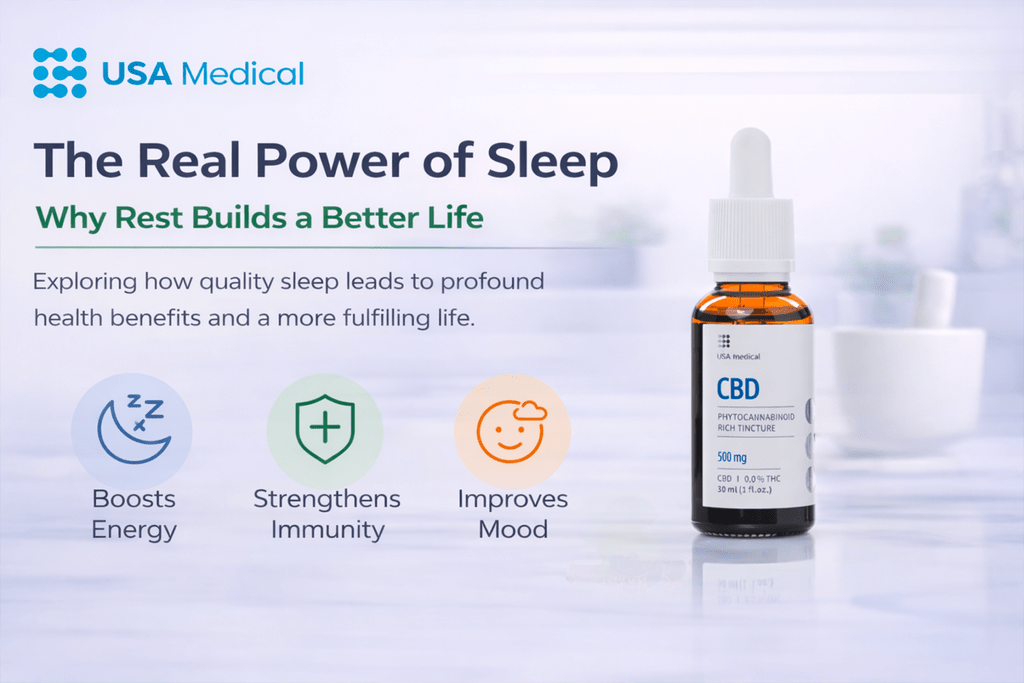
The Real Power of Sleep: Why Rest Builds a Better Life
Last updated: March 21, 2026
Sleep is not a luxury or a reward for finishing everything on your list. Sleep is a biological requirement that drives focus, mood, productivity, and long term health. Many people treat rest as optional, choosing one more hour of work, one more scroll, or one more task. The truth is that your body keeps track of what your mind tries to ignore. When you prioritize sleep, you are not falling behind. You are strengthening every system that helps you move forward.
Table of Contents
- Why sleep matters for physical and mental health
- The myth of productivity through exhaustion
- How your body signals the need for rest
- Practical ways to improve sleep quality
- Natural support for better sleep
- FAQ
- Works Cited
Why Sleep Matters for Physical and Mental Health
Sleep is the foundation of physical health and mental clarity. During sleep, your body repairs tissue, balances hormones, and resets brain function. Quality sleep supports immune system strength, heart health, and emotional stability.
When you get deep and consistent rest, your brain processes information more effectively. Memory consolidation improves, decision making sharpens, and creativity expands. Sleep quality directly impacts your ability to solve problems and stay focused throughout the day.
Lack of sleep, on the other hand, disrupts hormone balance and increases stress levels. Cortisol rises, inflammation increases, and energy regulation becomes unstable. Over time, poor sleep habits can affect metabolism, mood, and long term health outcomes.
Sleep is not passive. It is active restoration. Prioritizing sleep health allows your body to perform at its best without constant strain.
The Myth of Productivity Through Exhaustion
Many people believe that staying up later leads to getting ahead. This belief is deeply rooted in hustle culture, where working longer hours is often seen as dedication. In reality, sleep deprivation reduces efficiency and increases mistakes.
An extra hour of grinding rarely delivers meaningful progress when your brain is fatigued. Focus drops, reaction time slows, and problem solving becomes less effective. What feels like effort often turns into diminished output.
Projects will still be there in the morning. Tasks do not disappear when you sleep. In fact, stepping away often improves clarity and leads to better solutions the next day.
True productivity is not about how long you work. It is about how well you function. Rested individuals complete tasks faster, think more clearly, and make better decisions. Prioritizing sleep is one of the most effective productivity strategies available.
How Your Body Signals the Need for Rest
Your body constantly communicates its need for rest, even when your mind tries to override it. Recognizing these signals is essential for maintaining healthy sleep habits.
Common signs of sleep deprivation include:
- Difficulty concentrating on simple tasks
- Increased irritability or emotional sensitivity
- Cravings for sugar or caffeine
- Slower reaction times
- Frequent fatigue even after resting
These signals are not weaknesses. They are biological indicators that your system needs recovery. Ignoring them leads to deeper imbalance.
Your circadian rhythm plays a central role in regulating sleep. This internal clock responds to light, activity, and routine. When you align with it, falling asleep becomes easier and waking up feels more natural.
Your body always prioritizes survival and function. It knows when it needs rest, even if your schedule suggests otherwise. Listening to these cues strengthens your overall health and resilience.
Practical Ways to Improve Sleep Quality
Improving sleep quality does not require drastic changes. Small, consistent habits can create a strong foundation for better rest and recovery.
Start by maintaining a consistent sleep schedule. Going to bed and waking up at the same time each day supports your circadian rhythm and improves sleep efficiency.
Create a calming evening routine. Reducing screen exposure, dimming lights, and engaging in relaxing activities signals your body that it is time to wind down.
Keep your sleep environment comfortable. A cool, dark, and quiet space promotes deeper sleep. Investing in supportive bedding and minimizing noise can make a significant difference.
Limit stimulants in the evening. Caffeine and late night eating can interfere with your ability to fall asleep and stay asleep.
Prioritize mental clarity before bed. Writing down tasks for the next day can help reduce racing thoughts and allow your mind to relax.
These habits reinforce the importance of sleep and support consistent, restorative rest.
Natural Support for Better Sleep
In addition to lifestyle changes, certain natural options can support relaxation and improve sleep quality. Magnesium is known for its role in muscle relaxation and nervous system balance. Taking magnesium in the evening may help your body transition into a restful state.
CBD is another option that some individuals use to support calmness and reduce stress before bedtime. It may help quiet mental activity and promote a sense of relaxation that supports falling asleep.
These approaches work best when combined with strong sleep habits. They are not replacements for good routines, but they can complement a healthy approach to sleep.
This content is educational and not medical advice. Supplements are not approved by the FDA to diagnose, treat, cure, or prevent disease.
FAQ
How many hours of sleep do adults need?
Most adults benefit from seven to nine hours of sleep each night. Consistency is just as important as duration.
Can you catch up on lost sleep?
Short term recovery sleep can help, but consistent sleep habits are more effective than trying to make up for lost rest.
Why do I feel tired even after sleeping?
Poor sleep quality, stress, and irregular schedules can reduce the restorative effects of sleep.
Does sleep affect mental health?
Yes, sleep plays a major role in emotional regulation, stress management, and cognitive function.
Is it better to sleep earlier or wake up later?
Aligning with your natural circadian rhythm and maintaining consistency is more important than the exact timing.
Do supplements really help with sleep?
Magnesium and CBD may support relaxation, but they work best alongside strong sleep habits.
What is the biggest mistake people make with sleep?
Treating sleep as optional instead of essential leads to long term health and performance issues.
Works Cited
- Centers for Disease Control and Prevention. Sleep and Sleep Disorders
- National Institutes of Health. Why Is Sleep Important
- Mayo Clinic. Sleep tips for better rest
- Harvard Medical School. Sleep and mental health
- National Sleep Foundation. Sleep guidelines and recommendations
- Cleveland Clinic. Effects of sleep deprivation
- Johns Hopkins Medicine. The science of sleep
- Sleep Research Society. Sleep health and performance