
USA Medical · CBD explained
CBG vs CBD: different cannabinoids, different questions.
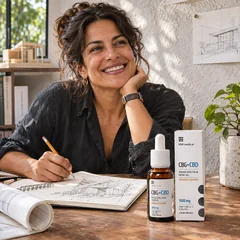
About this guide
Publisher: USA Medical. Editorial owner: Jake Crossman, NASM-CNC. Updated
Jake Crossman is responsible for the company’s editorial standards. NASM-CNC is a nutrition-coaching credential, not a medical or clinical license. This guide has not received independent scientific or clinical review.
How we develop and correct educational content · Independent review process
CBD and CBG are distinct hemp compounds. CBD has a larger human research base; CBG research is earlier. Our CBG + CBD oils combine the two, so they should be compared as blends, not as CBD-free alternatives.
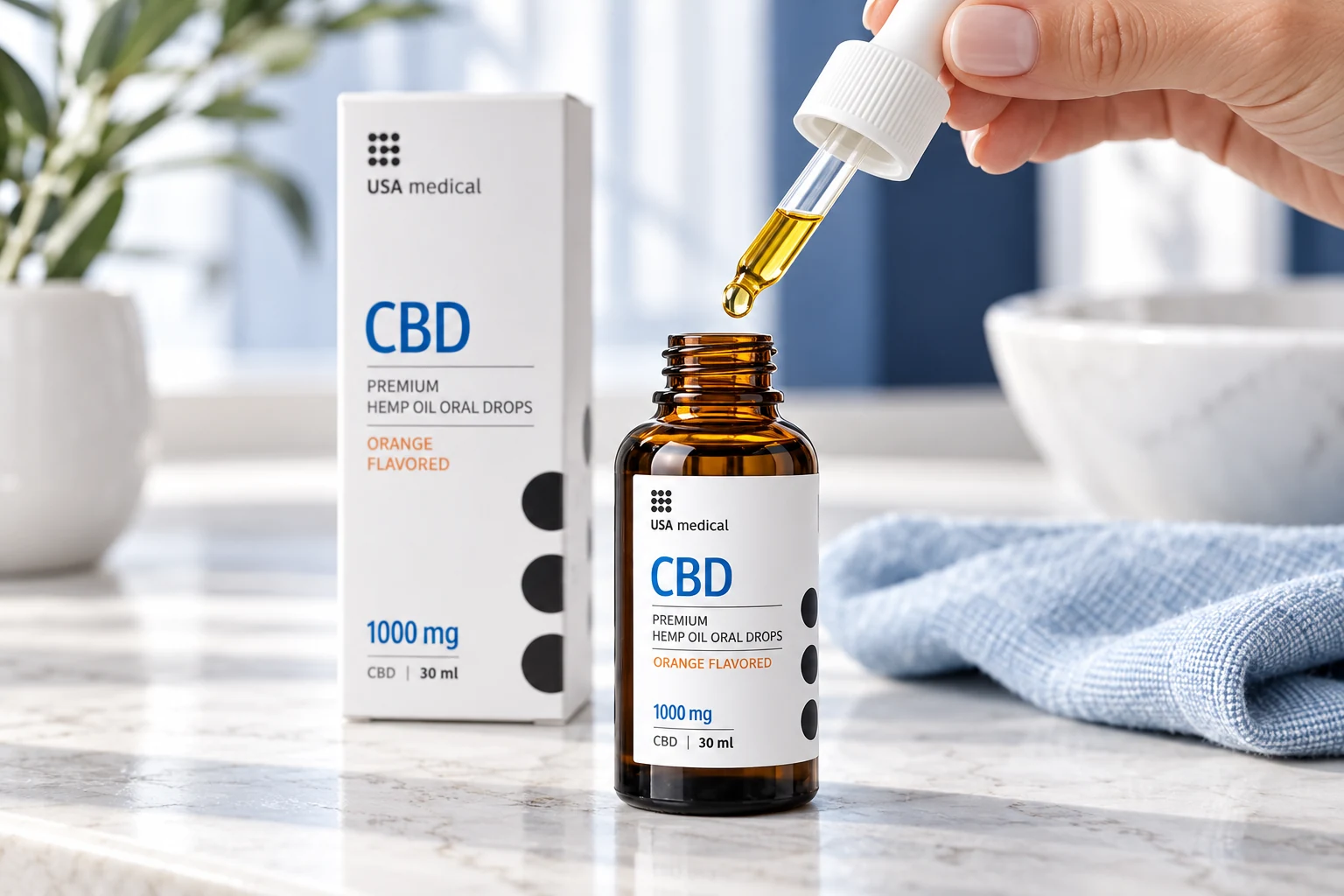
Understand what you are comparing.
| Question | CBD | CBG |
|---|---|---|
| What is it? | Cannabidiol, a cannabinoid found in hemp. | Cannabigerol, a different cannabinoid found in hemp. |
| Human evidence | Studied for a variety of outcomes; evidence depends on the actual condition and formulation. | A much smaller human evidence base; many proposed uses remain unproven. |
| Our range | Broad-spectrum oils in three concentrations, plus softgels. | CBG + CBD blends; read each product’s amount of both compounds. |
| What not to assume | That every CBD product works like a prescription formulation. | That “newer” means more effective, or that the blend guarantees energy, pain or inflammation relief. |
What has CBG research shown so far?
A 2024 double-blind crossover field trial studied a single 20 mg CBG dose in 34 healthy adults. It reported changes in self-rated anxiety and stress on some measures. It did not test USA Medical’s 1:1 blend or establish treatment for pain, inflammation or an anxiety disorder.
Read Cuttler and colleagues’ primary study. Small early studies help frame questions; they do not justify a promise for every bottle.
Read both amounts on a blend.
Identify the ratio
A 1:1 blend means equal labeled amounts of CBG and CBD. Check whether the number on the front refers to one compound or the combined total.
Calculate separately
Use each cannabinoid’s total amount and the bottle volume. Keep CBD mg/mL and CBG mg/mL separate when comparing products.
Two 1,000 mg bottles, two different labels
On our regular CBD oil, the front number refers to CBD. On our regular 1:1 CBG oil, the number combines CBG and CBD. Both bottles contain 30 mL.
| USA Medical bottle | Labeled amount per bottle | Calculated per 1 mL |
|---|---|---|
| CBD oil, 1,000 mg | 1,000 mg CBD | About 33.3 mg CBD |
| CBG oil, 1,000 mg blend | 500 mg CBG + 500 mg CBD | About 16.7 mg CBG + 16.7 mg CBD |
Avoid accidental stacking
A CBG + CBD oil already contains CBD. Adding another oil or softgel increases the combined amount; do not assume it is a separate, non-overlapping routine.
Make it practical
Choose for the formula you want.
Choose our CBD range when you want the familiar Calm, Peace or Sleep routine choices, or a premeasured softgel.
Explore CBG + CBD when you specifically want to compare a blend. Read both cannabinoid amounts, the ingredients and the available product documents before deciding.
Compare the current bottles.
Your questions
A few useful answers.
Is CBG an energy supplement?
We do not have product-specific human evidence establishing an energy effect for our CBG + CBD blend. Compare the formula rather than treating that phrase as a guaranteed outcome.
Is CBG stronger than CBD?
They are different compounds. A “stronger” comparison needs a defined outcome, amount and formulation; the names alone cannot establish it.
Does a 1:1 blend mean twice the CBD?
No. The ratio describes the relationship between CBG and CBD. Read the labeled amount of each compound.