
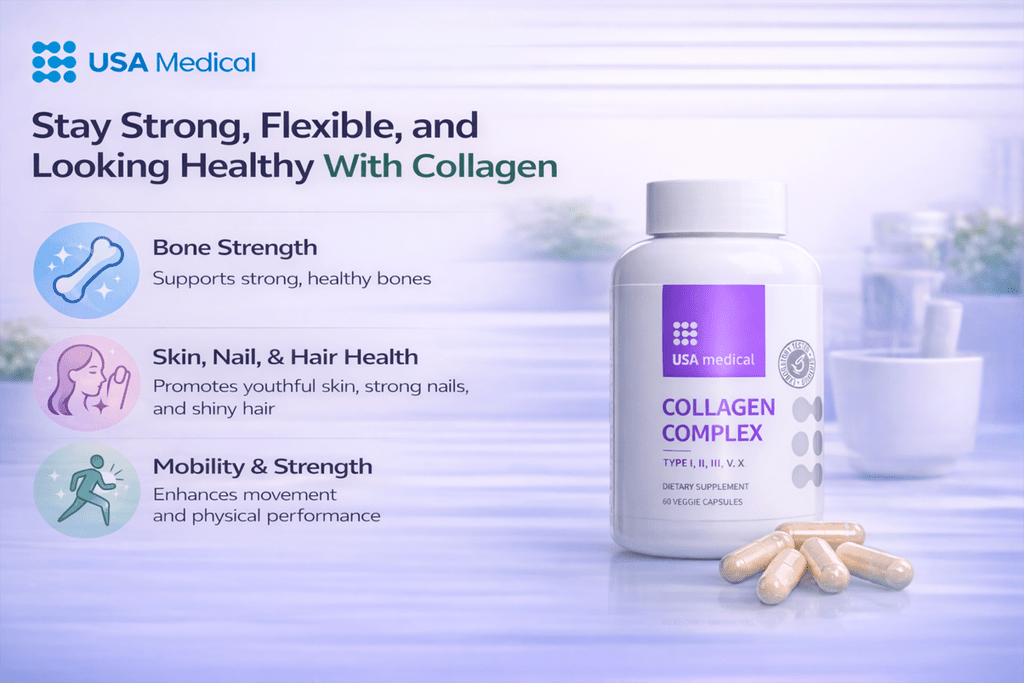
Stay Strong, Flexible, and Supported With Collagen
Last updated: March 24, 2026
Introduction
Collagen is one of the most important proteins in the human body, yet it is often overlooked until signs of aging or discomfort appear. From supporting joint comfort to maintaining smooth skin, collagen plays a central role in how your body feels and functions every day. As natural collagen production decreases with age, many people begin to notice changes in mobility, skin texture, and overall strength.
This guide explores how collagen works, why it matters, and how it supports your body from the inside out. We will focus on practical, evidence based information to help you understand its benefits and role in daily health.
Table of Contents
- What Is Collagen and Why It Matters
- How Collagen Supports Joints and Bones
- Collagen for Skin, Hair, and Nails
- Signs Your Body May Need More Collagen
- Ways to Support Collagen Levels
- FAQ
- Target Keywords Used
What Is Collagen and Why It Matters
Collagen is the most abundant protein in the body and serves as a structural foundation for many tissues. It is found in joints, bones, cartilage, skin, hair, nails, and connective tissues. Think of collagen as the framework that helps hold everything together while providing strength and flexibility.
Your body naturally produces collagen by combining amino acids from protein rich foods. This process works efficiently during youth, but production gradually declines with age. Environmental factors such as sun exposure and lifestyle habits can also influence collagen levels.
Collagen supports multiple systems at once. It contributes to joint support, helps maintain bone strength, improves skin elasticity, and supports hair growth and nail strength. Because of its wide reach, maintaining healthy collagen levels is essential for overall tissue support.
In summary, collagen is not just about appearance. It plays a vital role in movement, structure, and resilience throughout the body.
How Collagen Supports Joints and Bones
Collagen is a key component of joint support and bone strength. It helps maintain the integrity of cartilage, which cushions joints and allows smooth movement. Without adequate collagen, cartilage can weaken, leading to stiffness and reduced flexibility.
Joint Support and Comfortable Movement
Collagen helps joints move smoothly by supporting the structure of cartilage. This is especially important for people who stay active or experience joint discomfort over time.
Key ways collagen supports joints include:
- Maintaining cartilage structure for smoother motion
- Supporting flexibility during movement
- Promoting comfort during daily activities
These benefits contribute to improved mobility and help reduce the feeling of stiffness during routine tasks.
Bone Strength and Stability
Bones are not just made of minerals like calcium. They also contain collagen, which provides a flexible framework that supports strength and durability. This combination allows bones to remain strong while resisting fractures.
Collagen supports bone health by:
- Providing structure to bone tissue
- Supporting mineral density
- Contributing to long term mobility
Strong bones and healthy joints work together to support everyday movement and independence.
Healthy Cartilage and Flexibility
Cartilage acts as a cushion between bones. Collagen helps maintain this cushion, ensuring that joints remain flexible and supported.
When collagen levels are adequate, cartilage can better absorb impact and support a full range of motion. This is especially important for activities like walking, bending, and lifting.
In conclusion, collagen plays a foundational role in keeping joints comfortable, bones strong, and movement fluid.
Collagen for Skin, Hair, and Nails
Collagen is widely known for its role in appearance, but its benefits go deeper than surface level improvements. It supports skin elasticity, hair growth, and nail strength by reinforcing the underlying structure of these tissues.
Skin Elasticity and Smoothness
Collagen helps maintain the firmness and elasticity of the skin. It supports the structure of the dermis, which is the layer responsible for skin strength and resilience.
As collagen levels decline, skin may begin to lose its smooth texture and elasticity. Supporting collagen levels can help maintain:
- A firmer appearance
- Smooth texture
- Improved hydration retention
Healthy collagen levels contribute to skin that looks and feels more resilient over time.
Hair Growth and Strength
Hair relies on protein and structural support to grow and remain strong. Collagen provides amino acids that support hair growth and help maintain the health of hair follicles.
This can contribute to:
- Stronger strands
- Improved thickness
- Healthier growth patterns
Nail Strength and Durability
Nails are also made of protein and benefit from collagen support. Adequate collagen can help improve nail strength and reduce brittleness.
Benefits for nails include:
- Increased durability
- Reduced breakage
- Improved growth
Together, these effects highlight how collagen supports not just internal health but also visible aspects of well being.
In summary, collagen contributes to healthy skin, stronger hair, and more resilient nails by supporting the structure beneath the surface.
Signs Your Body May Need More Collagen
As natural collagen production declines, certain changes may become noticeable. These signs can appear gradually and often reflect the role collagen plays in multiple systems.
Common signs include:
- Joint stiffness or reduced flexibility
- Decreased mobility during daily activities
- Changes in skin elasticity or smoothness
- Thinner hair or slower growth
- Brittle nails
- General decline in tissue support
These changes are a normal part of aging, but they also highlight the importance of maintaining collagen levels.
Recognizing these signs early can help guide decisions about supporting overall health and function.
Ways to Support Collagen Levels
Supporting collagen levels involves a combination of nutrition, lifestyle habits, and consistency. While the body produces collagen naturally, certain practices can help maintain this process.
Nutrition and Protein Intake
Collagen production relies on amino acids found in protein rich foods. Consuming a balanced diet supports the body’s ability to build and maintain collagen.
Helpful nutrients include:
- Protein from whole food sources
- Vitamin C, which supports collagen formation
- Minerals that contribute to tissue health
Eating a well rounded diet provides the building blocks needed for collagen production.
Daily Movement and Activity
Regular movement supports joint support and flexibility. Physical activity helps maintain circulation and encourages healthy tissue function.
Activities such as walking, stretching, and strength training can contribute to:
- Improved mobility
- Better joint comfort
- Long term bone strength
Consistency in Routine
Supporting collagen is not about a single change. It involves consistent habits over time. Maintaining a balanced lifestyle helps support overall tissue health and function.
In conclusion, collagen support comes from a combination of proper nutrition, regular movement, and long term consistency.
FAQ
What does collagen do in the body
Collagen provides structure and support to joints, bones, skin, hair, nails, and connective tissues. It plays a key role in strength, flexibility, and overall tissue support.
Does collagen help with joint support
Collagen helps maintain cartilage, which supports smooth joint movement and flexibility. This contributes to overall joint comfort.
How does collagen support bone strength
Collagen forms part of the structure of bones, helping them remain strong and resilient while supporting mineral density.
Can collagen improve skin elasticity
Collagen supports the structure of the skin, helping maintain firmness and smoothness over time.
Is collagen important for hair growth
Collagen provides amino acids that support hair growth and help maintain healthy hair structure.
Does collagen help nails grow stronger
Collagen supports nail strength and durability, which can reduce brittleness and support growth.
Why does collagen decline with age
Natural collagen production slows as part of the aging process, which can affect joints, skin, and overall tissue support.
How can I support collagen levels naturally
Supporting collagen involves proper nutrition, regular movement, and maintaining consistent healthy habits.