
Vitamin D
NIH explains vitamin D’s established roles, intake recommendations, adult upper limit, deficiency context, and medication considerations.
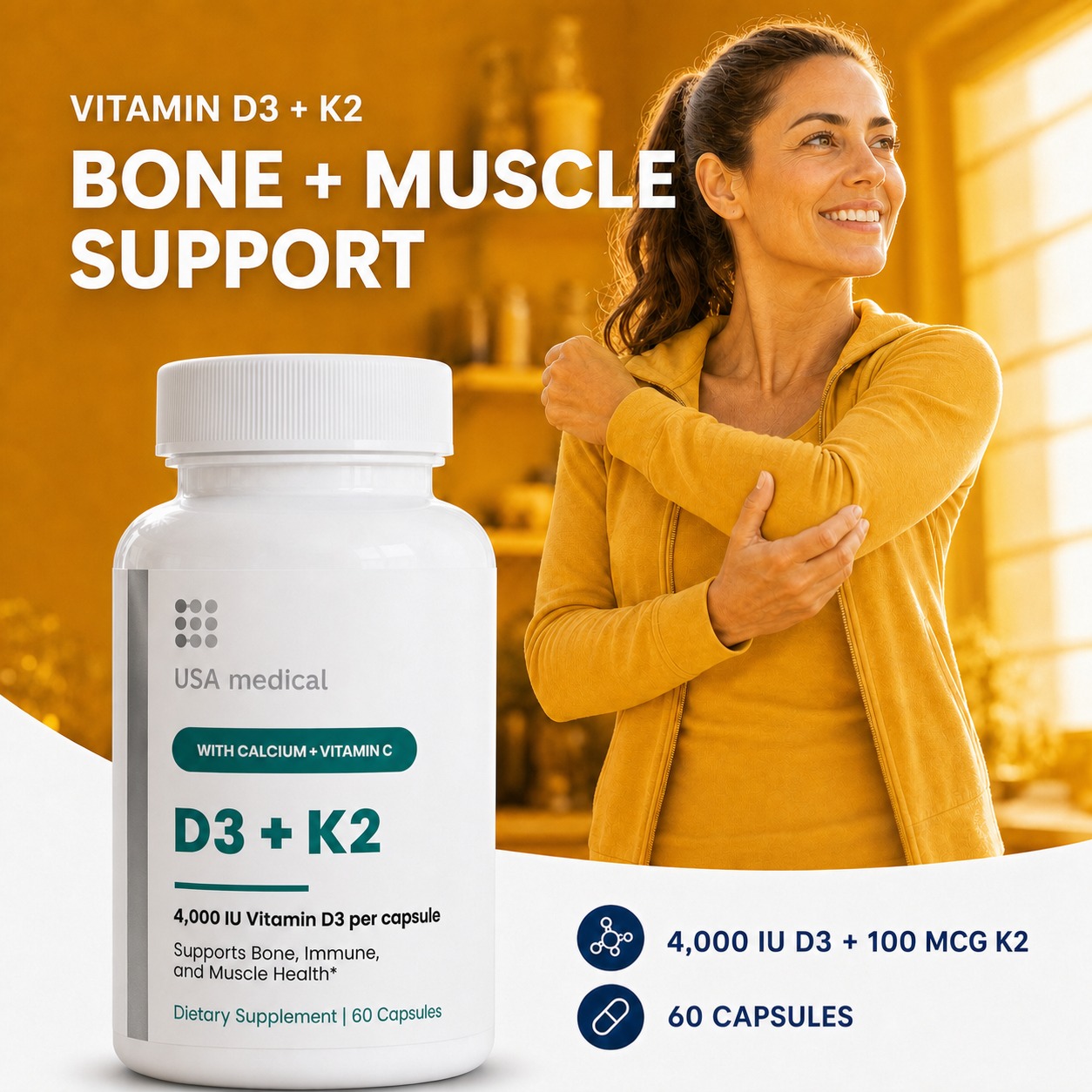


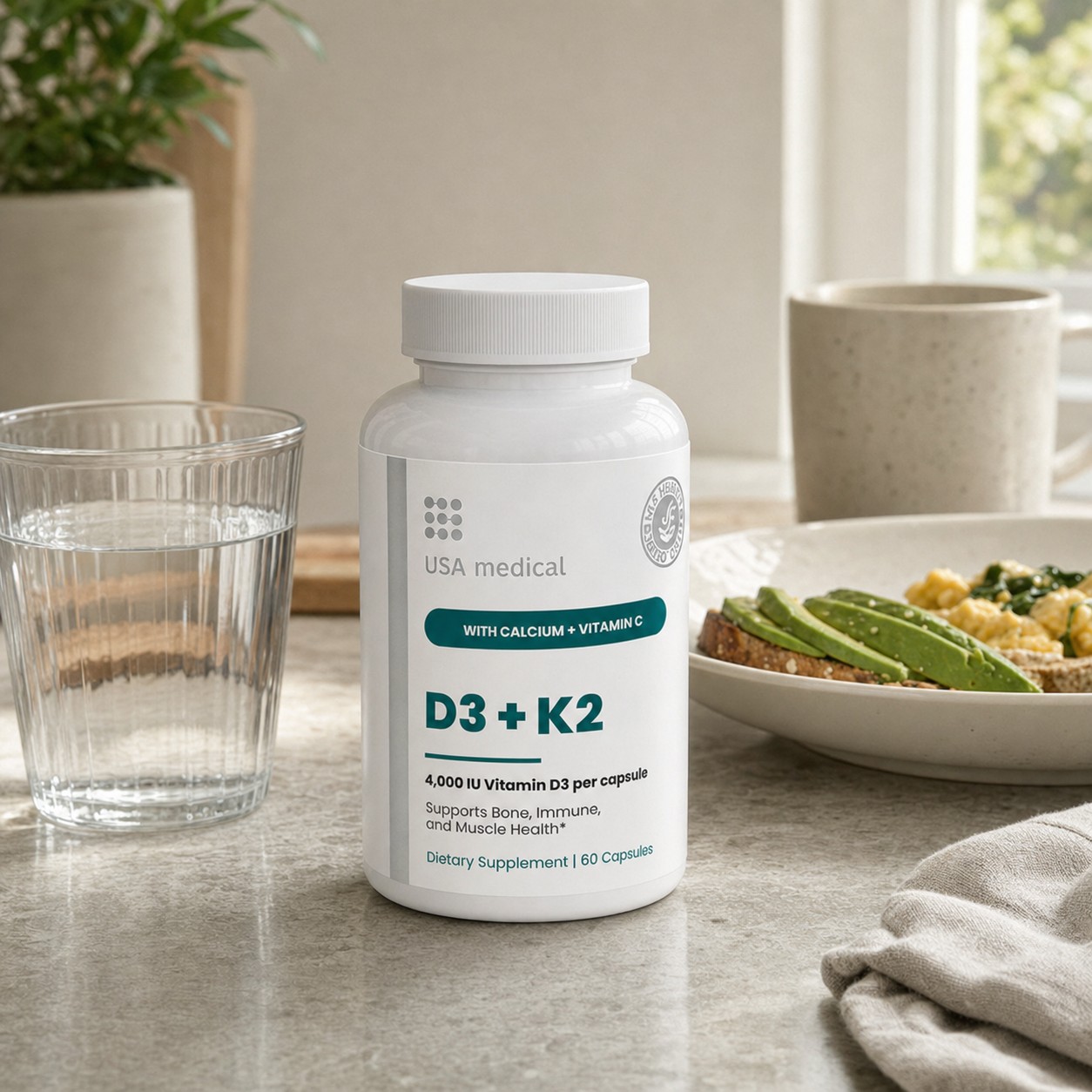
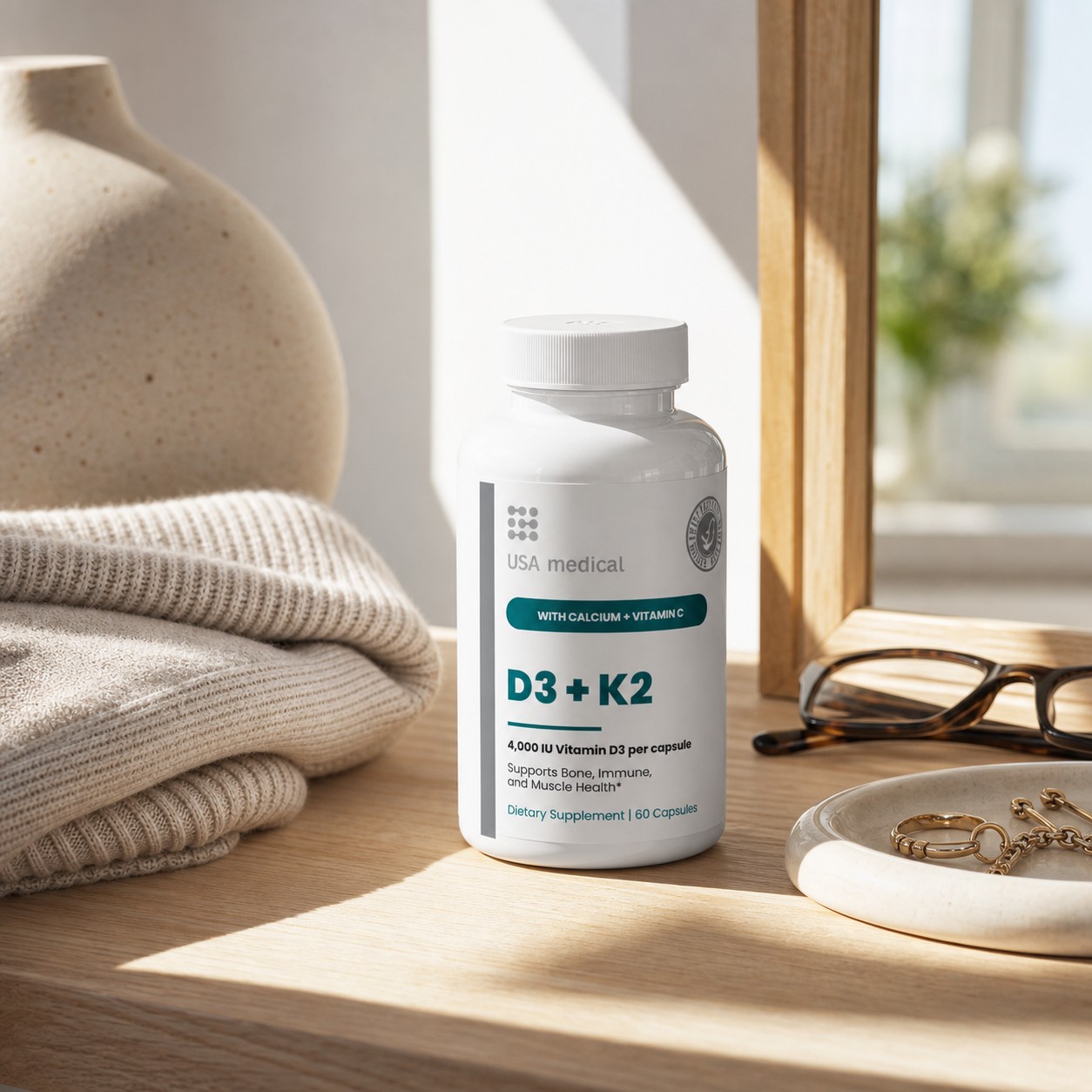
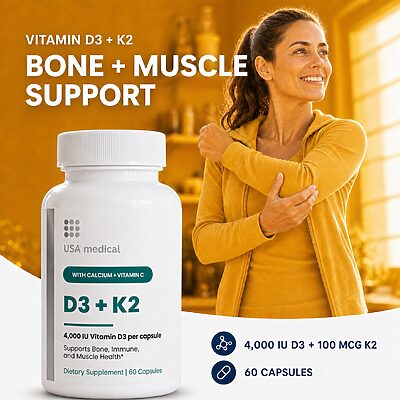


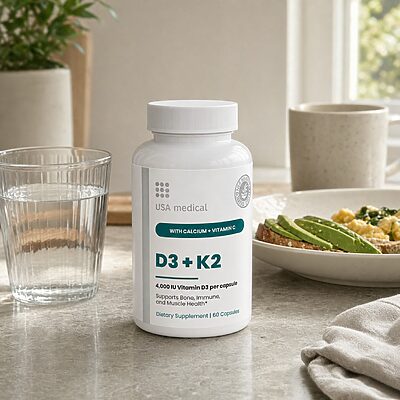
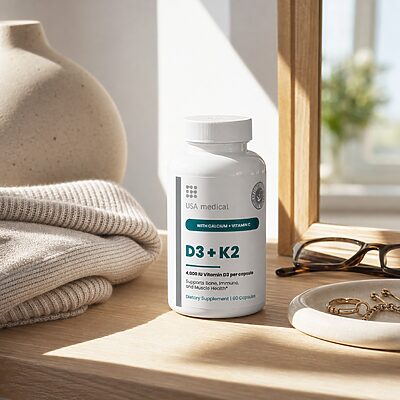
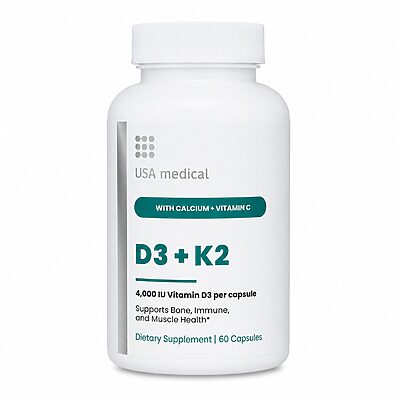
Bone + muscle support, made simple. One daily capsule combines vitamin D3, vitamin K2 as MK-7, vitamin C, and calcium in a clear food-time routine.
Take 1 capsule daily with food and water, following the current label.
Product details
$30.00
In stock
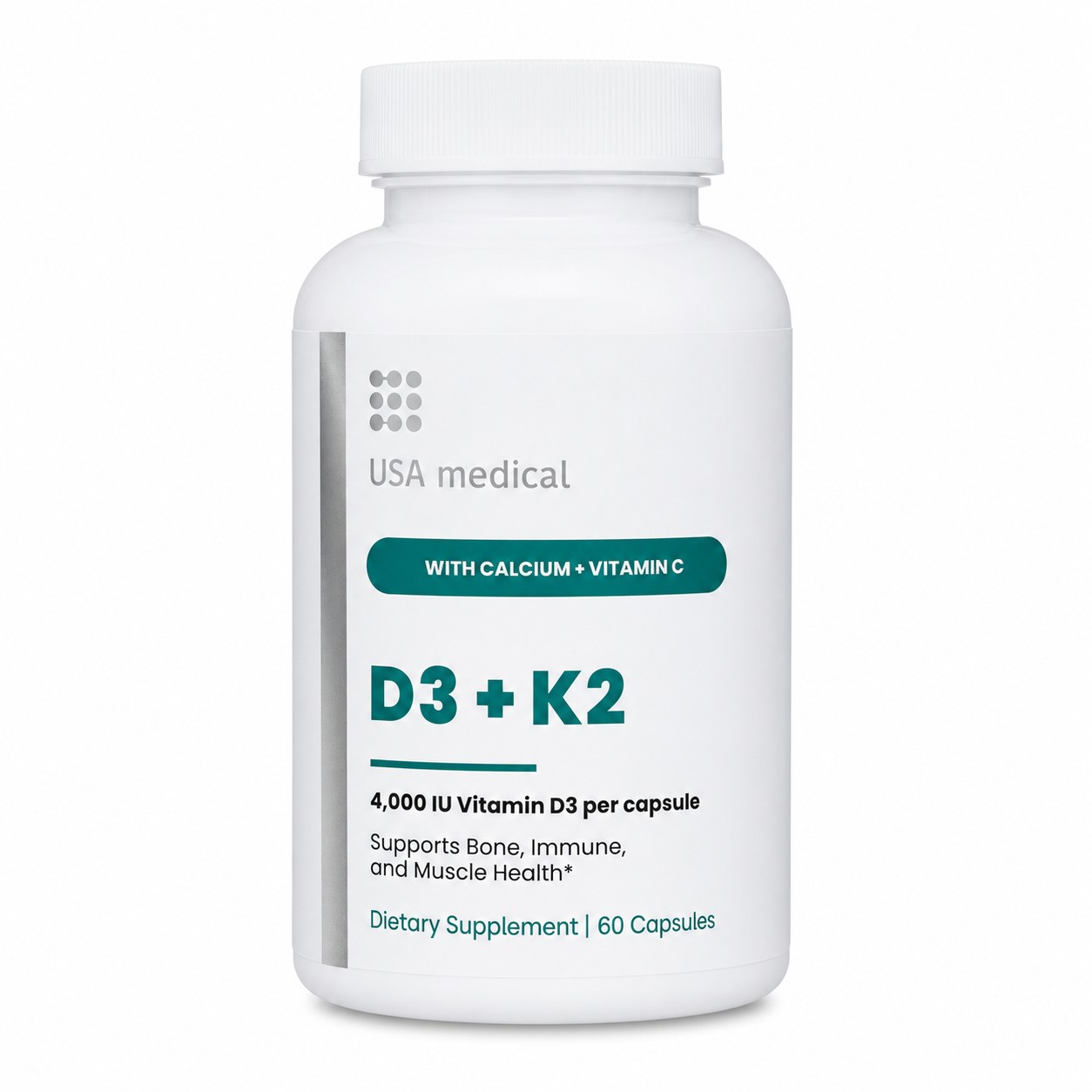
One capsule provides 4,000 IU vitamin D3, 100 mcg vitamin K2 as MK-7, 80 mg vitamin C, and 120 mg calcium. The purpose is obvious at a glance: a once-daily routine for bone, muscle, and immune support.
Vitamin D helps the body absorb calcium, and both nutrients have established roles in bone health. This formula states the amount of each instead of treating them as one interchangeable number.[1][3]
Vitamin D contributes to normal muscle function. A supplement supports nutritional intake; it does not replace movement, protein, or medical evaluation for weakness.[1]
Vitamins D and C have established roles in immune function, which supports a straightforward daily-wellness story without promising illness prevention.[1][4]
Vitamin K is required for proteins involved in blood clotting and bone metabolism. This formula uses the menaquinone-7 form and clearly states 100 mcg.[2]
The current label directs one capsule daily with food and water, making the routine easy to attach to breakfast or another consistent meal.
One capsule is one complete serving, so a 60-capsule bottle provides 60 label servings.
Vitamin D supports calcium absorption and has established roles in bone, muscle, and immune function. Vitamin K participates in proteins involved in clotting and bone metabolism, while calcium is a principal structural component of bone.[1][2][3]
The labeled serving provides 4,000 IU (100 mcg) vitamin D3, the NIH adult tolerable upper intake level from all sources. That number is a safety boundary, not a universal daily target. Total intake, health status, medication, sun exposure, diet, and laboratory results all matter.[1]
Our honest read: this is a clear one-capsule formula for adults who intentionally want a higher-dose D3 routine with K2, vitamin C, and calcium. It does not guarantee stronger bones, prevent illness, or replace individualized clinical guidance.
The vitamin D amount equals the adult upper intake level. Review other vitamin D products and fortified foods so the same nutrient is not unintentionally stacked.[1]

NIH explains vitamin D’s established roles, intake recommendations, adult upper limit, deficiency context, and medication considerations.
NIH describes vitamin K forms, its role in clotting and bone-related proteins, intake guidance, and the important interaction with warfarin.
NIH explains calcium’s structural role, recommended intakes, food and supplement sources, absorption, and upper limits.
NIH summarizes vitamin C’s roles in antioxidant activity, collagen synthesis, immune function, intake guidance, and safety.
It is a once-daily formula for bone, muscle, and immune support, built with vitamin D3, vitamin K2 as MK-7, vitamin C, and calcium.[1][2][3][4]
One capsule provides 4,000 IU, equal to 100 mcg, vitamin D3. That amount equals the NIH adult tolerable upper intake level from all sources, so review your total intake.[1]
The Supplement Facts panel lists 100 mcg vitamin K2 as menaquinone-7, commonly shortened to MK-7.
One capsule provides 120 mg calcium as calcium citrate, equal to 9% of the U.S. Daily Value. It is not a complete day’s calcium intake.
The current label says adults take 1 capsule daily with food and water.
Do not make a vitamin K change without speaking with the clinician who manages warfarin or another anticoagulant. NIH advises keeping vitamin K intake consistent because the interaction can be serious.[2]
No. An upper intake level is not a daily goal. Vitamin D needs vary, and testing or healthcare guidance may be appropriate before sustained use of a high-dose routine.[1]
The finished label states: European pharmacist-formulated, sourced globally, and made in Hungary.
Every amount below comes from the current Vitamin D3 + K2 printer proof and is shown per one-capsule serving.
A useful report should help you match the document to your bottle and see what was tested. FDA quality guidance centers on identity, purity, strength, composition, and limits on contaminants. Read the FDA quality guidance
The report identifier should match the lot or batch printed on your bottle.
Look for the named product or material and the test or examination method used.
When potency is tested, compare the actual result with the specification or labeled amount.
Look for contaminant or microbial limits, actual results, and a clear pass or specification.
No current finished-product, lot-specific certificate was found in the public product record. Match any future report to the product name and the lot or batch printed on your bottle.
Certificates are lot-specific. A report for one lot does not automatically describe a later production run, and a certificate evaluates product specifications - not clinical effectiveness.
Start with the product label, then compare it with public guidance. Label directions, nutrient targets, and research doses answer different questions.
The current label says adults take 1 capsule daily with food and water.
Per capsule: 4,000 IU (100 mcg) vitamin D3, 100 mcg vitamin K2 as MK-7, 80 mg vitamin C, and 120 mg calcium
NIH lists 4,000 IU (100 mcg) per day as the tolerable upper intake level for adults from all sources. An upper limit is a safety boundary, not a target that everyone needs.
The labeled serving itself reaches the adult vitamin D upper limit. Count vitamin D from this product, other supplements, and fortified foods together, and use clinician-directed testing when appropriate.
Use the complete label serving once daily.
That direction comes from the current product label.
Avoid unintentionally stacking additional vitamin D or vitamin K products.
Use the label as the ceiling unless a healthcare professional gives you a different plan. More is not automatically better, and vitamin D needs vary with diet, sun exposure, age, health status, and laboratory results.
This serving is high in vitamin D and includes vitamin K, so medication and total daily intake matter.
Product updates, wellness education, and customer experiences.
Dietary supplements and cosmetic products are not a substitute for a varied, balanced diet or a healthy lifestyle. Do not exceed the recommended daily serving. If you are pregnant, nursing, have a medical condition, or take prescription medication, ask a healthcare professional before use. Our products are not intended to diagnose, treat, cure, or prevent any disease. By using this website, you agree to our Privacy Policy and Terms and Conditions. In the USA medical® brand name, the word “medical” does not mean that we provide medical care or healthcare services.


Reviews
There are no reviews yet