


Usefulness, limits, and safety
NCCIH summarizes the evidence for stress and insomnia, common side effects, rare liver-injury reports, medication interactions, and who should avoid ashwagandha.
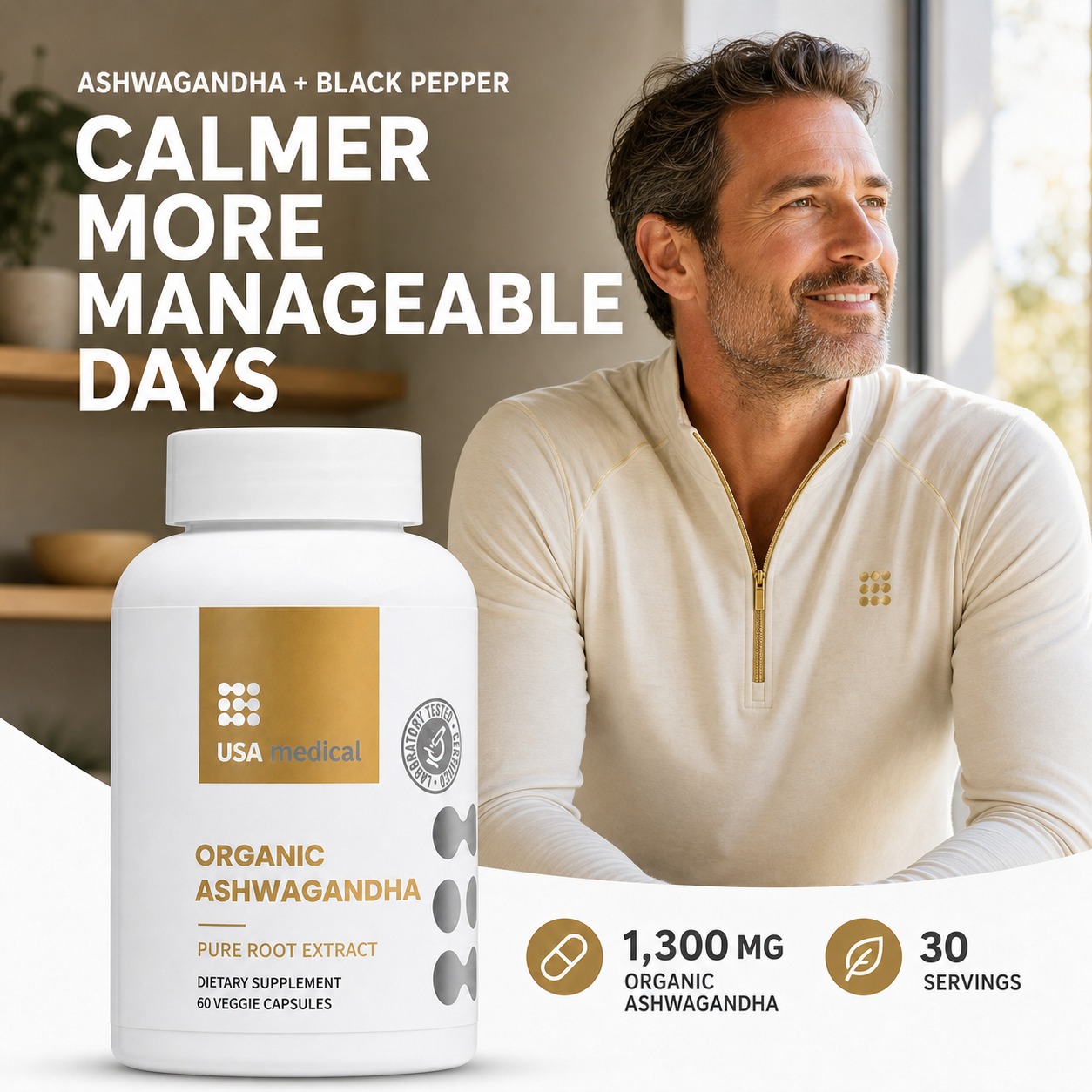
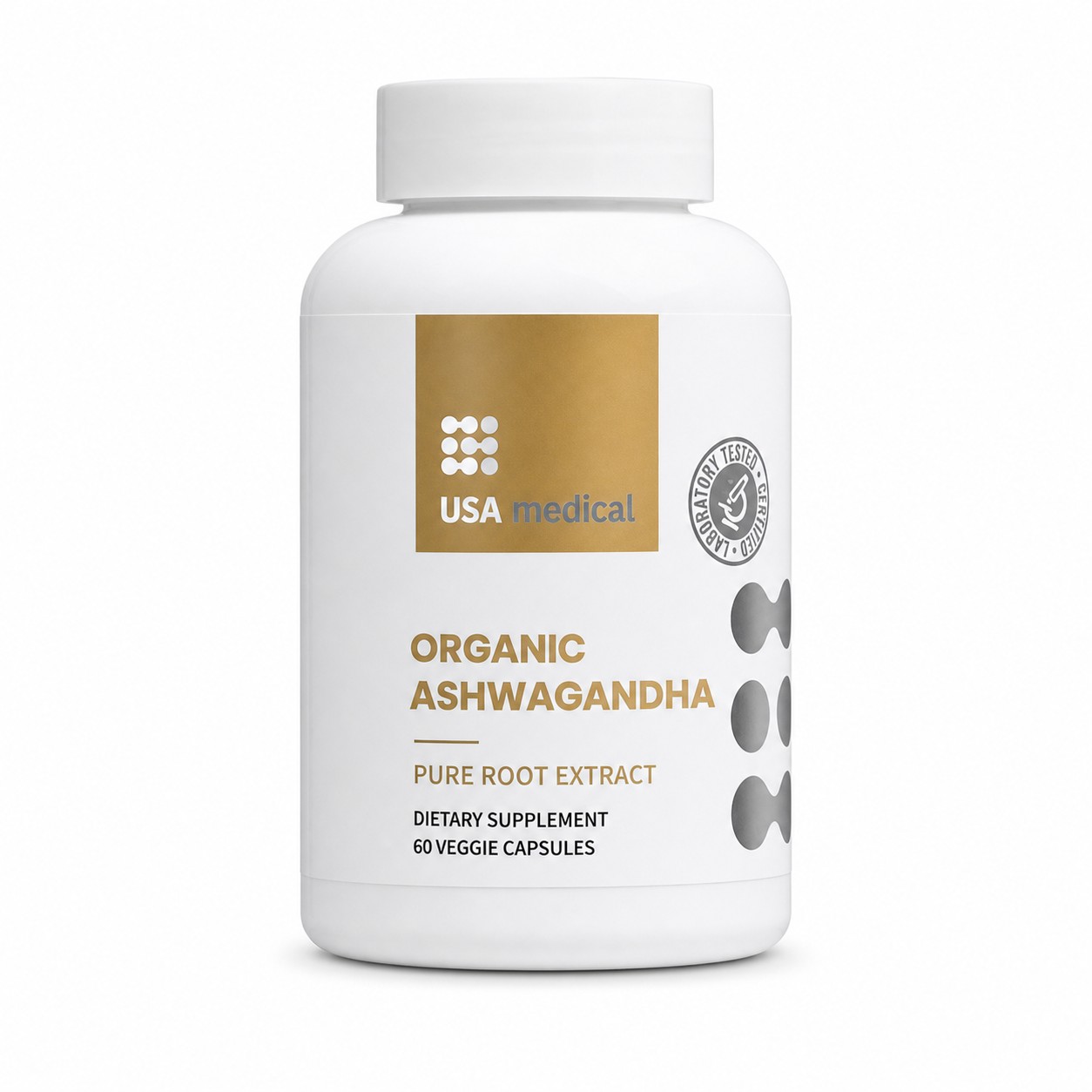
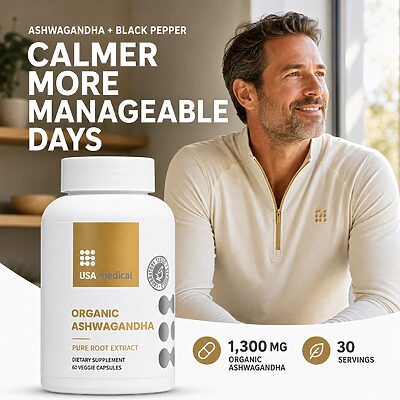
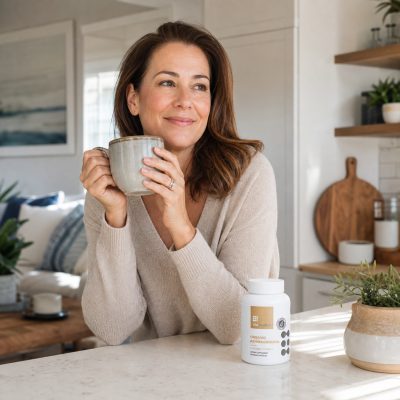
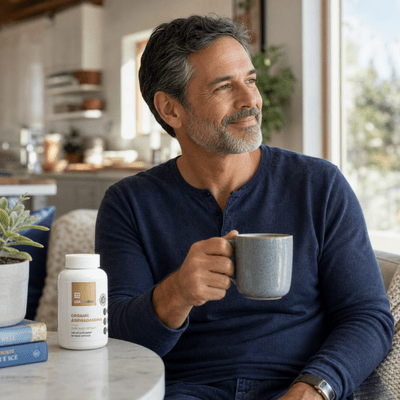
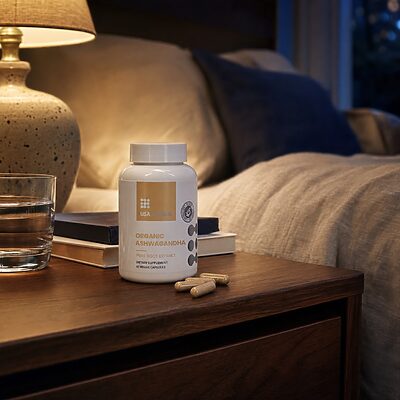
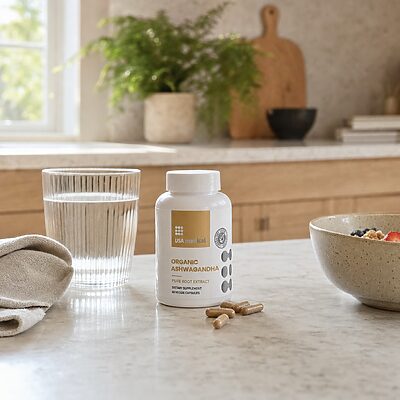
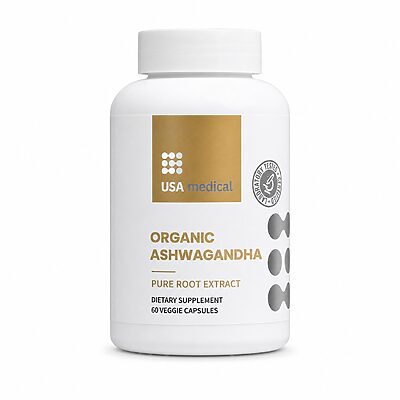
Botanical stress support for calmer, more manageable days. Two capsules pair organic ashwagandha with organic black pepper, with clear research limits and safety guidance below.[1]
Take 2 capsules daily with a full glass of water, following the current label.
Product details
$30.00
In stock
Ashwagandha is a botanical used for everyday stress support, not an instant calm switch. The human evidence is promising but still developing. This formula makes the routine simple: 1,300 mg organic ashwagandha, 10 mg organic black pepper, and two capsules daily.
A 60-day randomized trial in 60 stressed adults found improvements in some stress and anxiety measures with 240 mg daily of a standardized extract, not this product.[2] A 2024 meta-analysis of nine trials also found favorable effects on perceived stress, anxiety scores, and cortisol, while calling for more long-term safety information.[4]
A 2021 sleep meta-analysis found a small overall benefit across five trials, with stronger effects in adults with insomnia and in studies using at least 600 mg per day for eight weeks or longer.[3]
Our honest read: the signal is worth paying attention to, but different root powders, extracts, standardizations, and doses cannot be treated as interchangeable. This finished USA Medical formula has not been clinically tested.
Some standardized ashwagandha extracts have reduced perceived stress in small human trials.[2][4]
This is daily botanical support, not a treatment for anxiety or a promise to change how you feel after one dose.
The pooled sleep evidence is positive but modest, and trial formulas differ from this product.[3]
Two capsules with a full glass of water create a routine that is easy to repeat and easy to reassess.
1,300 mg ashwagandha and 10 mg black pepper are shown plainly per serving.
NCCIH says use may be safe for up to three months; long-term safety is not established.[1]
Adults looking for a simple, short-term ashwagandha routine during demanding seasons.
Avoid during pregnancy or breastfeeding. Check with a healthcare professional before use if you have a thyroid or autoimmune disorder, liver concerns, surgery planned, or take medication.[1]
Some small randomized trials and a 2024 meta-analysis report improvements in perceived stress with certain ashwagandha preparations.[2][4]
The studies used different extracts and doses, and this finished product has not been clinically tested. It should not be presented as a treatment for anxiety or another mental-health condition.
A 2021 meta-analysis of five randomized trials found a small overall sleep benefit, with stronger findings in certain subgroups and longer, higher-dose studies.[3]
That is promising, not a guarantee, and this formula is positioned first for a steadier daytime stress routine.
Two capsules provide 1,300 mg organic ashwagandha and 10 mg organic black pepper. One 60-capsule bottle provides 30 servings.
Take 2 capsules daily with a full glass of water, following the current label. Because some people experience drowsiness, learn how it affects you before driving or doing anything that requires alertness.[1]
NCCIH advises avoiding it during pregnancy and breastfeeding and does not recommend it before surgery or for people with autoimmune or thyroid disorders. People with hormone-sensitive prostate cancer should also avoid it.[1]
Potential interactions include medicines for diabetes or high blood pressure, immunosuppressants, sedatives, anti-seizure medicines, and thyroid hormone medicines. Ask a pharmacist or healthcare professional to review your medication list.[1]
Drowsiness, stomach upset, diarrhea, and vomiting may occur. Rare cases of liver injury have been reported. Stop use and seek medical advice if you develop symptoms that concern you.[1]
No. NCCIH says ashwagandha may be safe in the short term, up to three months, but there is not enough information to establish long-term safety.[1]
NCCIH summarizes the evidence for stress and insomnia, common side effects, rare liver-injury reports, medication interactions, and who should avoid ashwagandha.
Lopresti and colleagues studied 60 stressed adults for 60 days using 240 mg daily of a standardized extract. The tested extract was not this product.
Cheah and colleagues pooled five randomized trials with 400 participants. The authors found a small overall benefit and said more serious-adverse-event data were needed.
Arumugam and colleagues pooled nine trials with 558 participants and found favorable changes in stress, anxiety, and cortisol measures, while noting the need for more long-term safety information.
These statements have not been evaluated by the Food and Drug Administration. This product is not intended to diagnose, treat, cure, or prevent any disease.
Exact amounts restored from the matched USA Medical source product record.
Daily Value has not been established for ashwagandha or black pepper.
A useful report should help you match the document to your bottle and see what was tested. FDA quality guidance centers on identity, purity, strength, composition, and limits on contaminants. Read the FDA quality guidance
The report identifier should match the lot or batch printed on your bottle.
Look for the named product or material and the test or examination method used.
When potency is tested, compare the actual result with the specification or labeled amount.
Look for contaminant or microbial limits, actual results, and a clear pass or specification.
Compare lot ASH220628 in the report with the lot printed on your bottle before treating the document as a match.
Certificates are lot-specific. A report for one lot does not automatically describe a later production run, and a certificate evaluates product specifications - not clinical effectiveness.
Start with the product label, then compare it with public guidance. Label directions, nutrient targets, and research doses answer different questions.
The current label direction is 2 capsules daily with water.
Per capsule: 650 mg organic ashwagandha + 5 mg organic black pepper
NCCIH does not establish one recommended daily amount. It notes that studies use varied ashwagandha preparations and that short-term use may be safe for up to 3 months, while long-term safety is not established.
The label states the amount of organic ashwagandha in this formula. Research may use root, leaf, or standardized extracts with different concentrations, so milligram amounts cannot be compared one-for-one.
Use the complete label serving once daily.
Pair it with a daily routine you can follow consistently.
NCCIH describes short-term use as up to 3 months; ask a healthcare professional before continuing longer.
Use the label as the default. Research numbers from a different extract do not create a new serving direction for this whole-root formula.
Ashwagandha is not appropriate for everyone and may interact with medication.

 Verified customer
Helps me with mood and anxiety
 Verified customer
The Ashwagandha helps with my stress and sleep
 Verified customer
Been taking it for about a year or so and rarely, if ever, get sick
Product updates, wellness education, and customer experiences.
Dietary supplements and cosmetic products are not a substitute for a varied, balanced diet or a healthy lifestyle. Do not exceed the recommended daily serving. If you are pregnant, nursing, have a medical condition, or take prescription medication, ask a healthcare professional before use. Our products are not intended to diagnose, treat, cure, or prevent any disease. By using this website, you agree to our Privacy Policy and Terms and Conditions. In the USA medical® brand name, the word “medical” does not mean that we provide medical care or healthcare services.
★★★★★ 5.0 7 reviews
Been taking Ashwagandha for over a year and I’m very pleased with USA Medicals products and service
The Ashwagandha helps with my stress and sleep
Months using it, works great
Helps me with mood and anxiety
The Ashwagandha helps with my stress and sleep
Been taking it for about a year or so and rarely, if ever, get sick
Keeps me anxiety and stress free. Love it!
Months using it, works great