
Eriomin in prediabetes
This 12-week trial studied 200, 400, and 800 mg Eriomin in people with prediabetes. It measured metabolic biomarkers, not this formula’s fullness claim.
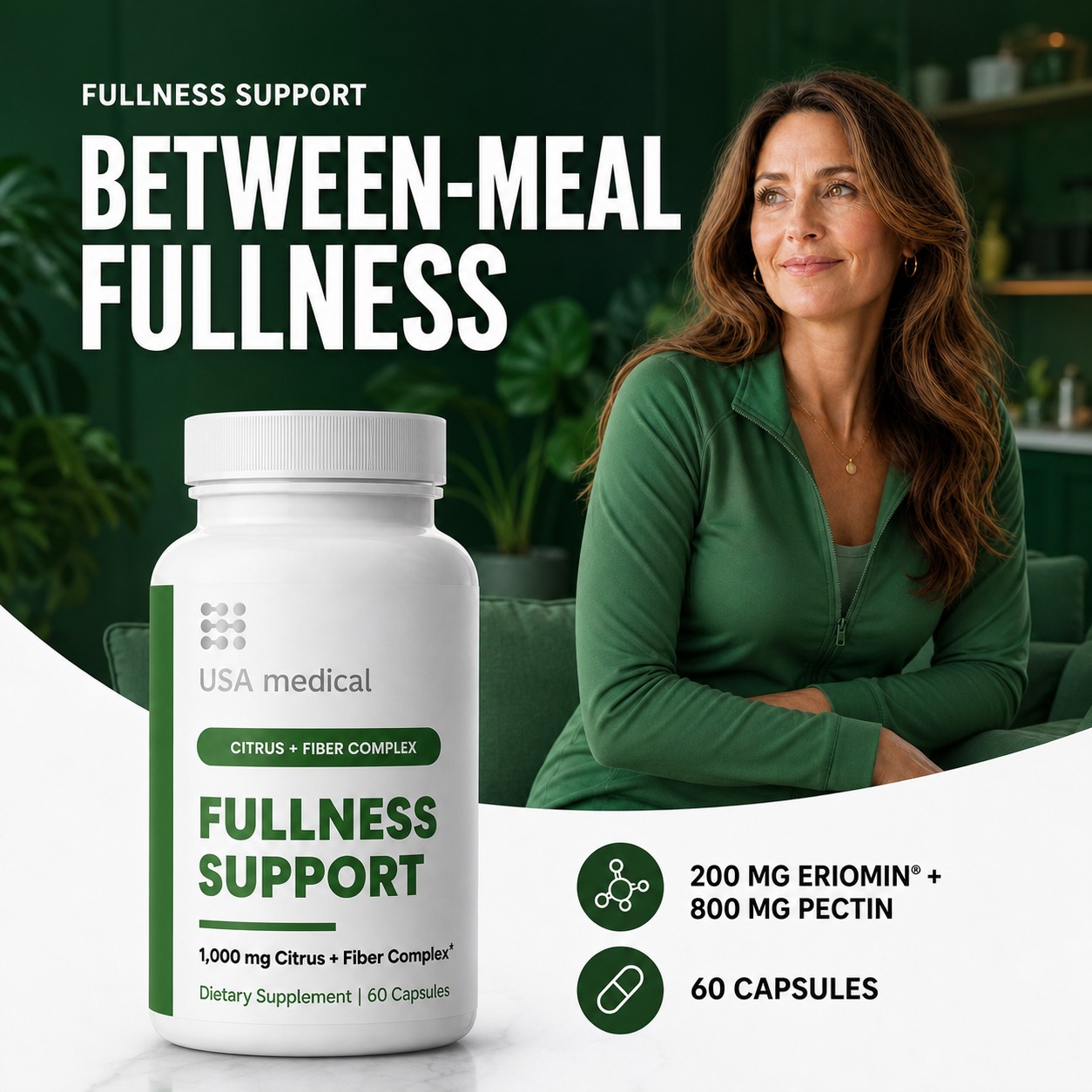


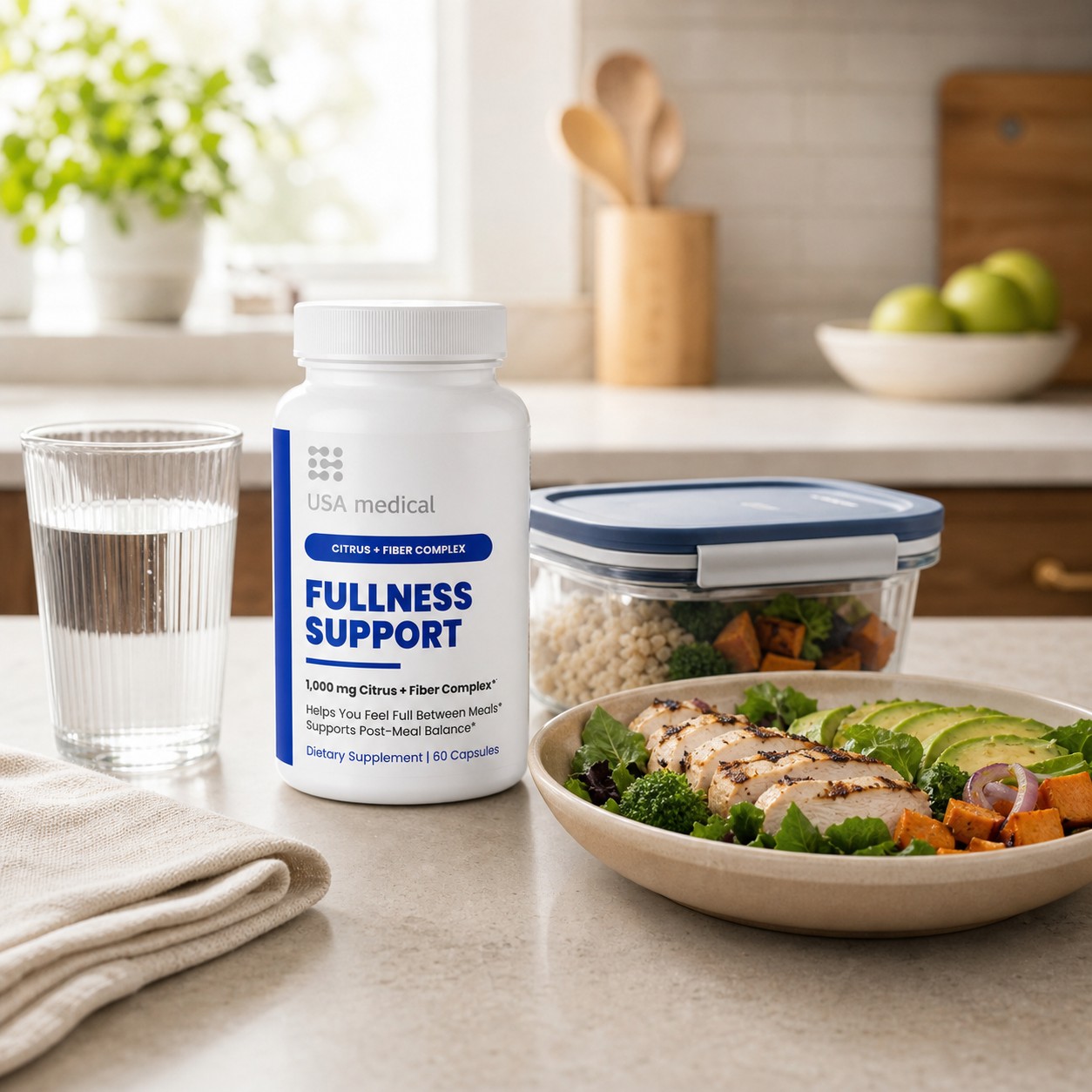
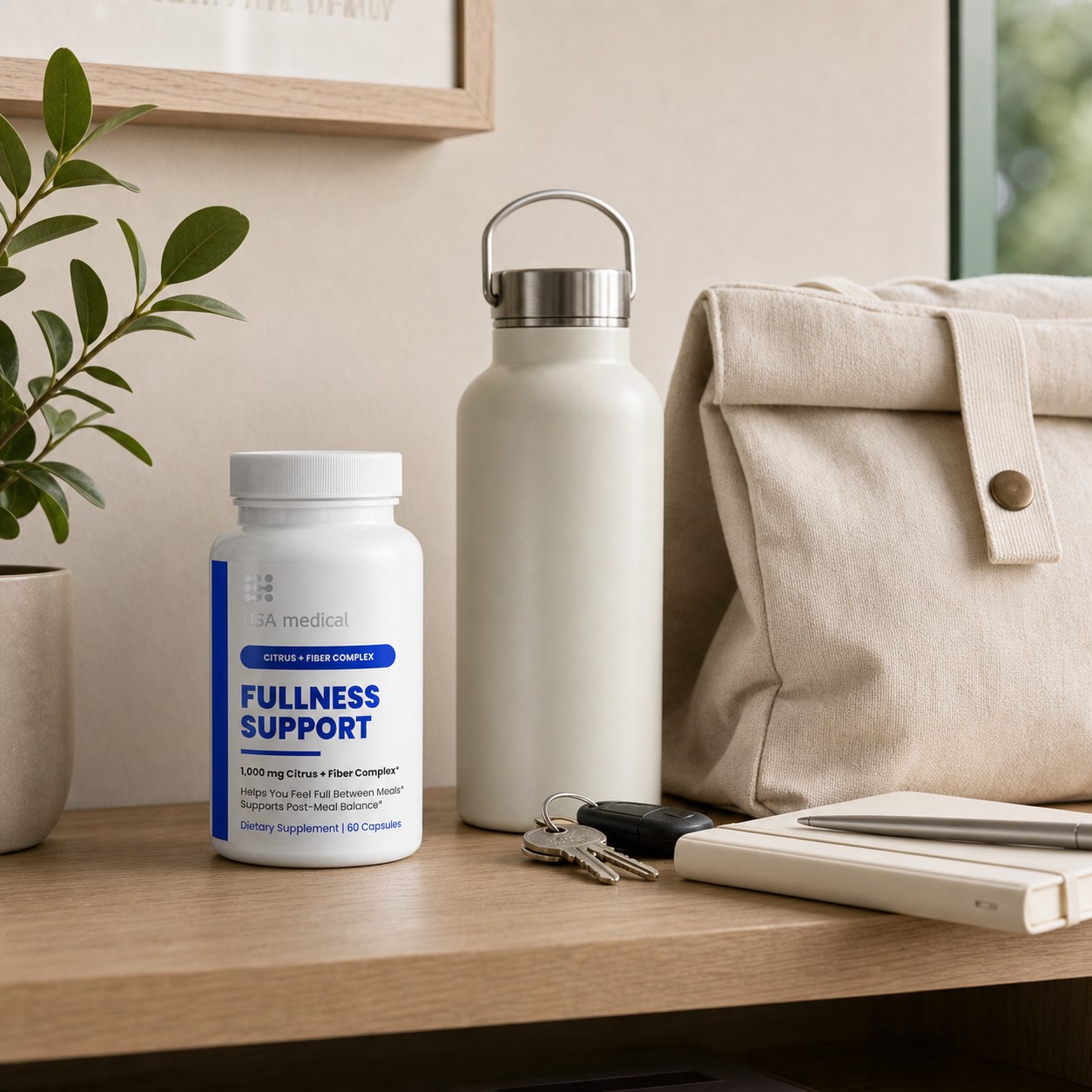
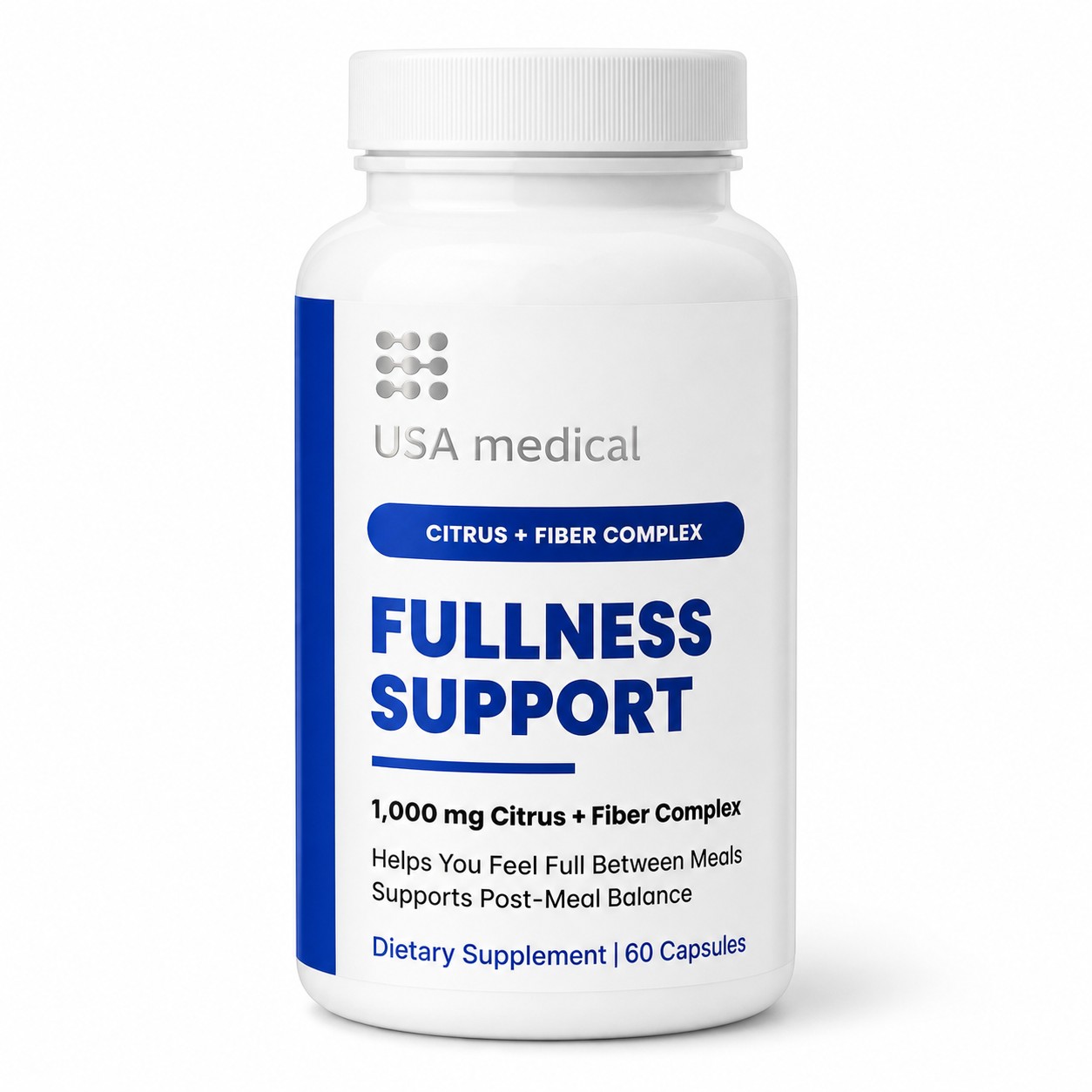
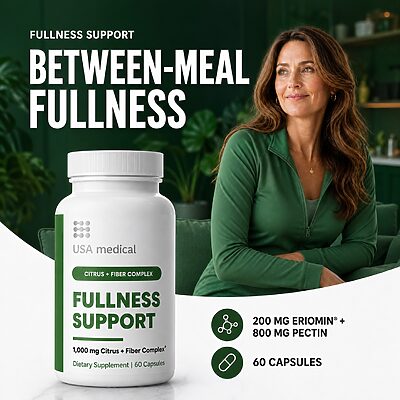


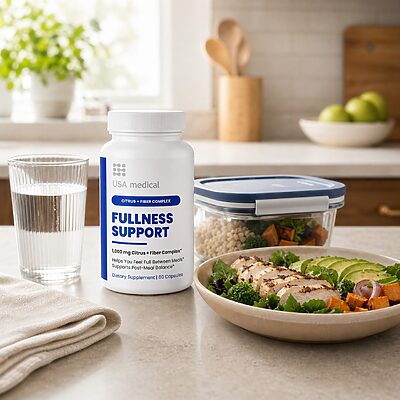
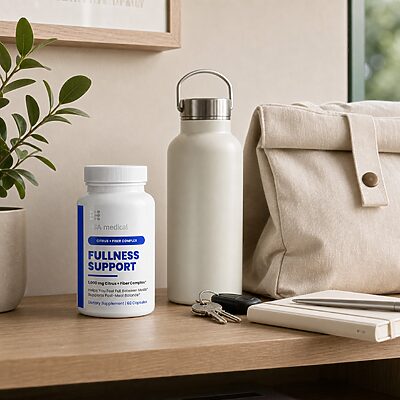
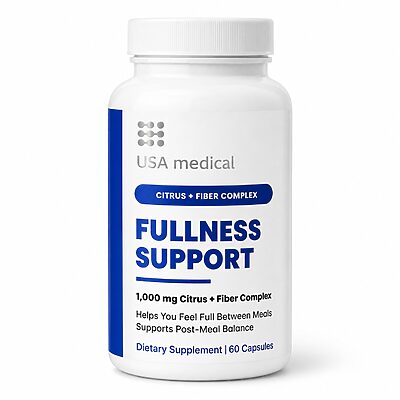
Feel fuller between meals. Two daily capsules pair Eriomin citrus extract with pectin in a simple food-time routine for fullness, fiber, and post-meal support.
Take 2 capsules daily with food and water, following the current label.
Product details
Two capsules combine 200 mg Eriomin citrus extract with 800 mg pectin. The purpose is obvious at a glance: help you feel fuller between meals and support a steadier post-meal routine.
Pectin is a soluble, gel-forming fiber studied in very different food formats and gram amounts for perceived satiety. This serving supplies 800 mg, so the page keeps the promise appropriately modest.[2][3][4]
Eriomin citrus extract has been studied at 200 mg in people with elevated glucose markers. Those trials were not fullness or weight-loss trials and do not make this finished formula a treatment.[1]
Pectin adds a clearly identified soluble-fiber component. It complements, not replaces, fiber-rich meals and a varied diet.
The full active formula is easy to audit: 200 mg Eriomin plus 800 mg pectin, with no proprietary amount hidden from comparison.
The current label directs two capsules daily with food and water, making it easy to attach to one consistent meal.
Hypromellose is the only listed other ingredient in the current finished proof.
A randomized prediabetes study used 200 mg Eriomin and reported changes in several metabolic markers, including circulating GLP-1. It also reported no influence on anthropometric or dietary variables. That study did not test this pectin combination, between-meal fullness, or weight loss.[1]
Pectin and soluble-fiber studies vary widely. One three-week trial tested 15 or 30 g per day of a combined oligofructose-plus-pectin intervention, far more total fiber than the 800 mg pectin in this serving. Broader reviews find that fiber type, viscosity, food form, dose, and outcome all matter.[2][3][4]
Our honest read: this is a straightforward citrus-and-fiber routine that may help some adults feel fuller between meals. It is not a GLP-1 receptor-agonist drug, a substitute for one, or a clinically proven weight-loss product.[5]

This 12-week trial studied 200, 400, and 800 mg Eriomin in people with prediabetes. It measured metabolic biomarkers, not this formula’s fullness claim.
This study used 15 or 30 g per day of a two-fiber combination for three weeks, illustrating why its dose and result are not transferable to 800 mg pectin capsules.
This review pools varied soluble fibers, doses, foods, and satiety measures and supports keeping product-specific conclusions narrow.
This review maps human pectin interventions and highlights major differences in source, structure, amount, delivery format, duration, and outcome.
FDA guidance emphasizes the relationship between the specific claim and the studied ingredient, serving, formulation, population, and outcome.
It is a citrus-and-fiber routine designed to help you feel fuller between meals and support post-meal balance, with 200 mg Eriomin and 800 mg pectin per serving.
No. It is a dietary supplement and is not a GLP-1 receptor agonist, an injection, or a substitute for prescription treatment. An Eriomin study measured circulating GLP-1 as one biomarker; that does not establish drug equivalence.[1][5]
The finished product has not been clinically tested for weight loss, and the cited Eriomin trial reported no influence on anthropometric or dietary variables. Use it for the modest label-led fullness and fiber purpose, not as a guaranteed weight-loss product.[1]
The complete two-capsule serving provides 200 mg Eriomin citrus extract.
The complete serving provides 800 mg pectin. That is 0.8 g and is not equivalent to the much larger gram amounts used in some pectin and fiber studies.[2][4]
The current label says adults take 2 capsules daily with food and water.
The only listed other ingredient is the vegetable capsule, made from hypromellose.
The finished label states: European pharmacist-formulated, sourced globally, and made in Hungary.
Every amount below comes from the current Fullness Support printer proof and is shown per two-capsule serving.
A useful report should help you match the document to your bottle and see what was tested. FDA quality guidance centers on identity, purity, strength, composition, and limits on contaminants. Read the FDA quality guidance
The report identifier should match the lot or batch printed on your bottle.
Look for the named product or material and the test or examination method used.
When potency is tested, compare the actual result with the specification or labeled amount.
Look for contaminant or microbial limits, actual results, and a clear pass or specification.
No current finished-product, lot-specific certificate was found in the public product record. Match any future report to the product name and the lot or batch printed on your bottle.
Certificates are lot-specific. A report for one lot does not automatically describe a later production run, and a certificate evaluates product specifications - not clinical effectiveness.
Start with the product label, then compare it with public guidance. Label directions, nutrient targets, and research doses answer different questions.
The current label says adults take 2 capsules daily with food and water.
Per capsule: 100 mg Eriomin citrus extract + 400 mg pectin
Human studies use different soluble fibers, pectin preparations, food vehicles, daily gram amounts, durations, and populations. They do not establish one interchangeable pectin or Eriomin serving for appetite or fullness.
This serving provides 800 mg pectin. One cited three-week trial studied 15 or 30 g per day of an oligofructose-plus-pectin combination, so its dose and result cannot be transferred one-for-one to this capsule formula.
Use the complete label serving once daily.
That direction comes directly from the current product label.
Do not substitute the gram amount from a different fiber product or study.
Use the label as the default. Give the routine context from balanced meals, adequate fluids, and total dietary fiber; more capsules do not turn this supplement into a studied high-gram fiber intervention.
This citrus-extract and fiber formula may not fit every digestive or medication routine.
Product updates, wellness education, and customer experiences.
Dietary supplements and cosmetic products are not a substitute for a varied, balanced diet or a healthy lifestyle. Do not exceed the recommended daily serving. If you are pregnant, nursing, have a medical condition, or take prescription medication, ask a healthcare professional before use. Our products are not intended to diagnose, treat, cure, or prevent any disease. By using this website, you agree to our Privacy Policy and Terms and Conditions. In the USA medical® brand name, the word “medical” does not mean that we provide medical care or healthcare services.


Reviews
There are no reviews yet