
Matcha Tea Guide: Flavor, Side Effects, and How to Prepare It
Japanese tea culture is known for its precision and long-standing traditions. Matcha is one of its best-known teas, enjoyed for centuries in ceremonies and daily life. Today, it’s also used in dishes, desserts, and smoothies for its vibrant color and distinctive flavor. This article covers what matcha is, how it’s prepared, and what to know about its possible effects and side effects.
What is matcha tea?
Matcha tea is essentially finely ground green tea produced using a special process. Tea plants (Camellia sinensis) are shaded a few weeks before harvest, which increases the chlorophyll and L-theanine content in the leaves. This is what gives matcha its characteristic vibrant green color and smooth, umami flavor.
After harvesting, the leaves are steamed, dried, and stripped of the veins and stems. The remaining parts are stone-ground into a very fine powder. This process helps give matcha its distinctive aroma, texture, and color.
The effects and benefits of matcha tea
Rich source of antioxidants
Matcha contains catechins, including EGCG (epigallocatechin gallate), which are often discussed for their antioxidant activity. Research is still evolving, so it’s best to think of matcha as part of an overall healthy diet.
Because matcha uses the whole powdered leaf rather than an infusion, it is often described as more concentrated than traditional steeped green tea.
Energy levels and caffeine content
Many people look for alternatives to coffee, and matcha is popular for that reason. It contains caffeine, with about 25–70 mg per cup, and also includes L-theanine. Together, these compounds give matcha its own character and a smoother feel than coffee for many people.
Matcha and Weight Management
Many people are interested in matcha as part of a balanced lifestyle. Matcha can be enjoyed as part of a regular diet, but it isn’t a weight-loss solution on its own. For best results, focus on overall nutrition, activity, and consistency.
Concentration and stress reduction
Matcha contains L-theanine and caffeine, two compounds that give it a distinct profile compared with coffee. Many people choose it for a smoother-feeling cup, but individual experiences vary.
How to prepare matcha tea?
Preparing matcha tea differs from steeping traditional tea leaves, as the whole tea leaf powder is consumed.
- Choose quality matcha: It’s worth buying matcha powder from a reliable source, preferably ceremonial grade.
- Heat the water: Ideally, the water temperature should be between 70–80 °C (158–176 °F). Boiling water can ruin the flavor and harm the nutrients.
- Sift the powder: Place about 1-2 teaspoons (2-3 grams) of matcha powder into a small bowl and sift it to remove any clumps.
- Add water: Pour a small amount (about 50-70 ml) of warm water onto the powder and mix thoroughly.
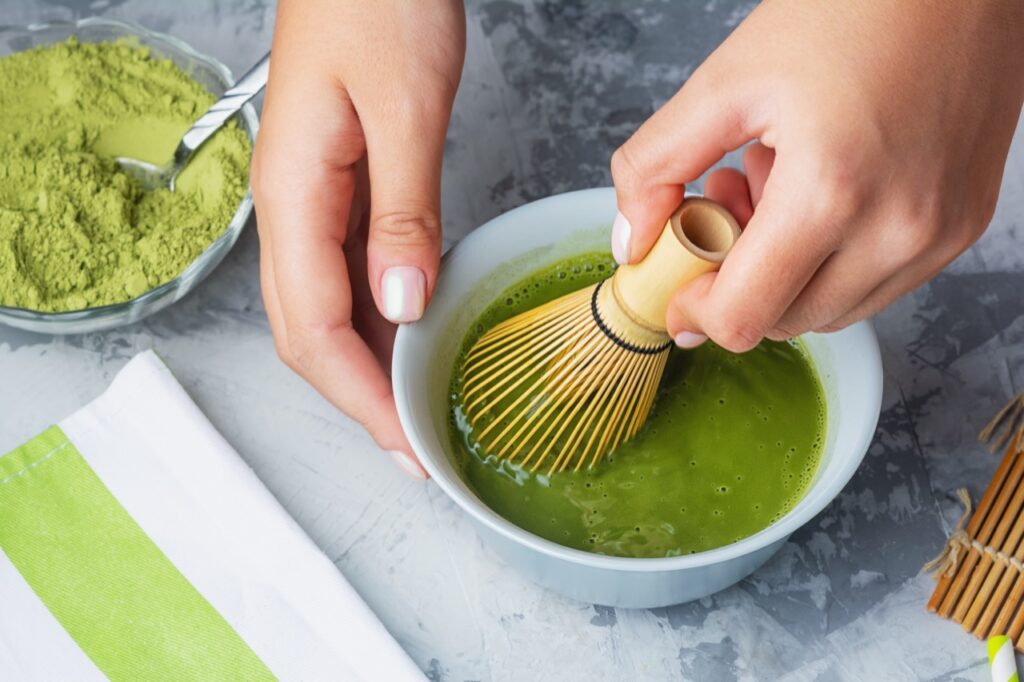
- Whisk: Use a traditional bamboo chasen whisk (or an electric milk frother) to froth the mixture. Stir quickly in “M” or “W” shaped motions until you get a silky, frothy, homogeneous green drink.
- Enjoy: Sip it fresh, as matcha quickly settles at the bottom of the cup. For a stronger flavor, use less water; for a milder one, add more.
Matcha tea vs. green tea – What’s the difference?
Although matcha is also a green tea, the way it’s produced and the fact that you consume the whole leaf powder result in significant differences:
- Nutrient and antioxidant content: Matcha is more concentrated since you drink not only the infusion but the entire powdered leaf.
- Caffeine and L-theanine content: Matcha’s higher L-theanine and caffeine levels provide balanced, long-lasting alertness.
- Flavor profile: Matcha is known for its distinctive “umami,” silky, slightly astringent, grassy taste, whereas traditional green teas can vary by variety and are generally less creamy in texture.
Matcha tea side effects and precautions
Like all caffeinated drinks, matcha tea can cause unpleasant symptoms in people sensitive to caffeine:
• Irregular heartbeat or anxiety: This can occur in caffeine-sensitive individuals, especially with excessive consumption.
• Excess stomach acid: Some may experience heartburn or reflux.
• Sleep disturbances: Drinking late in the afternoon or evening may disrupt sleep patterns.
Matcha contains oxalates, so if you have kidney stone concerns or are sensitive to oxalates, ask a healthcare professional before drinking it regularly. Many people keep it to 1–2 cups daily.
Buying Matcha Tea: Types and What to Look For
Quality is essential when buying matcha tea. You will often find the following labels on packaging:
• Ceremonial Grade: This represents the highest quality, usually used for tea ceremonies. It has a soft, less bitter taste.
• Premium/High-Grade: Also excellent quality but may differ slightly in flavor and texture from ceremonial grade.
• Culinary Grade: Mainly used for flavoring foods, pastries, and smoothies. These have a milder color and taste, sometimes a bit more bitter.
The shade of green is also telling: high-quality matcha is bright, almost neon green, while lower-quality powders often show a duller, yellowish-green hue.
Who should consume matcha tea?
Matcha can be a good option if you want a caffeinated drink with a distinct flavor. It’s also versatile in the kitchen, from cakes and ice cream to a wide range of drinks.
Summary
Matcha tea is a traditional Japanese tea now enjoyed worldwide. Its flavor, color, and caffeine content make it a versatile option for drinks and recipes:
1. Antioxidants: Matcha contains EGCG and chlorophyll, two compounds often associated with its color and composition.
2. Caffeine and L-theanine: Together, these compounds give matcha its distinct character compared with coffee.
3. Part of a balanced routine: Some people include matcha in a weight-management routine, but it isn’t a weight-loss solution on its own.
4. Versatile uses: Can be consumed as a drink or as an ingredient in many recipes.
As with any caffeinated drink, moderation is a good idea, especially if caffeine tends to bother your stomach or heart.
If you’re looking for new flavors, healthy alternatives, or diverse culinary options, matcha tea can be the perfect choice. Just make sure to buy high-quality products and pay attention to preparation. That way, you can fully enjoy matcha’s natural, silky aroma and its wide-ranging benefits , just as Japanese masters have for centuries.