
Collagen Absorption: Which Collagen Is the Most Easily Absorbed?

More than 28 types of collagen have been identified in the human body. This important structural protein helps support the skin, cartilage, bones, and connective tissues. Many people choose collagen supplements, but absorption can vary. The big question is which form may be easiest to use.
This article answers that question. Instead of general beauty tips, we take a closer look at how collagen absorption works.
In this article, we’ll look at how collagen is broken down in the body, compare powders, capsules, and liquid formulas, and review the main factors that affect absorption. We’ll also cover vitamins and nutrients commonly paired with collagen supplements.
Why is collagen important?
Collagen is one of the body’s most important structural proteins. It helps give skin, bones, cartilage, tendons, and ligaments their strength and structure. It makes up about 30% of the body’s total protein, which is why it gets so much attention.
How is collagen absorbed in the body?
Collagen absorption depends on how well the body breaks down the protein after you take it. Whether it comes in powder, capsule, or liquid form, collagen has to be broken down into smaller pieces before it can be absorbed. That process starts in the stomach and continues in the small intestine.
Which collagen format is easiest to take: powder, capsule, or liquid?
One of the most common questions about collagen supplements is whether powder, capsules, or liquid collagen is absorbed better. The answer depends on more than just the form. Peptide size, digestive health, and the nutrients taken with it can all play a role. It’s worth comparing the options to see which one fits your routine best.
Collagen powder
Powdered collagen, often sold as collagen peptides or hydrolyzed collagen, is one of the most popular forms. Its fine texture makes it easy to mix into smoothies, coffee, or tea, and it lets you adjust your serving size. Because it is broken down into smaller peptides, it may be easier for the body to absorb than larger protein forms.
Collagen capsules
Collagen capsules are a convenient option for people who want something easy to take on the go. There’s no need to mix powder, and the serving size is already set. However, you may need more than one capsule a day to reach your preferred amount. Absorption depends more on the collagen itself and digestion than on the capsule form alone.
Collagen drink or liquid collagen
Liquid collagen has become more popular in recent years and is often available in flavored versions. Many formulas also include ingredients like vitamin C, zinc, or hyaluronic acid. The key factor is whether the collagen is already broken down into peptide form.
Which Collagen Format Is Best?
No single form guarantees better absorption just because of how it’s packaged. Collagen absorption depends on factors like peptide size, the nutrients taken with it, digestive health, and individual differences. In general, the best choice is the one that fits your routine: powder mixes well into smoothies, capsules are easy to take on the go, and liquids often include added ingredients.
Collagen Supplements: Pros and Cons
Now that we’ve covered the main types of collagen supplements, let’s quickly compare their pros and cons.
| Collagen Supplement Form | Advantages | Disadvantages |
| Collagen powder | Flexible serving sizes, generally more affordable, and easy to use in many recipes. | Look for good mixability and flavor; some people find daily mixing inconvenient. |
| Collagen capsules | Simple and convenient dosing; no measuring or mixing needed. | Usually requires multiple capsules daily to reach desired dose. |
| Liquid Collagen or Collagen Drink | Convenient to take; often a more complex formula with extra nutrients. | Typically higher priced and may include flavorings, sweeteners, or other additives some shoppers prefer to avoid. |
What supports collagen absorption?
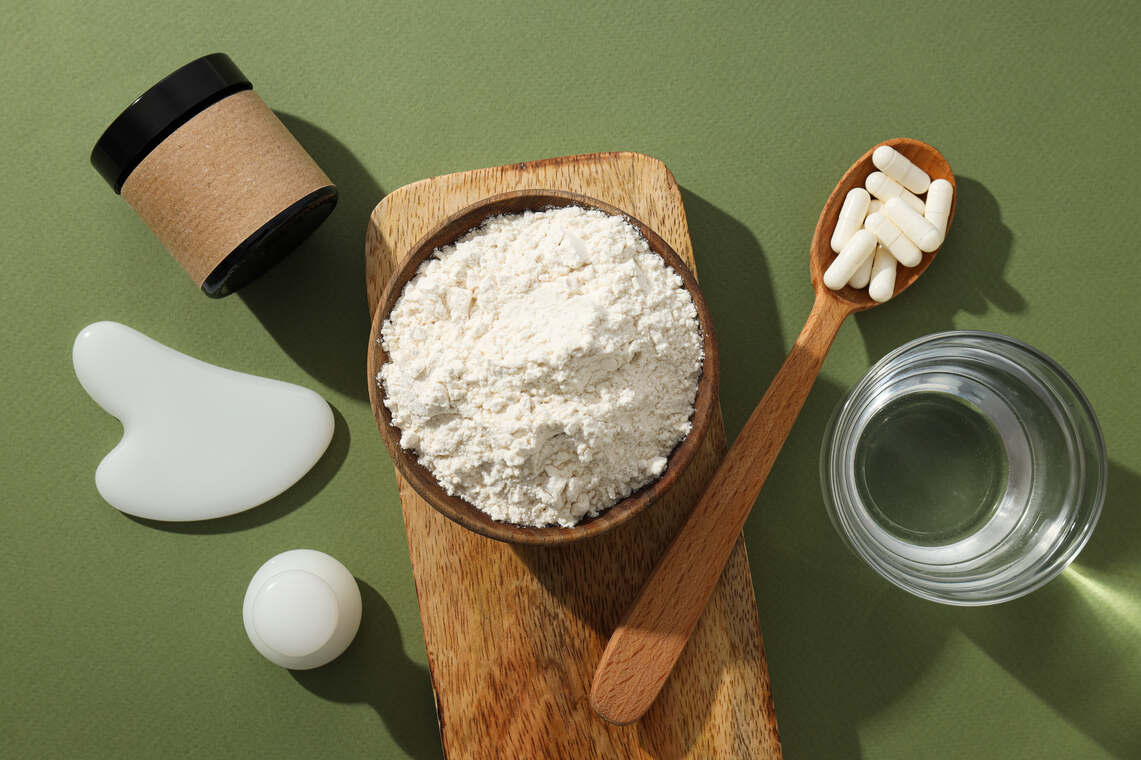
Collagen absorption is about more than just taking the right serving. Dietary, lifestyle, and biological factors can affect how collagen is broken down and used by the body. Let’s look at the main factors that may influence how people choose a collagen supplement.
Vitamin C: the engine of collagen synthesis
Vitamin C plays an important role in collagen production. If your intake is low, your body may not make collagen as efficiently. That’s why it helps to include vitamin C-rich foods like citrus fruits and berries, or use a supplement if needed.
Minerals and amino acids
Collagen is made up largely of glycine, proline, and hydroxyproline, so the body needs enough of these amino acids to build collagen. Zinc and copper also play a role in normal collagen formation and connective tissue structure.
Hydrolyzed collagen: the ideal form for absorption
Hydrolyzed collagen, also called collagen peptides, consists of smaller protein chains with lower molecular weight, allowing higher absorption from the digestive tract. These smaller peptides more easily pass through the intestinal wall, enabling potentially higher bioavailability than larger protein structures.
Digestion and Gut Microbiome
Digestive enzymes such as pepsin and trypsin help break collagen into smaller pieces. Stomach acid and overall digestive health can also affect how collagen is processed. Some people also include probiotics and prebiotics as part of a gut-health routine.
Important lifestyle factors: sleep, stress, smoking
Collagen production is influenced by more than nutrients. Lifestyle factors like stress, smoking, and sleep can all affect skin and connective-tissue health over time. Good sleep supports the body’s normal recovery processes.
Proper hydration: the basis for tissue function
Staying hydrated is an important part of overall wellness. Water supports normal cellular processes and helps keep skin and tissues functioning well.
What You Should Know About Collagen Types
Different collagen types are used in different products, which is why it helps to compare formulas based on your goals and preferences.
Type I collagen: supporter of skin, hair, and nails
Type I collagen is the most abundant collagen in the body and is found in skin, bones, tendons, and ligaments. Many people look for Type I formulas when they want support for healthy-looking skin, hair, and nails.
Type II collagen: building block of joint cartilage
Type II collagen is a major component of cartilage. Supplements that contain Type II collagen are often chosen by people looking for joint-support formulas, sometimes alongside ingredients like chondroitin sulfate, hyaluronic acid, and vitamin C.
Type III Collagen: What to Know
Type III collagen is mainly found around blood vessels, internal organs, and deeper skin layers. This type is often referred to as a helper to Type I collagen because they commonly work together to maintain the elastic yet strong structure of skin and muscles.
Other collagen types: There’s more than just 3
Most collagen supplements contain Type I, II, or III collagen, but other types exist too. Multi-collagen products typically combine several types in one formula, often Types I, II, and III, along with Types V and X.
USA Medical Collagen Products
If you’re shopping for a collagen supplement, it’s worth choosing a product from a source you trust. If you’re looking for options, you’re in the right place.
Easy to use, neutral taste. Our hydrolyzed collagen powders dissolve well in liquids and have a mild, neutral taste. You can stir them into coffee, juice, yogurt, smoothies, or oatmeal.
Purity and gentleness. USA Medical collagen powders contain no artificial additives, flavor enhancers, preservatives, or sweeteners. They’re a simple option for people who prefer a straightforward formula.
✔ Clinically proven collagen sources
When developing our products, we selected collagen sources whose effectiveness is supported by clinical studies.
Extra support with vitamin C and hyaluronic acid: Our products include vitamin C, and some formulas also contain hyaluronic acid. These ingredients are commonly paired with collagen in daily wellness routines.
⇒ Click here and browse our selection of premium quality collagen products!
Dietary supplements are not a substitute for a varied, balanced diet or a healthy lifestyle.