
Can CBD Show Up on a Drug Test?
Brief overview of the article:
- You will learn the basic differences between full-spectrum CBD oil and broad-spectrum CBD oil.
- We cover the main types of drug tests and the compounds they can detect.
- We review current CBD research and the questions shoppers often have about it, along with a few related studies.
- You’ll learn practical steps for understanding CBD use and drug testing.
Have questions about CBD and drug testing? You’re not alone. Many people want to understand how CBD products may affect workplace or other required drug tests. In this article, we cover the main questions and what to keep in mind before use.
Want a clear overview of CBD and drug tests? Let’s get started.
Does CBD oil contain THC?
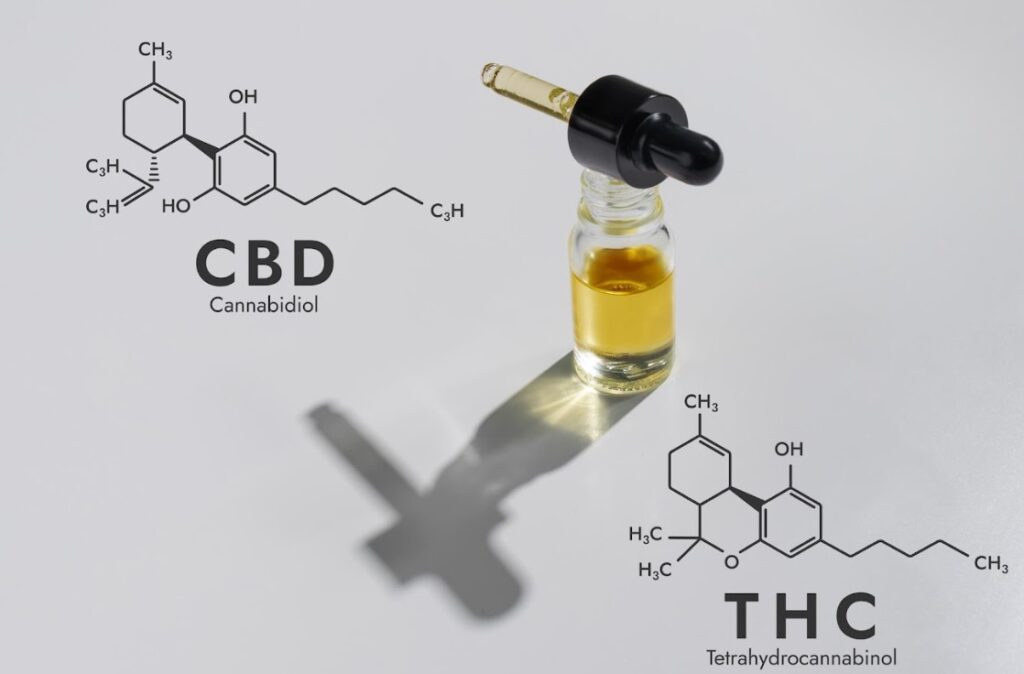
Both CBD and delta-9-tetrahydrocannabinol (THC) are cannabinoids found in the Cannabis sativa plant. THC can produce intoxication, while CBD does not cause a mind-altering effect. Because both compounds come from the same plant species, the question is whether they may be detected in drug tests.
Drug tests are designed to detect THC, not CBD. Because some CBD products can contain trace amounts of THC depending on the source, if you may be tested, choose products carefully and read labels closely.
Full-spectrum CBD oil vs. broad-spectrum CBD oil
Full-spectrum CBD oils contain the natural compounds found in hemp. Along with CBD, they also include terpenes, flavonoids, and other cannabinoids such as THC. Broad-spectrum CBD products also contain hemp-derived compounds like terpenes and other cannabinoids, but THC is removed.
CBD buying guide: what to know first
- Not sure what CBD Oil is? Learn how it works.
- Learn more about CBD Oil and the current research.
Not sure which CBD Oil to choose? We can help you find the right option.
- And if you’re ready to shop, browse our full CBD Oil collection of carefully selected, lab-tested products.
Types of drug tests and how they work
Drug tests work in different ways and detect different substances. Here’s a closer look at the most common types.
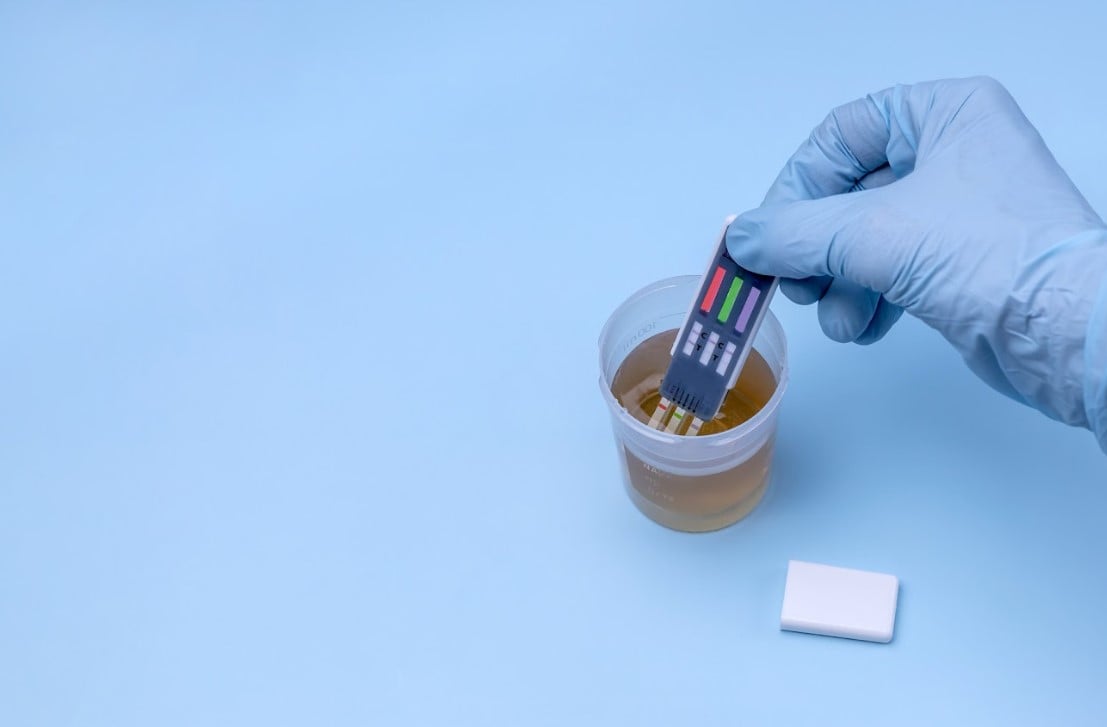
Urine Drug Test: How THC Is Detected in Urine
Urine tests can detect THC with rapid test kits. They are widely used and cost-effective because they can screen for many substances. These tests typically look for metabolites, which are byproducts the body makes as it breaks down drugs.
Blood Drug Tests: Can THC Be Detected in Blood?
Blood tests are much less common than urine tests in drug screening because THC is quickly eliminated from the bloodstream. THC can be detected in blood plasma for up to five hours, but its metabolites can produce positive results for up to seven days. Blood drug tests are more accurate but also more expensive than urine tests. They require invasive sampling but provide precise results and can detect acute intoxication.
Saliva Drug Tests
Saliva tests are becoming more popular, especially in roadside checks. These tests look for traces of drugs in saliva. They are non-invasive, give quick results, and detect drugs from a few hours up to a few days after use.
Hair Drug Tests: What to Know
Hair tests can detect drug use over the longest period. Drugs and their metabolites can remain in hair for months after use. These tests are more expensive and time-consuming than other methods, but they are used to detect long-term use.
Drug Test Basics
|
Type of Test |
Substance tested for |
Detection Window for Drug Tests |
Detection Threshold |
Accuracy |
|
Urine |
THC-COOH |
30 days |
50 ng/mL |
Good |
|
Blood |
THC |
14 days |
1–5 ng/mL |
Excellent |
|
Saliva |
THC |
24–72 hours |
5 ng/ml |
Good |
|
Hair |
THC |
Up to 90 days |
1 pg/mg |
Excellent |
Explore CBD Oil Products
Browse here: CBD OIL ONLINE STORE
CBD Oil: What Research Shows
Based on past and ongoing studies, researchers continue to explore CBD in a range of settings. Below, we briefly review selected areas of research.
CBD, Anxiety, and Sleep: What the Research Says
- A 2011 study looked at CBD in adults during a simulated public speaking task. Participants received either CBD or a placebo before the task.
- A 2015 review looked at CBD in anxiety-related research.
- A 2019 case series followed 72 patients who used CBD over the first month.
CBD and Stress: What to Know
- According to a 2020 scientific review, early-stage clinical trials are still examining CBD in stress-related research settings.
Current research shows promising results, but larger studies are still needed to better understand CBD’s potential effects.
If you are seriously interested, we recommend reading our CBD Oil Effects article for more information about CBD’s effects.
CBD and Drug Tests: How to Choose THC-Free Products
CBD and THC Metabolites
CBD and THC metabolites play a significant role in drug test results. As previously discussed, CBD itself is not psychoactive, but THC is. The body breaks down both compounds, and metabolites appear during this process, these are what drug tests look for.
False Positives and CBD Drug Tests
CBD itself (cannabidiol) is generally not what drug tests are designed to detect. However, products that contain even trace amounts of THC (delta-9-tetrahydrocannabinol) may still trigger a positive result.
What You Should Know About CBD Drug Test Results
It’s important to remember that drug tests are designed to detect THC, not CBD. If you use CBD and drug testing matters to you, choose products carefully and look for clear product details from a reputable brand.
What Broad-Spectrum CBD Oil Means for Drug Tests
Broad-spectrum CBD oil is often chosen by people who want CBD without THC. Let’s review some key qualities to look for when comparing products:
✔ Broad-spectrum, rich in terpenes and phytocannabinoids, but contains no THC.
✔ Made from organic hemp, free of heavy metals and pesticides.
✔ Sourced from American hemp.
✔ THC-free.
Distributed by a U.S.-focused product team, with responsive customer service.
Comes with laboratory test results so you can review product details and cannabinoid content.
✔ Based on customer reviews and experiences.
EU-registered product with a CPNP number.
⇒ Access our high-purity, guaranteed active ingredient, 100% THC-free CBD products here.

What is CBD?
All the important information in one place!
CBD Oil and Drug Tests: What to Know
CBD Oil Use and Workplace Drug Tests
CBD oil and workplace drug tests can raise questions. Here are the basics:
- Most workplace drug tests look for THC, not CBD.
- THC-free CBD oil may reduce the risk of THC-related drug test concerns, but results can still vary.
CBD oil consumption and driving
CBD and driving can raise important questions. Here are some key facts:
- CBD can affect people differently, so use caution before driving.
- Using CBD products that contain THC may lead to positive drug test results during road checks.
CBD and Sports: What to Know
The World Anti-Doping Agency does not currently list cannabidiol (CBD) as a prohibited substance. Even so, athletes should review product labels carefully, since some CBD products may contain THC. Caution is still advisable:
- Check the rules set by your sport’s national and international governing bodies.
- Choose reliable THC-free CBD oil products that are third-party tested.
Some drug tests screen for cannabinoids as a group instead of separating individual compounds. If you’re subject to workplace testing or athletic rules, review product labels carefully and consider whether CBD is appropriate for your situation.
CBD oil reviews and customer experiences , Read what people are saying.
User experiences and reviews can provide valuable information about using CBD oil. Discover the experiences of our CBD oil customers in the CBD Reviews section on our website!
=> Read hundreds of CBD user reviews here.
Summary
The relationship between CBD use and drug tests can be complicated. It helps to understand how different tests work and how CBD products that contain THC may affect results. If drug testing is a concern, choose reputable brands that clearly list cannabinoid content and share independent lab results. Read labels carefully and make an informed decision about use.
The CBD studies and research mentioned in this article are available in their original language via the embedded links in the “Sources” section below.
References and Scientific Sources
- Kuldeep Singh, Bharat Bhushan, Dilip Kumar Chanchal, Satish Kumar Sharma, Ketki Rani, Manoj Kumar Yadav, Prateek Porwal, Shivendra Kumar, Ashwani Sharma, Tarun Virmani, Girish Kumar, Abdullah Al Noman (2023): Emerging Therapeutic Potential of Cannabidiol (CBD) in Neurological Disorders: A Comprehensive Review
- Rabia Khan, Sadiq Naveed, Nadeem Mian, Ania Fida, Muhammad Abdur Raafey & Kapil Kiran Aedma (2020): The therapeutic role of Cannabidiol in mental health: a systematic review
- Shenglong Zou and Ujendra Kumar (2018): Cannabinoid Receptors and the Endocannabinoid System: Signaling and Function in the Central Nervous System
- Esther M. Blessing, Maria M. Steenkamp, Jorge Manzanares and Charles R. Marmar (2015): Cannabidiol as a Potential Treatment for Anxiety Disorders
- Vanessa P. Soares and Alline C. Campos (2017): Evidences for the Anti-panic Actions of Cannabidiol
- Danielle McCartney, Melissa J Benson, Ben Desbrow, Christopher Irwin, Anastasia Suraev, Iain S McGregor (2020): Cannabidiol and Sports Performance: a Narrative Review of Relevant Evidence and Recommendations for Future Research
- Jessica W Skelley, Crystal M Deas, Zachary Curren, Jonathan Ennis (2019): Use of cannabidiol in anxiety and anxiety-related disorders
- Scott Shannon, Nicole Lewis, Heather Lee, and Shannon Hughes (2019): Cannabidiol in Anxiety and Sleep: A Large Case Series
- Kimberly A Babson, James Sottile, Danielle Morabito (2017): Cannabis, Cannabinoids, and Sleep: a Review of the Literature
- Ila M. Linares, Antonio W. Zuardi, Luis C. Pereira, Regina H. Queiroz, Raphael Mechoulam, Francisco S. Guimarães and José A. Crippa (2019): Cannabidiol presents an inverted U-shaped dose-response curve in a simulated public speaking test