
CBD and the Endocannabinoid System
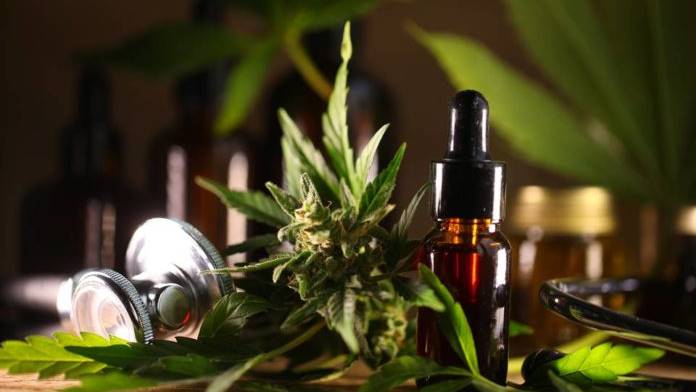
CBD and the Endocannabinoid System: What to Know
- We take a closer look at the endocannabinoid system.
- We explore how CBD interacts with the endocannabinoid system.
- We review what researchers have learned about CBD.
- We cover CBD safety, possible side effects, and the different product types and how they’re used.
Have you ever wondered how the body keeps itself in balance? The endocannabinoid system is one part of that process and helps regulate several normal bodily functions.
CBD has become widely used in recent years. Cannabidiol, better known as CBD, is a natural compound that may interact with this system. Let’s take a closer look.
What is the endocannabinoid system?
The endocannabinoid system (ECS) is a key cell-signaling system found throughout the human body.
The Role and Functions of the Endocannabinoid System
The ECS helps maintain the body’s internal balance, or homeostasis, and supports several normal physiological processes as conditions change.
The ECS is involved in several body functions, including:
- Sensory processing
- Mood and stress response
- Sleep and wakefulness
- Appetite and metabolism
- Immune function
- Inflammatory processes
- Well-being and mood
- Cognitive function
The historical background of cannabinoids
Scientists discovered the endocannabinoid system in the early 1990s, which expanded our understanding of human biology. In cannabis research, they identified key molecules such as anandamide in 1992 and 2-arachidonoylglycerol (2-AG) soon after.
What endogenous means
Endocannabinoids are compounds your body makes naturally. The term “endogenous” means “produced inside the body.” Their levels can vary, so there isn’t one ideal concentration for everyone.
Endocannabinoids in the Human Body
Anandamide and 2-AG are endocannabinoids made by the body. They circulate throughout the body and bind to receptors on cell membranes, helping support this important signaling system.
Endocannabinoids can bind to either of these receptors. Their effects depend on where in the body the receptors are located.
If the body is under stress from things like injury or heat, the ECS helps keep it in balance. Researchers generally describe homeostasis as the body’s internal state of balance.

Explore CBD Oil Products
Skin Receptors and the Endocannabinoid System
These receptors are found throughout the body. Endocannabinoids bind to them and signal that the ECS needs to respond.
There are two main endocannabinoid receptors:
- CB1 receptors , mostly found in the central nervous system.
- CB2 receptors – Found in the peripheral nervous system, especially on immune cells.
Endocannabinoids can bind to either receptor, and the effect depends on where in the body the receptor is located.
Enzymes
Enzymes break down endocannabinoids after they’ve done their job. Two main enzymes are involved:
- Fatty acid amide hydrolase (FAAH), an enzyme that breaks down anandamide.
- Monoacylglycerol lipase (MAGL), an enzyme that breaks down 2-AG.
We’ve seen how the ECS and the body’s endocannabinoids play important roles in normal bodily processes. Now let’s look at how this system interacts with cannabinoids like CBD and THC.
THC and Its Interaction with the Endocannabinoid System
Tetrahydrocannabinol (THC) is one of the main cannabinoids found in cannabis and is known for its psychoactive effects. In the body, THC interacts with the endocannabinoid system and can influence several physiological processes.
What CBD Is and How It Relates to the Endocannabinoid System
Another major cannabinoid in cannabis is cannabidiol (CBD). Unlike THC, CBD is not known for mind-altering effects.
Like THC, CBD may interact indirectly with receptors in the endocannabinoid system (ECS).
The relationship between CBD and anandamide
Anandamide is a key endocannabinoid in the human body. CBD has been studied for how it may interact with anandamide, but more research is needed.
|
Effects of anandamide |
CBD’s effect on anandamide |
|
Mood support |
How CBD may influence anandamide levels |
|
Comfort support |
How long the effects may last |
|
Appetite changes |
How CBD may break down more slowly |
How CBD May Interact with Endocannabinoid Receptors
Unlike THC, CBD does not bind directly to CB1 and CB2 receptors. Instead, it may influence them indirectly in the following ways:
- It may change receptor shape, which can affect how other cannabinoids bind.
- It affects receptor signaling.
- It can influence endocannabinoid activity without directly binding to receptors.
How CBD works
CBD’s effects may go beyond the endocannabinoid system because it also:
- Researchers are still studying whether CBD interacts with serotonin receptors.
- CBD interacts with vanilloid receptors, and researchers are still studying what that means.
- Some research has explored CBD’s antioxidant activity and inflammation-related processes.

What is CBD?
All essential information in one place!
What Research Says About CBD
Now that we understand the connection between CBD and the endocannabinoid system, let’s look at what research says about CBD.
CBD and sleep
Research on CBD and sleep is still developing. Some studies have explored whether CBD may affect sleep quality, but the findings are mixed and more research is needed.
CBD Research: An Overview
A 2022 review discussed CBD in early-stage research, but the evidence is still preliminary and not a basis for product claims. More human research is needed.
CBD and the nervous system
Researchers are still studying CBD’s effects on brain function, but the evidence is limited and not conclusive.
CBD Research on Mood-Related Topics
Some studies have explored CBD’s possible effects on mood, but the research is still early and the results are not conclusive.
CBD Research on Inflammation and Related Topics
CBD has been studied for its possible role in the body’s inflammatory response, but more research is needed, especially in humans.
The benefits listed here are promising, but more research is needed to understand CBD’s safety and how it works.
Customer experiences and reviews of CBD oil – Stories from those who already use it!
Read customer reviews to see what other shoppers say about our CBD oil.
=> Click here to read hundreds of CBD user reviews.
CBD safety and side effects
Possible CBD side effects
Some people may experience mild side effects from CBD, including:
- Dry mouth
- Tiredness
- Changes in appetite
- Diarrhea
- Weight changes
CBD and drug interactions
CBD can interact with certain medications. Talk with a doctor before use. Key points:
- CBD can affect the CYP450 enzyme system, which may change how the body processes some medications.
- Use extra caution if you take blood thinners, anti-epileptic medications, or immunosuppressants.
CBD dosing
When choosing a CBD product, consider these factors:
- Start with a low dose and increase gradually while paying attention to how your body responds.
- CBD is not recommended during pregnancy or while breastfeeding.
- Talk to a healthcare professional before use if you have a chronic condition or take regular medications.
=> Click this link for more useful information about CBD dosing.
Looking for CBD oil products?
Browse here: CBD OIL ONLINE STORE
Types of CBD products and methods of use
Now that we’ve covered CBD safety, let’s look at the different ways people use it.
CBD oils and tinctures
CBD oils and tinctures are among the most common CBD products. When used under the tongue, they can make it easier to adjust serving size.
Benefits:
- Easy to dose
- Longer-lasting effects
⇒ Access our high-purity, guaranteed active ingredient, 100% THC-free CBD products here.
Topical CBD products: CBD cream and CBD balm
Topical CBD products are applied directly to the skin and are designed for targeted use.
|
Product type |
Use cases |
Benefits |
|
CBD Creams |
Skin care and muscle comfort |
Some research has explored inflammation-related pathways and their effects. |
|
CBD balms |
Joint support |
Common uses |
CBD products come in many forms, so you can choose the format that works best for you.
Summary
CBD interacts with the endocannabinoid system, and researchers continue to study its effects on normal body processes.
CBD can cause side effects and may interact with other medications. Because product types and dosing formats vary, talk with a healthcare professional before using CBD, especially if you take prescription medicine or have a health condition.
You can find the studies cited in the Sources section through the linked references, which are in their original language.
References and Scientific Sources
- Shenglong Zou and Ujendra Kumar (2018): Cannabinoid Receptors and the Endocannabinoid System: Signaling and Function in the Central Nervous System
- Jacob N. Kisiolek, Victoria A. Flores, Arjun Ramani, Blake Butler, James M. Haughian, Laura K. Stewart (2023): Study on daily cannabidiol supplementation, sleep quality, and immune cell activity
- Kimberly A Babson, James Sottile, Danielle Morabito (2017): Cannabis, Cannabinoids, and Sleep: a Review of the Literature
- Heider et al. (2022), Read reviews article
- Kuldeep Singh, Bharat Bhushan, Dilip Kumar Chanchal, Satish Kumar Sharma, Ketki Rani, Manoj Kumar Yadav, Prateek Porwal, Shivendra Kumar, Ashwani Sharma, Tarun Virmani, Girish Kumar, Abdullah Al Noman (2023): Emerging Therapeutic Potential of Cannabidiol (CBD) in Neurological Disorders: A Comprehensive Review
- Esther M. Blessing, Maria M. Steenkamp, Jorge Manzanares and Charles R. Marmar (2015): Cannabidiol as a Potential Treatment for Anxiety Disorders
- Vanessa P. Soares and Alline C. Campos (2017): Evidences for the Anti-panic Actions of Cannabidiol
- D.C. Hammell, L.P. Zhang, F. Ma, S.M. Abshire, S.L. McIlwrath, A.L. Stinchcomb, K.N. Westlund (2016): Transdermal cannabidiol reduces inflammation and pain-related behaviours in a rat model of arthritis
CBD buying guide: what to know first
- Still have questions about CBD oil? Learn how CBD works.
-
Learn more about how CBD oil works.
- Not sure which product is right for you? We’ll help you compare options and choose the CBD oil that best matches what you’re looking for.
-
And if you’re ready to try it, here is our complete CBD oil range, carefully selected and lab-tested products.