
Oral collagen and skin aging
This review evaluates randomized trials of hydrolyzed collagen for skin hydration and elasticity and notes differences across products and studies.
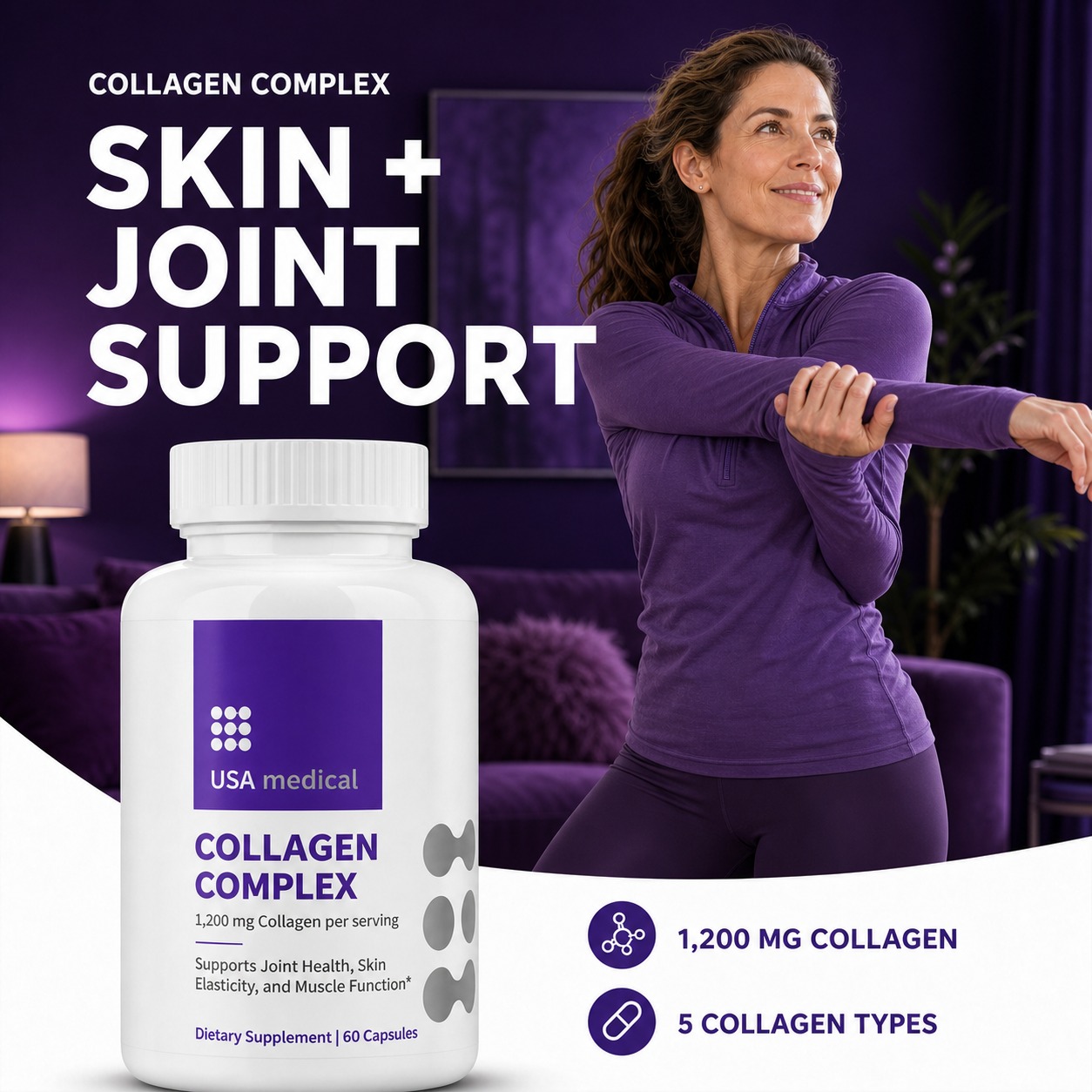
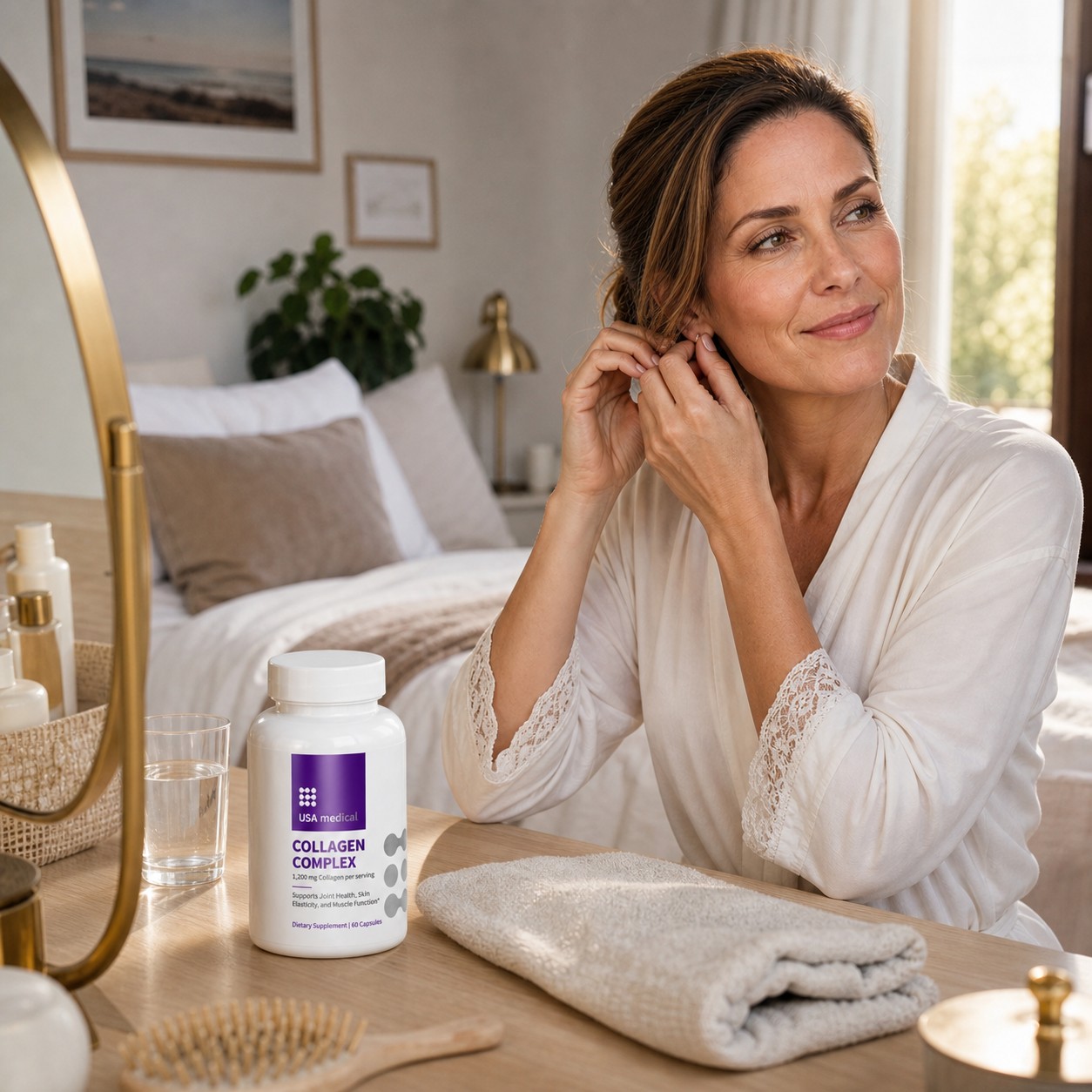

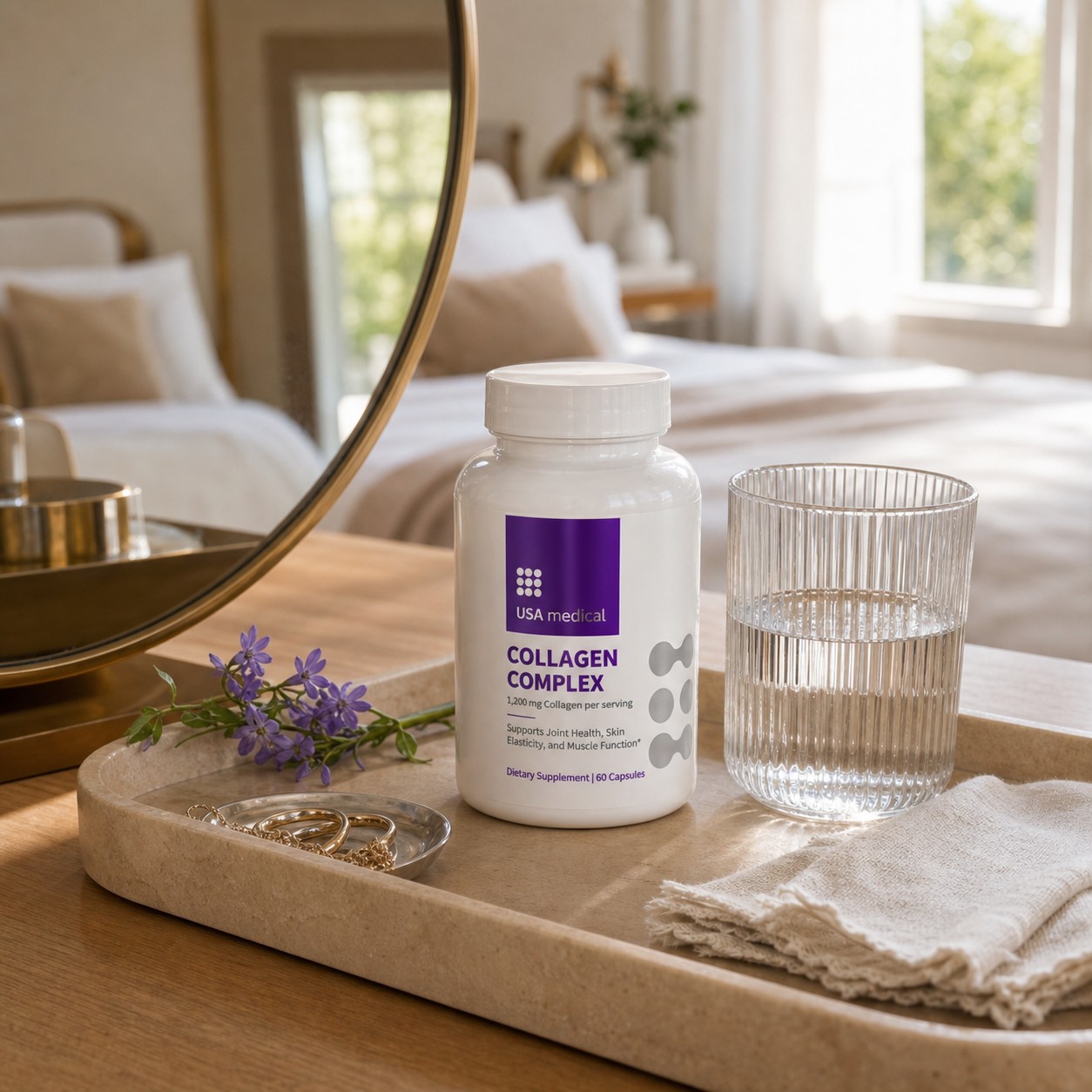
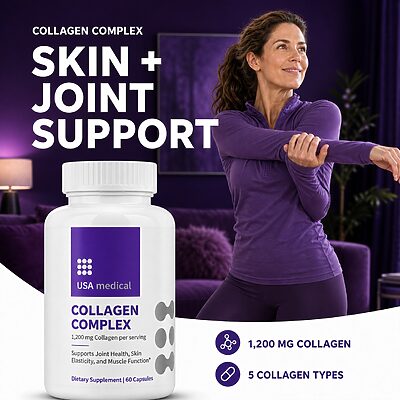
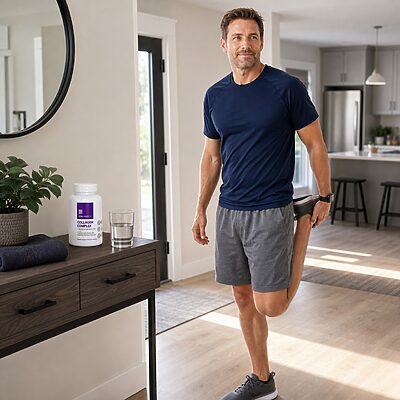
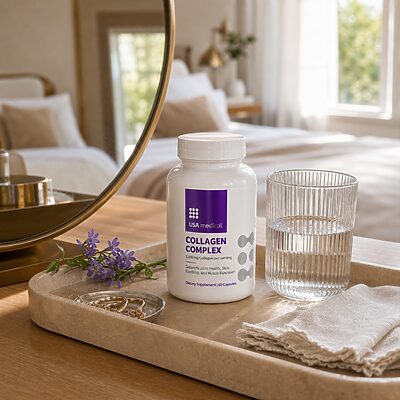
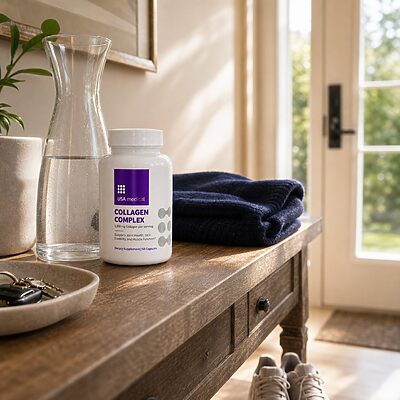
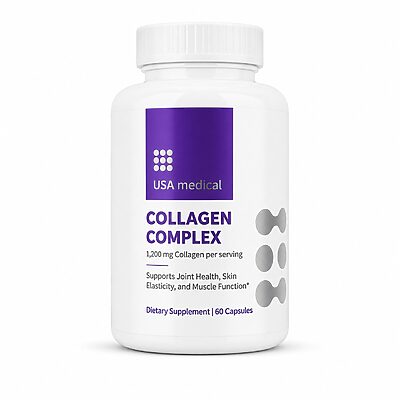
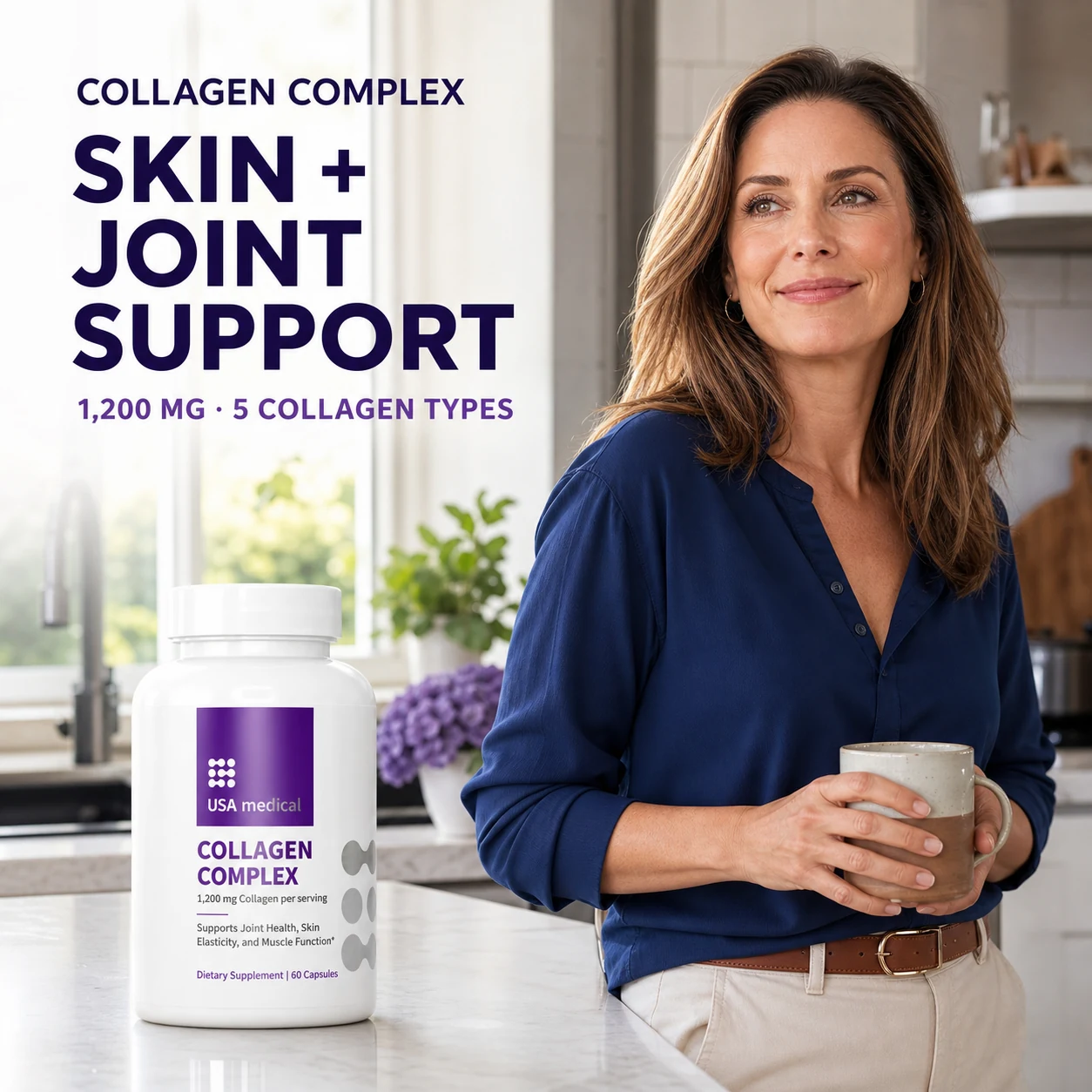
Skin + joint support, made simple. Each two-capsule serving provides 1,200 mg of a multi-source collagen complex spanning types I, II, III, V, and X.
Adults take 2 capsules once daily, following the current label.
Product details
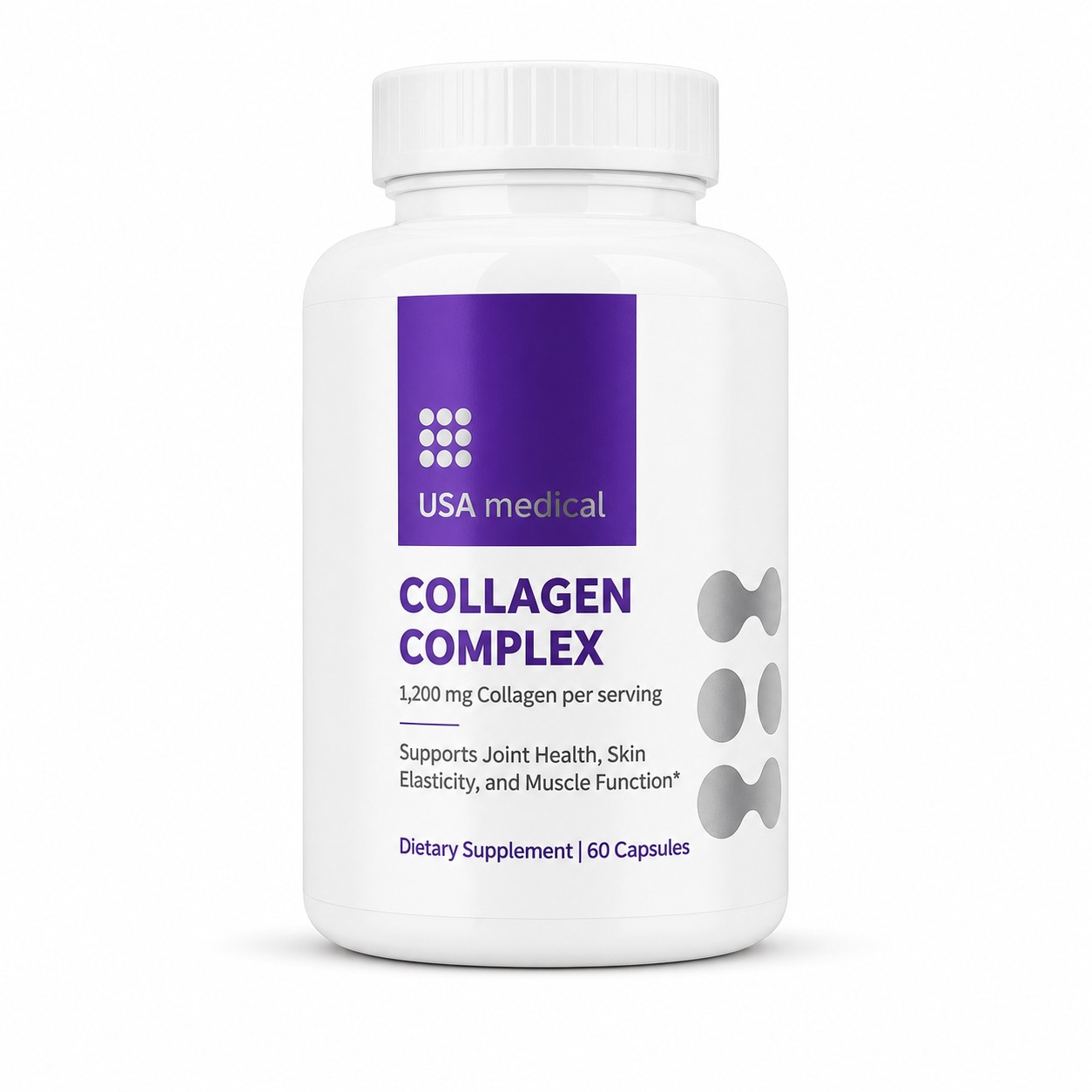
Two capsules provide 1,200 mg of collagen peptides from five named source materials and span collagen types I, II, III, V, and X. The purpose is clear at a glance: everyday support for skin elasticity, joints, and connective-tissue structure.
Hydrolyzed collagen has been studied for skin hydration and elasticity, but products, doses, durations, and study quality vary.[1]
Collagen preparations have also been studied for selected joint outcomes. Evidence is preparation-specific and does not make this a pain treatment.[2][3]
The blend names types I, II, III, V, and X rather than reducing the formula to one generic collagen claim.
Bovine, chicken, marine, eggshell-membrane, and avian-sternum collagen peptides are all disclosed.
Two capsules once daily offer an alternative for people who do not want to mix a collagen powder.
The 1,200 mg total is the amount in the full two-capsule serving, not a hidden proprietary serving estimate.
Systematic reviews report favorable findings for some skin and joint outcomes, while also describing differences in collagen source, hydrolysis, daily amount, duration, population, and study quality.[1][2][3]
The quantity distinction is important. This formula provides 1.2 g per day. Many published trials use several grams daily of a named peptide preparation; for example, one 2024 joint study used 5 g daily of a specific collagen peptide product.[4]
Our honest read: collagen can be a sensible connective-tissue routine, but the evidence does not make every source, collagen type, 1.2 g capsule serving, and higher-dose powder interchangeable. This product supports skin and joint wellness; it does not promise the result of a different research product.
Hydrolysis breaks collagen proteins into smaller peptides. It does not make every collagen peptide product clinically equivalent.
This review evaluates randomized trials of hydrolyzed collagen for skin hydration and elasticity and notes differences across products and studies.
This meta-analysis pools randomized studies in knee osteoarthritis populations using varied collagen preparations; it is not a trial of this product.
This review covers collagen-peptide studies across activity and musculoskeletal outcomes, with varied daily amounts and protocols.
This study used 5 g daily of a specific collagen peptide preparation, illustrating why its dose and result should not be transferred to a 1.2 g multi-source serving.
It is designed for everyday skin-elasticity, joint, and connective-tissue support. Human research is preparation- and dose-specific and does not guarantee a visible or clinical result.[1][2]
The complete two-capsule serving provides 1,200 mg of the premium collagen protein complex.
The label identifies collagen types I, II, III, V, and X across five source materials.
The blend contains bovine collagen peptides, hydrolyzed chicken collagen peptides, hydrolyzed marine collagen peptides, eggshell-membrane collagen peptides, and avian-sternum collagen peptides.
Adults take 2 capsules once daily, following the current label. One bottle contains 60 capsules and 30 servings.
No. The collagen comes from bovine, chicken, marine, eggshell-membrane, and avian sources, and the capsule shell is gelatin.
Yes. The label declares egg and fish (cod). The facility also processes fish, crustacean shellfish, peanuts, and tree nuts.
The 2024 report records heavy-metals results for the sample tested. It does not establish the identity, amounts, complete formula, or lot of the current 2026 bottle.
Every formula fact below comes from the current Collagen Complex printer proof and is shown per two-capsule serving.
A useful report should help you match the document to your bottle and see what was tested. FDA quality guidance centers on identity, purity, strength, composition, and limits on contaminants. Read the FDA quality guidance
The report identifier should match the lot or batch printed on your bottle.
Look for the named product or material and the test or examination method used.
When potency is tested, compare the actual result with the specification or labeled amount.
Look for contaminant or microbial limits, actual results, and a clear pass or specification.
The available 2024 report records heavy-metals results for the USA Medical Collagen Complex sample tested. It does not establish the identity, amounts, complete formula, or lot of the current 2026 bottle. Match future lot-specific documentation to the lot or batch printed on your package.
Certificates are lot-specific. A report for one lot does not automatically describe a later production run, and a certificate evaluates product specifications – not clinical effectiveness.
Start with the product label, then compare it with public guidance. Label directions, nutrient targets, and research doses answer different questions.
The current label says adults take 2 capsules once daily.
Per capsule: 600 mg of the five-source collagen protein complex
Human collagen studies use different hydrolysates, source materials, daily gram amounts, durations, and populations. Systematic reviews do not establish one interchangeable serving for every collagen product.
This serving supplies 1.2 g of a five-source complex. Many trials study several grams per day of a specific collagen peptide preparation, so results and amounts cannot be transferred one-for-one to this finished formula.
Use the complete label serving once daily.
The current label does not require a particular meal or time of day.
Do not substitute the gram amount from a different collagen powder or trial.
Use the label as the default. Research on another source, hydrolysate, daily gram amount, or population does not create a different serving for this product.
This multi-source animal collagen formula contains declared allergens and is not appropriate for everyone.
| 5 star | 100% | |
| 4 star | 0% | |
| 3 star | 0% | |
| 2 star | 0% | |
| 1 star | 0% |

 Verified customer
I have noticed a big difference in my overall health. The only problem is the capsules are a little big kind of hard to get them down sometimes. But I would highly recommend this product.
 Verified customer
Top quality product with great customer service
 Verified customer
I’ve only been taking the Collagen Complex for a few weeks but I can see a difference in my joints. Thank you USA Medical
Product updates, wellness education, and customer experiences.
Dietary supplements and cosmetic products are not a substitute for a varied, balanced diet or a healthy lifestyle. Do not exceed the recommended daily serving. If you are pregnant, nursing, have a medical condition, or take prescription medication, ask a healthcare professional before use. Our products are not intended to diagnose, treat, cure, or prevent any disease. By using this website, you agree to our Privacy Policy and Terms and Conditions. In the USA medical® brand name, the word “medical” does not mean that we provide medical care or healthcare services.