
Omega-3 fatty acids
NIH explains EPA, DHA, food sources, supplement forms, biological roles, evidence limits, and medication considerations.

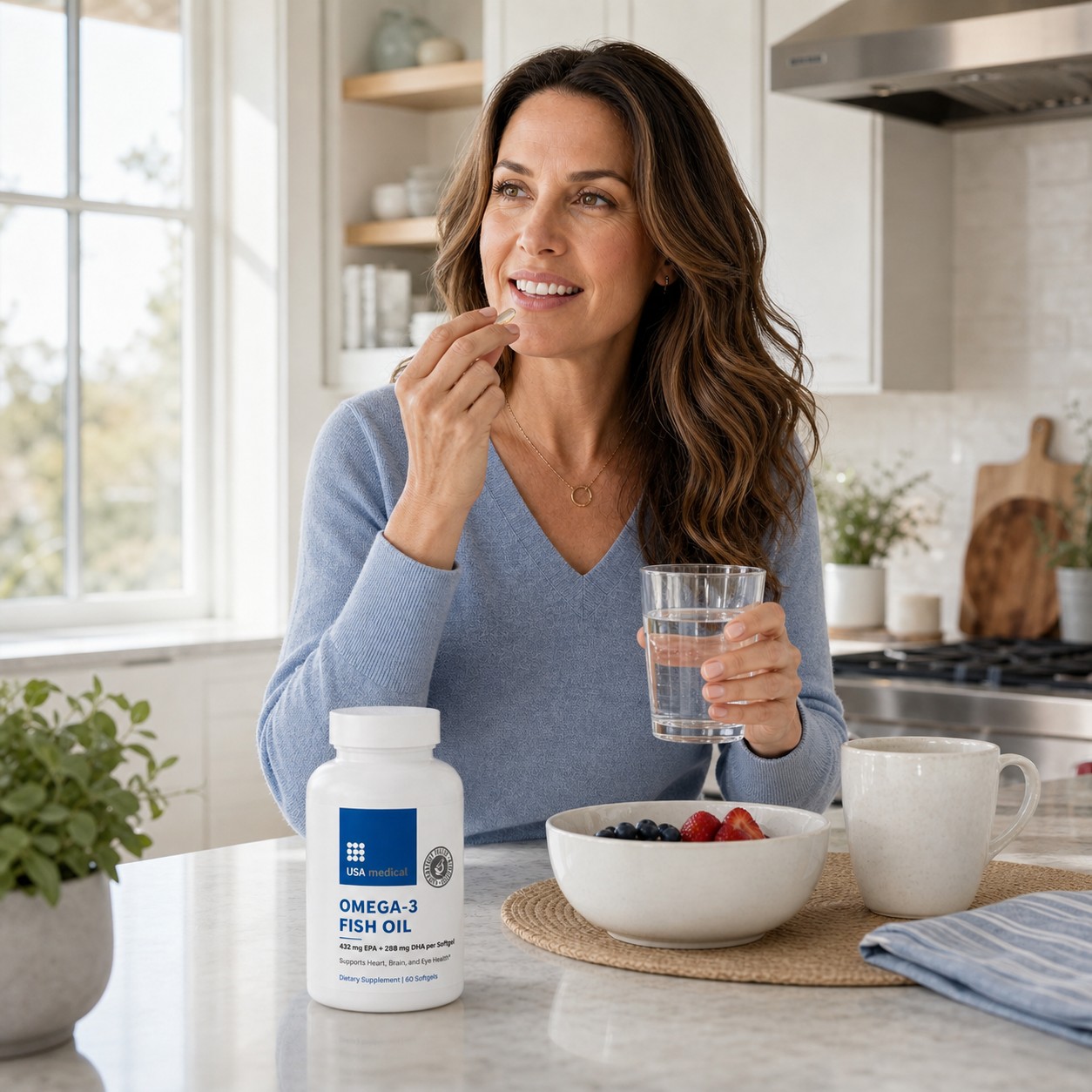

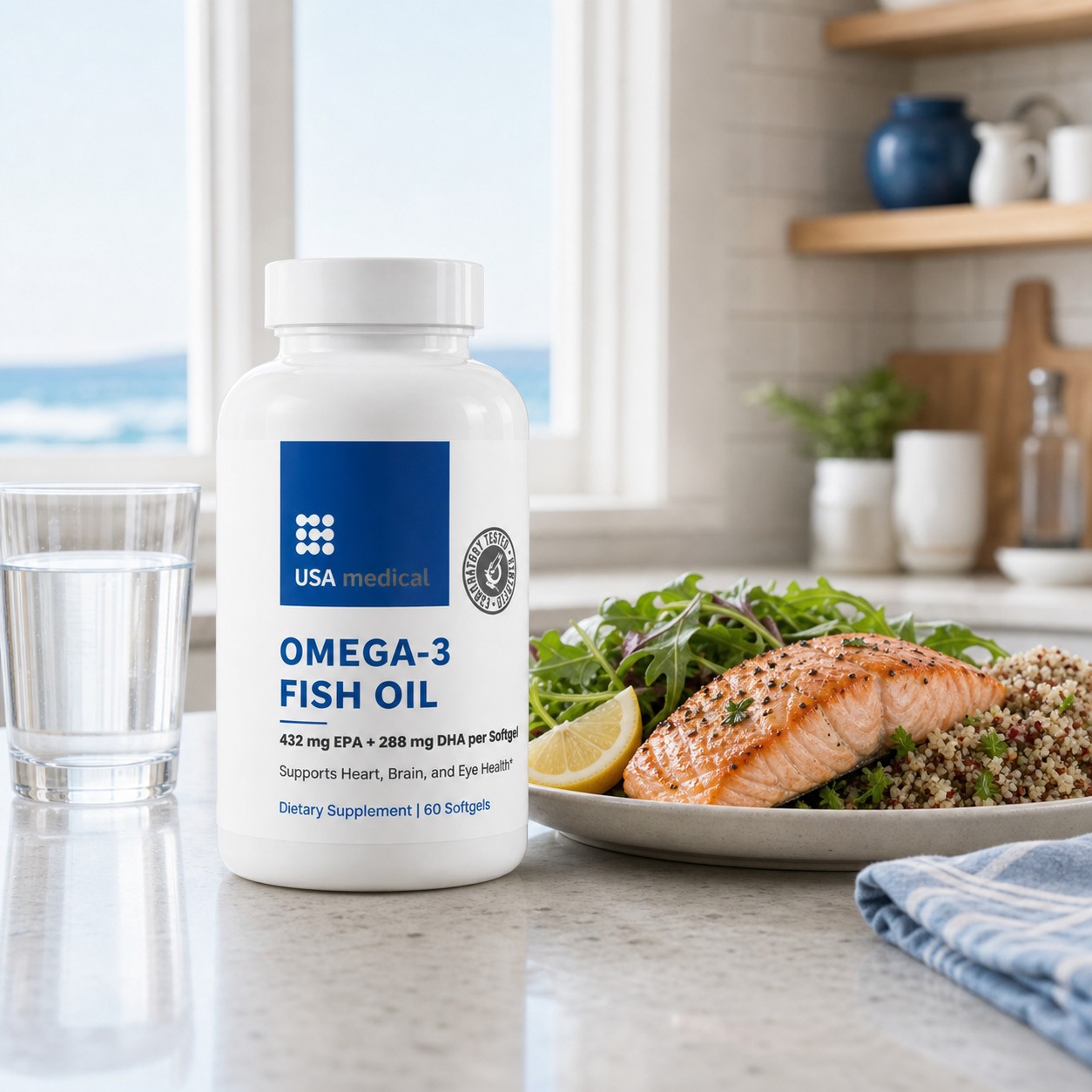
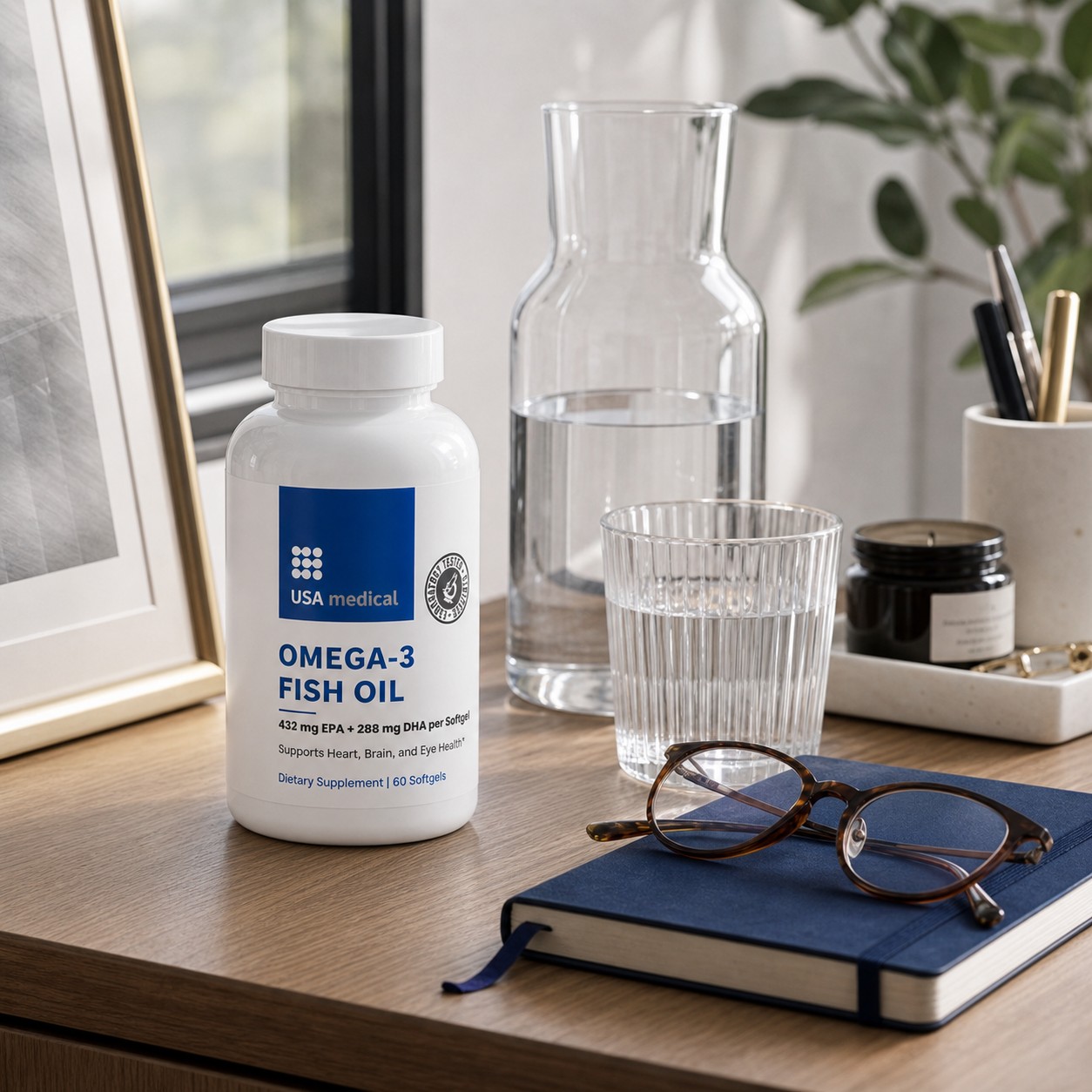
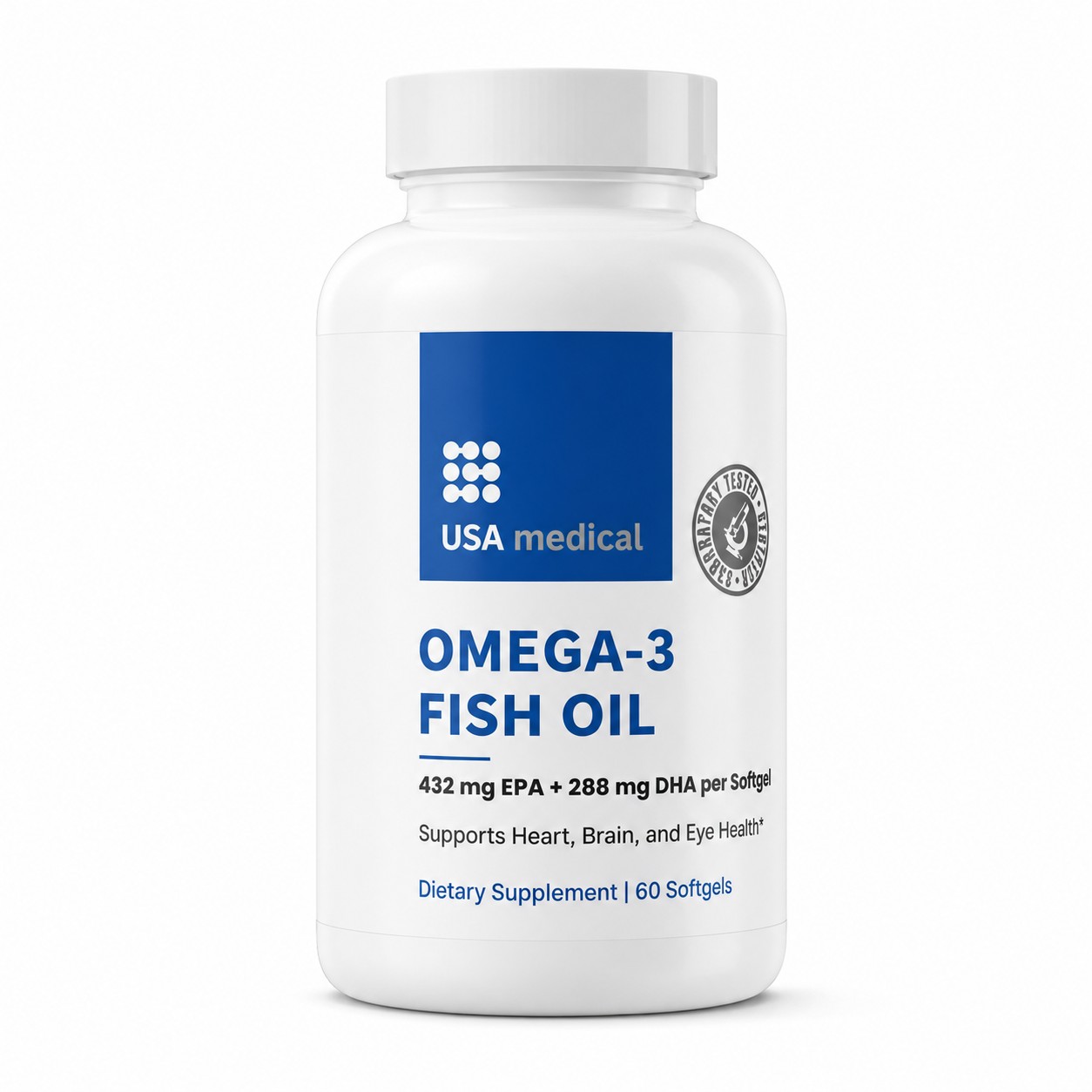



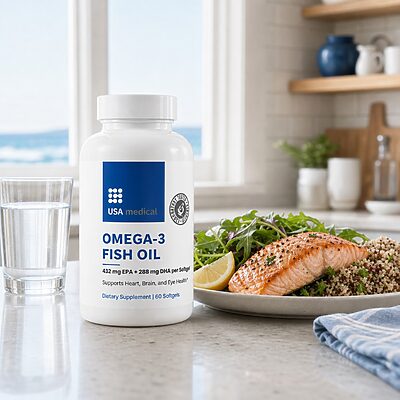
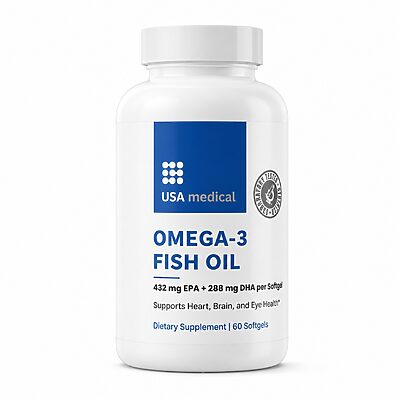
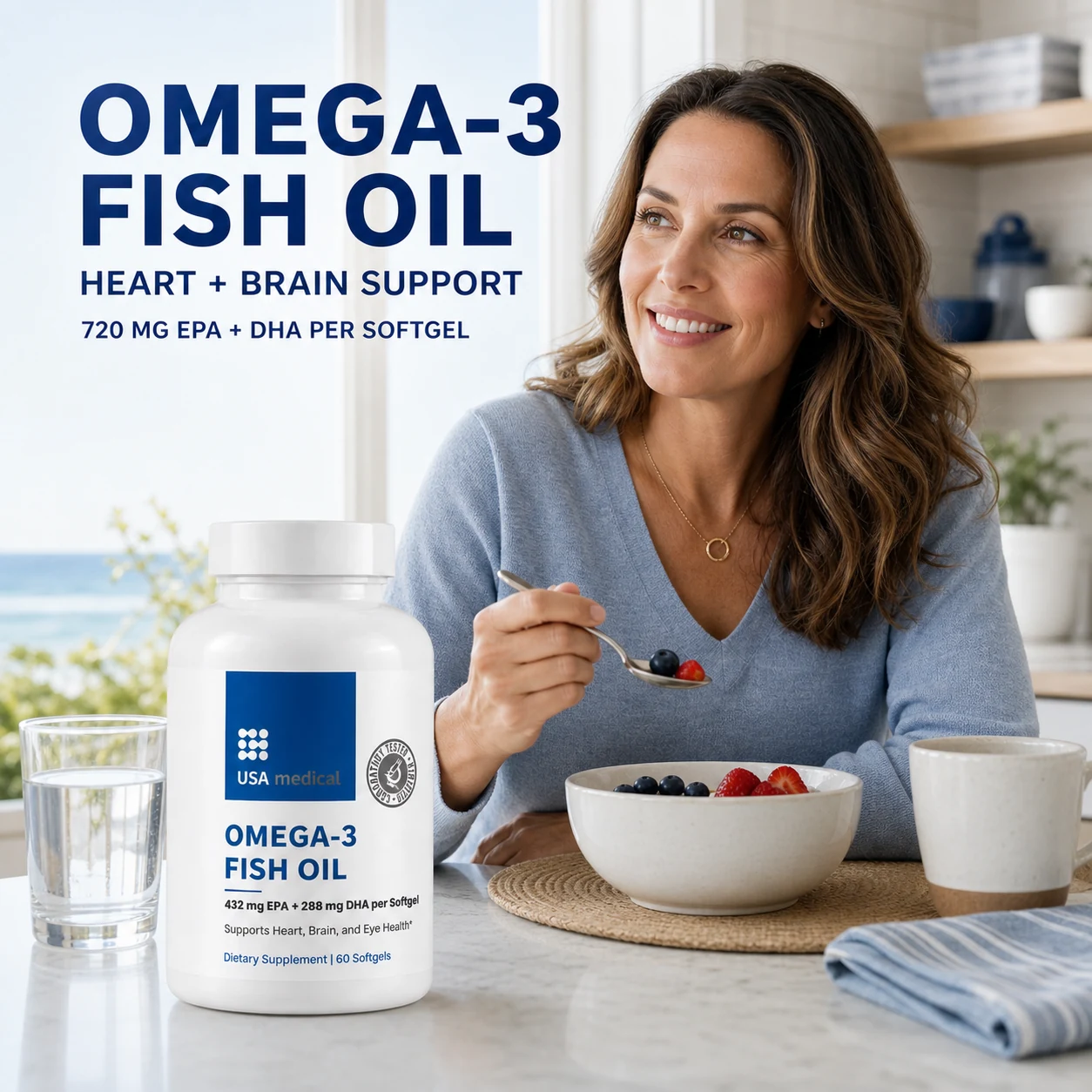
Heart + brain support, made simple. Each softgel provides 720 mg combined EPA + DHA from fish oil, with every key omega-3 amount shown plainly.
Take 1 softgel 2 to 3 times daily with meals, following the current label.
Product details
$30.00
In stock
One softgel provides 720 mg of the omega-3s people actually compare: 432 mg EPA plus 288 mg DHA. The purpose is clear at a glance, an easy meal-time routine for everyday heart, brain, and eye support.
EPA and DHA are long-chain omega-3s widely studied in cardiovascular nutrition, with results that depend on dose, population, and outcome.[1][2]
DHA is an important structural fat in the brain. Human cognitive research is mixed and does not make this product a guaranteed memory change.[1][3]
DHA is also concentrated in the retina, which is why eye wellness is a straightforward part of the label-led story.[1]
The label separates total fish oil from combined EPA + DHA, so the meaningful omega-3 amount never has to be guessed.
The current label directs one softgel 2 to 3 times daily with meals, making it easy to attach to an existing routine.
Natural lemon flavor is included among the other ingredients for a more considered fish-oil experience.
EPA and DHA have been studied across cardiovascular, brain, and eye outcomes, but studies use different products, daily amounts, ratios, durations, and populations.[1][2][3]
The FDA describes evidence behind certain EPA/DHA cardiovascular qualified claims as inconsistent and inconclusive.[4] This softgel contains 720 mg EPA + DHA; it should not be represented as satisfying a claim threshold or reproducing a trial simply because the ingredients have been studied.
Our honest read: this is a transparent, higher-potency fish-oil routine with the EPA and DHA amounts buyers need to compare. It supports everyday nutrition; it is not a treatment or a guaranteed clinical result.
That number is total fish oil. The more informative comparison is the 720 mg combined EPA + DHA inside it.
NIH explains EPA, DHA, food sources, supplement forms, biological roles, evidence limits, and medication considerations.
This large review found little or no effect on several major cardiovascular outcomes from increasing long-chain omega-3 intake, while some secondary outcomes differed.
This review found varied cognitive results across populations and study designs, reinforcing why a guaranteed memory benefit is not appropriate.
The FDA describes the evidence behind its qualified EPA/DHA blood-pressure claim as inconsistent and inconclusive and specifies conditions this serving does not satisfy.
It is designed for everyday heart, brain, and eye support, with 720 mg combined EPA + DHA per softgel. Research outcomes vary and are not guaranteed.[1][2][3]
Each softgel provides 432 mg EPA plus 288 mg DHA, for 720 mg combined EPA + DHA.
No. One softgel contains 1,200 mg total fish oil. The combined EPA + DHA amount inside that oil is 720 mg.
The current label says adults take 1 softgel 2 to 3 times daily with meals.
The allergen statement identifies fish (anchovy). Natural lemon flavor is included among the other ingredients.
Other ingredients are gelatin, glycerol, water, and natural lemon flavor. The label says the softgel may contain porcine.
Ask before use if you take anticoagulant or antiplatelet medication, have a bleeding condition, plan a procedure, are pregnant or nursing, or manage a medical condition.[1]
The public 2024 Eurofins report records microbiology and heavy-metals results for the sample tested. It does not establish the potency, formula, or lot of the current 2026 bottle.
Every amount below comes from the current Omega-3 Fish Oil printer proof and is shown per one-softgel serving.
A useful report should help you match the document to your bottle and see what was tested. FDA quality guidance centers on identity, purity, strength, composition, and limits on contaminants. Read the FDA quality guidance
The report identifier should match the lot or batch printed on your bottle.
Look for the named product or material and the test or examination method used.
When potency is tested, compare the actual result with the specification or labeled amount.
Look for contaminant or microbial limits, actual results, and a clear pass or specification.
The available Eurofins report records microbiology and heavy-metals results for a USA Medical Omega 3 sample tested in 2024. It does not establish the potency, formula, or lot of the current 2026 bottle. Match future lot-specific documentation to the lot or batch printed on your package.
Certificates are lot-specific. A report for one lot does not automatically describe a later production run, and a certificate evaluates product specifications – not clinical effectiveness.
Start with the product label, then compare it with public guidance. Label directions, nutrient targets, and research doses answer different questions.
The current label says adults take 1 softgel 2 to 3 times daily with meals.
Per capsule: 1,200 mg fish oil, including 432 mg EPA + 288 mg DHA
NIH explains that omega-3 needs and study doses vary by purpose, population, and product. EPA and DHA are the numbers to compare across fish-oil supplements; total fish-oil weight is not the same as EPA plus DHA.
One softgel contains 1,200 mg fish oil and 720 mg combined EPA plus DHA. Research and qualified claims may use different EPA/DHA totals, ratios, products, and daily servings, so they do not create a new serving direction.
Use one softgel for each label-directed serving.
The current label directs 2 to 3 servings across the day with meals.
Count 720 mg EPA plus DHA per softgel when reviewing the rest of your routine.
Use the label as the default. Public research explains omega-3s generally; it does not establish a different serving for this finished fish-oil product.
This fish-derived product is not appropriate for everyone, and medication context can matter.

 Verified customer
Love the quality, the texture is easy.
 Verified customer
Best Omega 3 I have used with excellent customer service
 Verified customer
I'm just trying this product but there's no doubt it will be good
UPS delivery was terrible
Product updates, wellness education, and customer experiences.
Dietary supplements and cosmetic products are not a substitute for a varied, balanced diet or a healthy lifestyle. Do not exceed the recommended daily serving. If you are pregnant, nursing, have a medical condition, or take prescription medication, ask a healthcare professional before use. Our products are not intended to diagnose, treat, cure, or prevent any disease. By using this website, you agree to our Privacy Policy and Terms and Conditions. In the USA medical® brand name, the word “medical” does not mean that we provide medical care or healthcare services.
★★★★★ 5.0 5 reviews
I'm just trying this product but there's no doubt it will be good UPS delivery was terrible
Love the quality, the texture is easy.
Best Omega 3 I have used with excellent customer service