
Reishi Mushroom: Uses, Potential Effects, and Side Effects
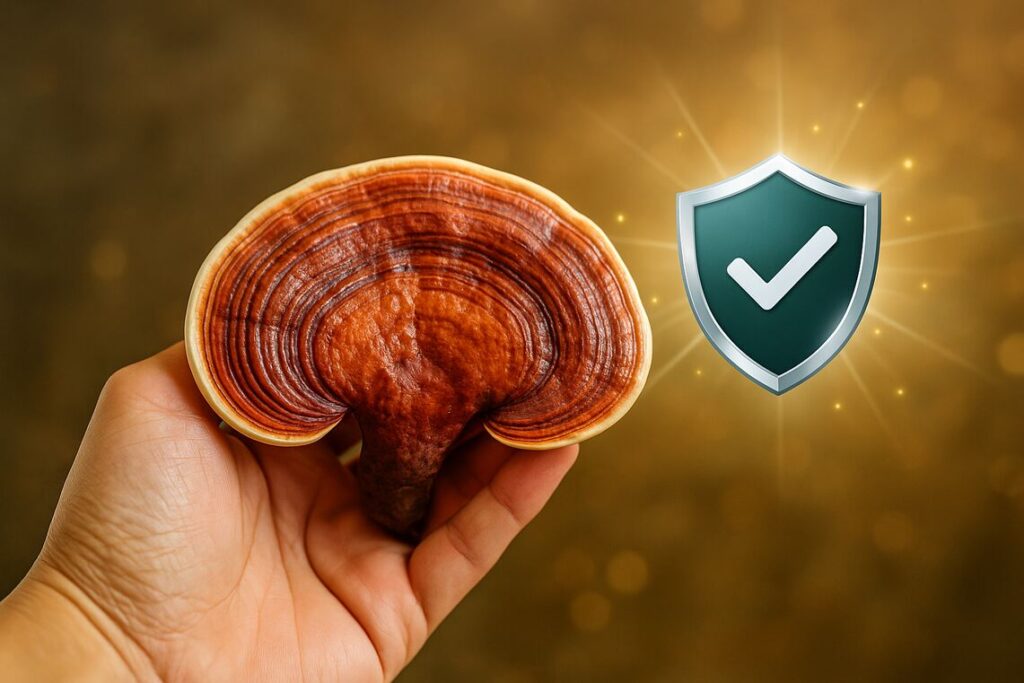
Reishi mushroom, also known as lingzhi or Ganoderma lucidum, has a long history of use in traditional Eastern wellness practices. Today, researchers are studying its naturally occurring compounds, including beta-glucans and triterpenes, for their possible role in supporting normal immune function, stress resilience, and overall wellness. Evidence is still developing, and reishi is not right for everyone. This guide explains what reishi is, how it is commonly used as a dietary supplement, and what safety considerations to discuss with a healthcare professional.
What is reishi mushroom?
Reishi mushroom, also called lingzhi, is a tough, woody mushroom native to parts of Asia. Because the fruiting body is hard, fibrous, and very bitter, it is usually taken as a powder, extract, or capsule rather than eaten as food. Reishi contains naturally occurring compounds such as polysaccharides, beta-glucans, triterpenes, and antioxidants. These compounds are being studied for their potential to support normal immune function, stress resilience, and overall wellness, but research in people is still limited.
Reishi (lingzhi) mushroom: origins and names
The lingzhi mushroom originates from Asia and naturally grows mostly in forested areas of China, Japan, and Korea. The Latin name Ganoderma lucidum refers to the mushroom’s shiny, lacquered surface. “Lucidum” means bright or shiny, while “Ganoderma” comes from the Greek words “ganos” (brightness, shine) and “derma” (skin).
The name “reishi” comes from Japanese, while the Chinese name “lingzhi” is often associated with spiritual power, longevity, and good fortune. In scientific literature, reishi is most often identified as Ganoderma lucidum, though naming can vary by species and region. Historically, reishi was rare and highly valued in Eastern traditions and was sometimes reserved for elites and imperial courts.
Reishi’s glossy, lacquered surface is one reason it has been compared to polished wood or wax seals in some languages.
Natural habitat and cultivation of reishi mushroom
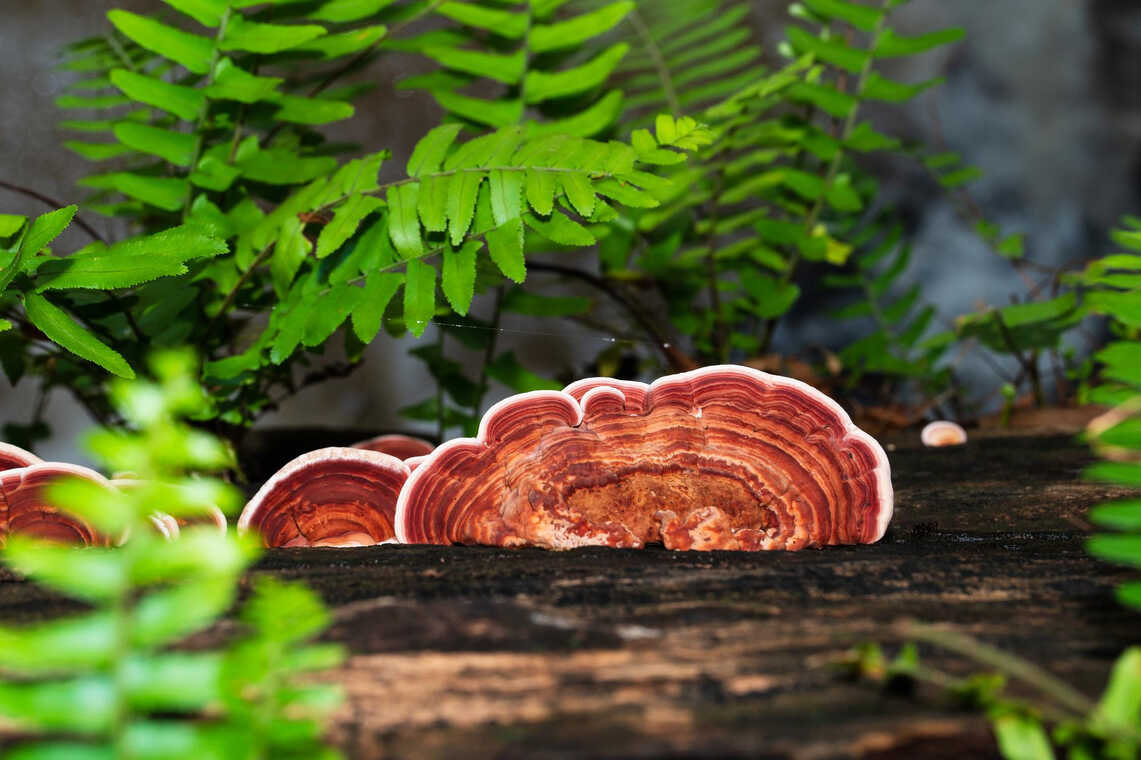
In the wild, reishi mushrooms grow mainly on dead or weakened hardwood trees such as oak, maple, and elm, especially on trunks and roots. They thrive in warm, humid forests, including regions of China, Japan, and Korea. Although reishi occurs in nature, some varieties, such as red reishi, have historically been harder to harvest and more highly valued. Since the mid-20th century, commercial cultivation has made reishi widely available around the world.
Two cultivation methods are common. In substrate cultivation, reishi grows on a prepared medium made from hardwood sawdust or wood chips, often with plant-based ingredients such as bran or rice bran. The mixture is sterilized or pasteurized to help limit unwanted microorganisms. In log cultivation, spores are introduced into living or freshly cut hardwood logs and grown in controlled, humid, shaded conditions. Both methods can produce reishi suitable for dietary supplement use when quality controls are in place.
What research suggests about reishi mushroom
Traditional Chinese medicine has long associated reishi with vitality; it is sometimes called the “mushroom of immortality.” Modern research is focused on its naturally occurring polysaccharides, beta-glucans, triterpenes, and antioxidant compounds. These ingredients are being studied for their possible role in normal immune function, healthy stress response, and antioxidant support. Human research is growing, but much of the evidence still comes from laboratory and animal studies.
Support for normal immune function
One common reason people consider reishi is immune support. Reishi polysaccharides, including beta-glucans, have been studied for how they interact with immune cells such as macrophages and natural killer cells. A 2025 review reported possible effects on immune signaling, but more human research is needed. Reishi may help support normal immune system function; it is not intended to diagnose, treat, cure, or prevent disease.
Human research on reishi is limited and should be interpreted cautiously. Reishi is not a medical treatment and should not replace prescribed care. If you have a serious health condition or are receiving medical treatment, talk with your healthcare professional before using reishi or any dietary supplement.
Antioxidant research and overall wellness support
Reishi contains triterpenes and polysaccharides that researchers are studying for their role in antioxidant activity and normal inflammatory response. Oxidative stress occurs when free radicals outpace the body’s natural defenses, which may contribute to cell damage over time. More human research is needed to understand what reishi can and cannot do.
Laboratory and animal studies have explored how reishi extract may interact with normal inflammatory and antioxidant pathways. A small number of human studies have also examined markers of oxidative stress. These findings are interesting, but evidence in people remains limited. Reishi should be viewed as general wellness support, not as a treatment for inflammation or any medical condition.
Support for occasional stress and relaxation
Some early human studies have looked at reishi and wellness measures related to stress, mood, vitality, and quality of life. A 2024 placebo-controlled, double-blind study in India reported improvements in self-reported wellness measures among young women. A 2025 study of a combination supplement containing reishi and ashwagandha also reported positive stress-related findings, but because the product contained multiple ingredients, the results cannot be attributed to reishi alone. These findings are preliminary and should not be read as proof that reishi treats anxiety, depression, or any mental health condition.
These studies were short term and included small numbers of participants. The results are promising, but there is not enough evidence to conclude that reishi reliably improves stress, mood, or relaxation in people.
Reishi Mushroom Side Effects and Safety Considerations
Reishi is generally well tolerated by many adults, but side effects can occur. Reported side effects include digestive symptoms such as mild nausea, diarrhea, or abdominal discomfort, and less commonly headache or dizziness. Prolonged or high-dose use has occasionally been associated with dry mouth and skin rash. Stop use and contact a healthcare professional if you experience concerning symptoms.
Who should avoid reishi, or ask a healthcare professional first?
Reishi may not be appropriate for everyone. Talk with a healthcare professional before using reishi, especially if any of the following situations apply:
If you are pregnant or breastfeeding: Safety data are limited. Ask your healthcare professional before using reishi.
If you take blood thinners or have a bleeding disorder: Reishi may affect clotting. Talk with a healthcare professional before use.
If you take blood pressure medication: Reishi may affect blood pressure and could interact with your medication. Ask a healthcare professional before use.
If you have an autoimmune condition: Reishi may affect immune activity. Ask your healthcare professional before using it, especially if you take immunosuppressive medication.
How to add reishi (lingzhi) to your daily routine
Traditionally, reishi was prepared as a tea or decoction. Today, it is commonly sold as capsules, powders, and tea blends. The best format depends on your routine, taste preferences, and whether you want a more precisely measured serving.
Capsules, tea, or powder: common forms of reishi
- Reishi capsules: Convenient and easy to measure, with no bitter mushroom taste. Standardized extracts may provide more consistent amounts of key compounds than non-standardized products.
- Reishi powder: A flexible form that can be mixed into drinks or smoothies. However, its strong, earthy flavor may not appeal to everyone. Potency can vary more with powder, so it’s best to choose products from reliable sources.
- Reishi tea: A traditional preparation. Tea blends may be less concentrated than capsules or extracts and are often combined with other herbs.
Serving size, timing, and safe use considerations
Reishi is commonly used as a dietary supplement for limited periods. Many studies have evaluated use over several weeks or months, but long-term safety data are still limited. Follow the serving directions on the product label, and ask a healthcare professional before use if you have a medical condition, take medication, are pregnant or breastfeeding, or are planning surgery. There is no established schedule proven to maintain benefits or prevent tolerance.
Organic Reishi Mushroom Extract from USA Medical
Not all reishi supplements are formulated the same. USA Medical ORGANIC REISHI Lingzhi Mushroom Extract Capsules are made with organic reishi fruiting-body extract rather than whole mushroom powder or mycelium.
What makes this capsule different from reishi powder?
✔ Concentrated extract: 12:1 reishi extract. ✔ Polysaccharide content: More than 30%, including beta-glucans. ✔ Organic cultivation: Made with organic mushrooms under controlled conditions. ✔ Hot-water extraction: Extracted with hot water, without alcohol or solvents. From 100 kg of dried mushrooms, 6–20 kg of extract is produced. ✔ With acerola extract: A natural source of vitamin C to complement the formula. Always follow the product label and ask a healthcare professional if you take medications, are pregnant or breastfeeding, or have a medical condition.
References and Scientific Sources- Wachtel-Galor, S., & Benzie, I. F. (2011). Ganoderma lucidum (Lingzhi or Reishi): A Medicinal Mushroom. In: Benzie IFF, Wachtel-Galor S. (eds) Herbal Medicine: Biomolecular and Clinical Aspects. 2nd edition. CRC Press/Taylor & Francis.
https://www.ncbi.nlm.nih.gov/books/NBK92757/
- Khan, M.A. et al. (2025). Ganoderma lucidum (Reishi Mushroom): Bioactive Compounds and Therapeutic Potential. Antioxidants, 14(5):513. MDPI.
https://www.mdpi.com/2076-3921/14/5/513
- Jin, X., Ruiz Beguerie, J., Sze, D.M.Y., Chan, G.C.F. (2016). Ganoderma lucidum (Reishi mushroom) for cancer treatment. Cochrane Database of Systematic Reviews, Issue 4.
https://www.cochrane.org/evidence/CD007731_g-lucidum-reishi-mushroom-cancer-treatment
- Ganguly, S. et al. (2024). Efficacy of Lingzhi or Reishi Medicinal Mushroom Ganoderma lucidum Supplementation on Psychological Stress and Selective Fitness Profile Parameters in Female College Students in West Bengal, India. J Diet Suppl. PMID: 39241163.
https://europepmc.org/article/med/39241163
- Bhattacharya, S. et al. (2025). A Randomized, Double-Blind, Placebo-Controlled Study to Investigate the Anti-Stress Effects of Supplement Containing a Combination of Reishi Mushroom (Ganoderma lucidum) Fruiting Body Extract and Ashwagandha. Current Developments in Nutrition, 9(Suppl 1): 1643.
https://cdn.nutrition.org/article/S2475-2991%2825%2901643-9/fulltext