

Ashwagandha and Weight Management: What the Research Says

More people are looking for natural ways to support healthy weight management as busy schedules and daily stress add up.
Ashwagandha (Withania somnifera) is an ancient Ayurvedic herb that has recently drawn attention as a possible supplement for stress support and healthy weight management. But does it really help, or is it just another wellness trend? The answer is more nuanced than it first appears.
Below, we’ll look at how ashwagandha works in the body, what it may support, who should think twice before taking it, and when to avoid it.
We’ll use the research to help readers make an informed choice about whether ashwagandha belongs in their daily routine.
What is Ashwagandha, and How Does It Work in the Body?
Ashwagandha, also known as Indian ginseng or winter cherry, is a highly valuable adaptogenic herb that has been part of Ayurvedic medicine for thousands of years. The plant’s name comes from the Sanskrit words “ashwa” (horse) and “gandha” (smell), referring both to the distinct earthy scent of the ashwagandha root and the traditional folk belief that consuming it provides strength and endurance comparable to that of a horse.
This shrub-like plant is native to India, North Africa, and the Middle East and grows well in dry, semi-arid regions. Its root contains withanolides, the compounds most often discussed in ashwagandha research.
Understanding Adaptogenic Properties
Ashwagandha is often described as an adaptogen, a type of herb that may help the body adapt to everyday stress.
It’s worth noting that adaptogens are not sedatives. Instead, they’re generally discussed as herbs that help support the body’s normal balance and stress response.
As an adaptogen, ashwagandha may help the body respond to stress more evenly. Some research suggests it may support healthy energy and stress balance, though more studies are still needed.
How Ashwagandha May Affect Cortisol
One of the best-studied mechanisms is its effect on the HPA axis, which helps regulate the body’s stress response and cortisol production.
Under normal conditions, cortisol plays an important role in the body. When levels stay elevated over time, they may be associated with weight changes and other unwanted effects.
Several clinical studies suggest that ashwagandha root extract may help support a healthier cortisol response. For example, a 2012 study followed 64 adults with chronic stress who took 600 mg of KSM-66 Ashwagandha extract daily for eight weeks. The ashwagandha group reported a larger drop in cortisol than the placebo group.
Ashwagandha, Stress, and Weight Management
Chronic stress can affect both mental well-being and body weight. Understanding that connection helps explain why some people look to ashwagandha as part of a broader wellness plan.
How Chronic Stress Can Affect Body Weight
Stress is a natural response that helps us handle dangerous situations. In the short term, it can mobilize energy, sharpen attention, and improve performance. When stress becomes chronic, it can start to work against us.
Stress can affect appetite, sleep, and daily habits, which may make weight management feel harder:
Stress Hormones and Weight Changes
With ongoing stress, the body may keep producing cortisol for longer than it needs to. Over time, that can be associated with changes in appetite and fat storage, especially around the abdomen.
Blood Sugar and Metabolic Health
Cortisol can affect blood sugar and insulin activity, which may make weight management harder over time. Ongoing stress can create a cycle that works against healthy metabolic balance.
Leptin Resistance
Leptin helps signal fullness to the brain. Ongoing stress may disrupt normal appetite signaling, which can make it harder to feel satisfied after meals.
How Can Ashwagandha Help?
As an adaptogenic herb, ashwagandha is often studied for its effects on the stress-cortisol axis. In a 2012 randomized clinical trial, taking 600 mg of KSM-66® ashwagandha daily was associated with lower cortisol levels and more favorable stress-related results.
From a weight-management perspective, a 2017 study followed adults with chronic stress for eight weeks. Researchers reported changes in body weight and BMI, along with fewer cravings reported by participants.
Who May Want to Avoid It?
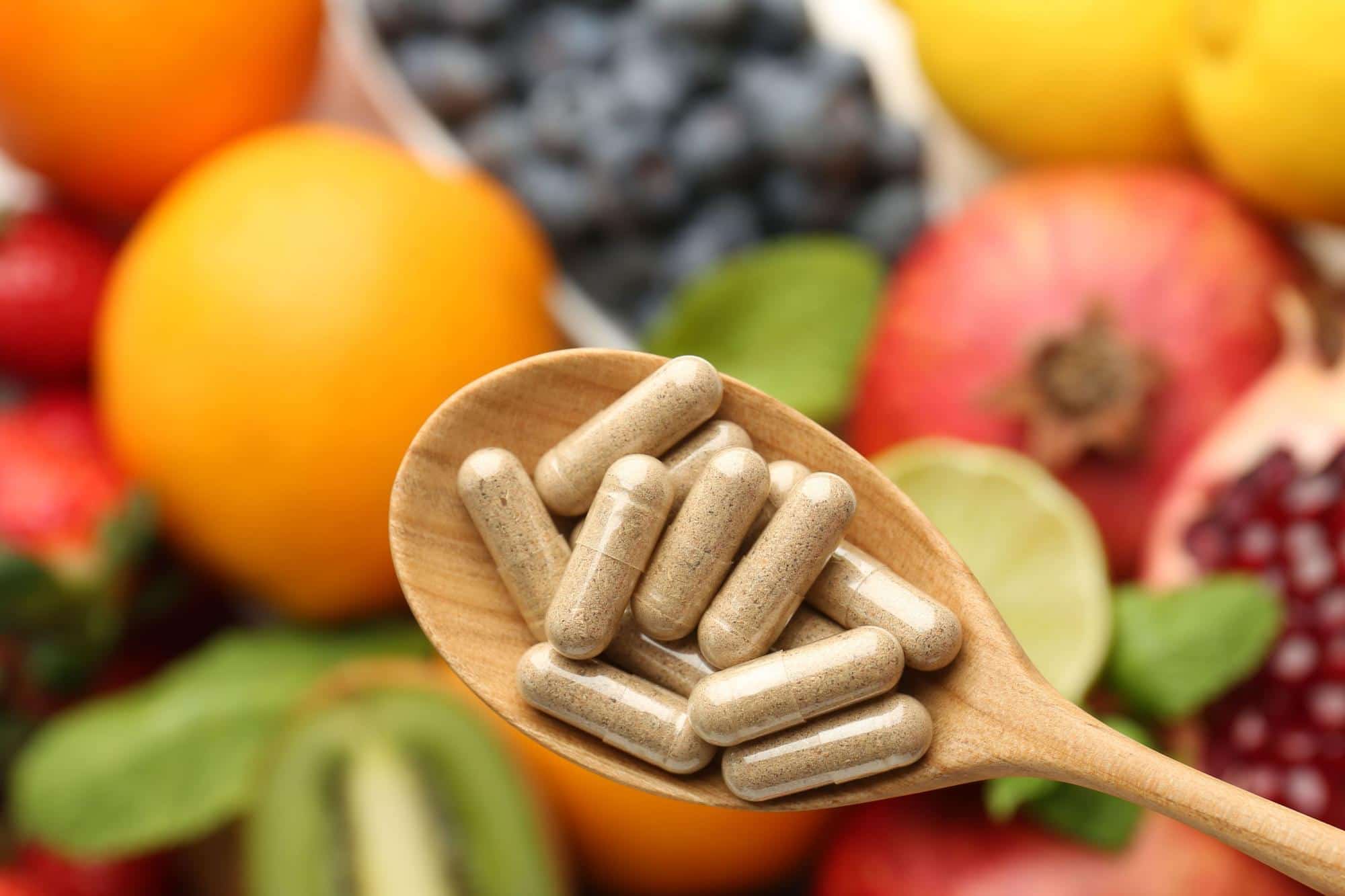
Ashwagandha may be considered as part of a broader wellness routine.
People dealing with ongoing stress or emotional eating may be interested in ashwagandha. If you take medication or have a health condition, talk with a healthcare professional before starting any supplement.
Use caution in certain situations:
If You’re Pregnant or Breastfeeding
Because human data is limited, ashwagandha is generally not recommended during pregnancy or while breastfeeding. Ask a healthcare professional if you have questions.
With Thyroid Issues
Ashwagandha may affect thyroid hormone activity, so it should only be used under medical supervision in cases of hypo- or hyperthyroidism or when taking thyroid medication.
In Autoimmune Diseases
Because ashwagandha may influence immune activity, people with autoimmune conditions should ask a healthcare professional before use.
If You Take Prescription Medications
Ashwagandha can interact with blood thinners, antidepressants, sedatives, and thyroid medications. If you take prescription medication, are pregnant, or have a chronic condition, talk with a healthcare professional before use.
Ashwagandha and Weight Management: What Does Current Research Show?
Ashwagandha is being studied for stress support and healthy weight management. The early findings are encouraging, but more research is needed. When choosing a supplement, it’s wise to choose a brand you trust.
Here’s why these KSM-66® Ashwagandha capsules stand out:
✓ Made from whole-spectrum ashwagandha root extract
The KSM-66® ashwagandha extract is made from the plant’s root only, without the leaves. This traditional approach reflects the way ashwagandha has long been used in Ayurveda.
✓ High concentration of active compounds
The KSM-66® extract contains more than 5% withanolides.
✓ Studied in 22 clinical studies
The KSM-66® extract has been studied in 22 human clinical trials, including randomized, double-blind, placebo-controlled studies.
✓ Pure, solvent-free extract
It is made using a patented extraction process without alcohol or synthetic solvents.
✓ Precise dosing and convenience
Each capsule contains 250 mg of KSM-66® extract for consistent daily use.
Buy the USA medical KSM-66 Ashwagandha® capsules now!
References and Scientific Sources- Choudhary, D., Bhattacharyya, S., & Joshi, K. (2017): Body weight management in adults under chronic stress through treatment with ashwagandha root extract: a double-blind, randomized, placebo-controlled trial. https://pmc.ncbi.nlm.nih.gov/articles/PMC5871210/
- Singh, N., Bhalla, M., de Jager, P., & Gilca, M. (2011). An overview on ashwagandha: a Rasayana (rejuvenator) of Ayurveda. https://pubmed.ncbi.nlm.nih.gov/22754076/
- Mishra, L. C., Singh, B. B., & Dagenais, S. (2000). Scientific basis for the therapeutic use of Withania somnifera (ashwagandha): a review. https://pubmed.ncbi.nlm.nih.gov/10956379/
- Panossian, A., & Wikman, G. (2010). Effects of adaptogens on the central nervous system and the molecular mechanisms associated with their stress, protective activity. https://www.mdpi.com/1424-8247/3/1/188
- Lopresti, A. L., Smith, S. J., Malvi, H., & Kodgule, R. (2019). An investigation into the stress-relieving and pharmacological actions of an ashwagandha (Withania somnifera) extract: A randomized, double-blind, placebo-controlled study. https://pubmed.ncbi.nlm.nih.gov/31517876/
- Chandrasekhar, K., Kapoor, J., & Anishetty, S. (2012). A prospective, randomized double-blind, placebo-controlled study of safety and efficacy of a high-concentration full-spectrum extract of ashwagandha root in reducing stress and anxiety in adults. https://pmc.ncbi.nlm.nih.gov/articles/PMC3573577/
- Candelario, M., Cuellar, E., Restrepo, J. M., Gallagher, T., Benson, K., Nabavi, S. F., … & Daglia, M. (2015). Direct evidence for GABAergic activity of Withania somnifera on mammalian ionotropic GABAA and GABAρ receptors. https://pubmed.ncbi.nlm.nih.gov/26068424/
- Bhattacharya, S. K., Bhattacharya, A., Sairam, K., & Ghosal, S. (2000). Anxiolytic-antidepressant activity of Withania somnifera glycowithanolides: an experimental study. https://pubmed.ncbi.nlm.nih.gov/11194174/
- Auddy, B., Hazra, J., Mitra, A., Abedon, B., & Ghosal, S. (2008). A standardized Withania somnifera extract significantly reduces stress-related parameters in chronically stressed humans: a double-blind, randomized, placebo-controlled study. https://pubmed.ncbi.nlm.nih.gov/19205472/
- Hewagalamulage, S. D., Lee, T. K., Clarke, I. J., & Henry, B. A. (2016). Stress, cortisol, and obesity: a role for cortisol responsiveness in identifying individuals prone to obesity https://pubmed.ncbi.nlm.nih.gov/27345309/
- Kyrou, I., & Tsigos, C. (2009). Stress hormones: physiological stress and regulation of metabolism. https://pubmed.ncbi.nlm.nih.gov/19758844/
- Vicennati, V., Pasqui, F., Cavazza, C., Pagotto, U., & Pasquali, R. (2009). Stress‐related development of obesity and cortisol in women. https://pubmed.ncbi.nlm.nih.gov/19300426/
- Torres, S. J., & Nowson, C. A. (2007). Relationship between stress, eating behavior, and obesity https://pubmed.ncbi.nlm.nih.gov/17869482/
- Adam, T. C., & Epel, E. S. (2007). Stress, eating and the reward system. https://pubmed.ncbi.nlm.nih.gov/17543357/
- Bachour, G., Samir, A., Haddad, S., Houssaini, M. A., Cheaito, M. A., Diab-El-Harake, M., & Hallit, S. (2025). Effects of Ashwagandha supplements on cortisol, stress, and anxiety levels in adults: a systematic review and meta-analysis. https://www.cambridge.org/core/journals/bjpsych-open/article/effects-of-ashwagandha-supplements-on-cortisol-stress-and-anxiety-levels-in-adults-a-systematic-review-and-metaanalysis/6F2D7847C1F64707F2034A45FD6CF0C0
- Langade, D., Kanchi, S., Salve, J., Debnath, K., & Ambegaokar, D. (2019). Efficacy and safety of ashwagandha (Withania somnifera) root extract in insomnia and anxiety: a double-blind, randomized, placebo-controlled study. https://pubmed.ncbi.nlm.nih.gov/31728244/
- Pratte, M. A., Nanavati, K. B., Young, V., & Morley, C. P. (2014). An alternative treatment for anxiety: a systematic review of human trial results reported for the Ayurvedic herb ashwagandha (Withania somnifera). https://pubmed.ncbi.nlm.nih.gov/25405876/
- Andallu, B., & Radhika, B. (2000). Hypoglycemic, diuretic and hypocholesterolemic effect of winter cherry (Withania somnifera, Dunal) root. https://pubmed.ncbi.nlm.nih.gov/11116534/
- Sharma, A. K., Basu, I., & Singh, S. (2018). Efficacy and safety of ashwagandha root extract in subclinical hypothyroid patients: a double-blind, randomized placebo-controlled trial. https://pubmed.ncbi.nlm.nih.gov/28829155/
- Salve, J., Pate, S., Debnath, K., & Langade, D. (2019). Adaptogenic and anxiolytic effects of ashwagandha root extract in healthy adults: a double-blind, randomized, placebo-controlled clinical study. https://pubmed.ncbi.nlm.nih.gov/32021735/
- Fuladi, S., Emami, S. A., Mohammadpour, A. H., Karimani, A., Manteghi, A. A., & Sahebkar, A. (2020). Assessment of Withania somnifera root extract efficacy in patients with generalized anxiety disorder: a randomized double-blind placebo-controlled trial. (https://pubmed.ncbi.nlm.nih.gov/31746286/)
- Gorelick, J., Rosenberg, R., Smotrich, A., Hanuš, L., & Bernstein, N. (2015). Hypoglycemic activity of withanolides and elicitated Withania somnifera. (https://pubmed.ncbi.nlm.nih.gov/25982145/)
- Lopresti, A. L., Drummond, P. D., & Smith, S. J. (2019). A randomized, double-blind, placebo-controlled, crossover study examining the hormonal and vitality effects of ashwagandha (Withania somnifera) in aging, overweight males. https://pubmed.ncbi.nlm.nih.gov/30854916/
- Speers, A. B., Cabey, K. A., Soumyanath, A., & Wright, K. M. (2021). Effects of withania somnifera (ashwagandha) on stress and the stress-related neuropsychiatric disorders anxiety, depression, and insomnia. https://pmc.ncbi.nlm.nih.gov/articles/PMC8762185/
- Mikulska, P., Malinowska, M., Ignacyk, M., Szustowski, P., Nowak, J., Pesta, K., … & Szklanny, D. (2023). Ashwagandha (Withania somnifera), current research on the health-promoting activities: a narrative review. https://pubmed.ncbi.nlm.nih.gov/37111543/
- Panda, S., & Kar, A. (1998). Changes in thyroid hormone concentrations after administration of ashwagandha root extract to adult male mice. https://pubmed.ncbi.nlm.nih.gov/9811169/
- Raut, A. A., Rege, N. N., Tadvi, F. M., Solanki, P. V., Kene, K. R., Shirolkar, S. G., … & Vaidya, A. B. (2012). Exploratory study to evaluate tolerability, safety, and activity of Ashwagandha (Withania somnifera) in healthy volunteers. https://pmc.ncbi.nlm.nih.gov/articles/PMC3487234