
Beef Doesn’t Eat Collagen, Yet It Contains It – How Is That Possible?
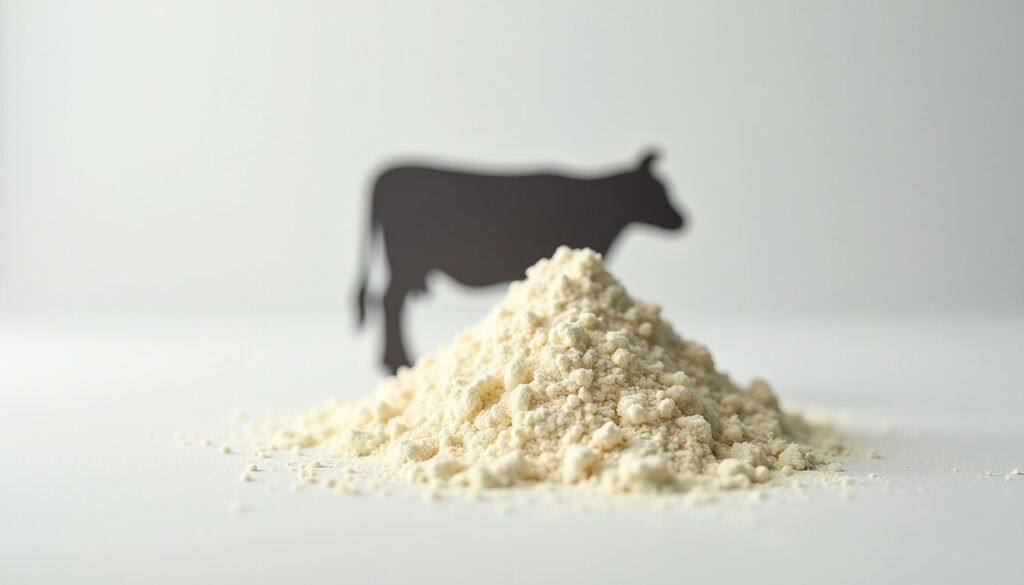
Collagen is one of the most talked-about proteins these days when it comes to healthy joints, firm skin, or overall vitality. Collagen derived from beef forms the basis of many dietary supplements – yet a seemingly logical question often arises: if cows don’t consume collagen, how can they be such a rich source of this valuable protein?
This question is not only a biological curiosity but also sheds light on how vertebrate bodies function – whether human or animal. We will explore how collagen is produced in a cow’s body and what we humans can learn from this regarding our own nutrition and health.
What is collagen and why is it important?
Collagen is one of the most important structural proteins in both human and animal bodies. It makes up about 30% of all body proteins and is found almost everywhere: in the skin, tendons, cartilage, blood vessel walls, bones, and even teeth.
This fibrous, flexible protein acts like an internal glue that helps hold tissues together. Without it, the body would lose its elasticity, support, and protection. A lack or decrease of collagen – whether due to aging or poor nutrition – can lead to wrinkled skin, joint problems, slower cell regeneration, among other issues.
The body can produce collagen on its own but requires certain amino acids, vitamins – especially vitamin C – and adequate protein intake to do so. This is also the key to understanding why cows don’t need to eat collagen for their bodies to have a steady supply of it.
How does the cow’s body produce collagen?
Like humans, cows don’t primarily get collagen by consuming it directly. Instead, their bodies produce it using amino acids derived from the proteins they eat.
When a cow consumes plant-based feed, its digestive system breaks down the proteins into amino acids. The animal’s body then uses these amino acids as building blocks to create proteins, including collagen. This process is biologically the same as what happens in the human body. Therefore, cows don’t need to eat collagen itself; their bodies just need the right nutrients to make it.
The role of amino acids
A key feature of collagen is that it consists of specific amino acids – primarily glycine, proline, and hydroxyproline. The cow’s body obtains these amino acids from the plant-based proteins in its diet during digestion.
Cells then join these building blocks into a specific sequence. That is how collagen fibers are formed. In other words, the body uses nutrients to build collagen naturally rather than taking it in directly.
This explains how cow connective tissues can be an excellent source of collagen even though the animal doesn’t consume collagen itself. The answer lies in natural synthesis and intelligent biology.
What can we humans learn from this?
The example of cows clearly demonstrates that collagen appears in the body not by external supplementation, but through internal production. The same is true for humans: while we ingest the amino acids and supporting micronutrients needed for collagen from the outside, the actual collagen production is done by our bodies.
So the goal is not necessarily to take collagen directly, but to choose collagen products and nutrients that help support normal collagen production.
Supporting natural collagen synthesis
Alongside a balanced diet, it can also be helpful to take supplements that:
- contain hydrolyzed collagen peptides
- are well digestible and easily absorbed
- provide amino acids and vitamin C through your diet
While these products do not replace a balanced, healthy, and varied diet, they can help support normal collagen production as part of your routine.
Try our beef collagen powder for yourself!
If you want to support your body’s natural collagen production, choose a collagen peptide source that fits your routine. The USA Medical Beef Collagen Powder – Solugel® contains hydrolyzed collagen peptides in an easy-to-use form.
✔️ A source of high-purity, bioactive collagen peptides
✔️ Made without GMOs, gluten, added additives, or sugar
✔️ Easily dissolves, neutral in taste – can be mixed into drinks, smoothies, or food
✔️ Ideal for supporting skin, joints, and connective tissues
Summary
At first, it may seem surprising that cows don’t eat collagen, yet their connective tissues abound with it. The key to this mystery is simple: their bodies don’t get it from an outside source but build collagen internally from the right amino acids and nutrients. This biological logic applies equally to the human body.
The main takeaway is that your body needs the right building blocks to make collagen, including protein and vitamin C.
With mindful nutrition and targeted supplementation if needed, you can do a lot to promote the health of your skin, joints, and tissues.