
Liposomal Vitamin C: What to Know Before You Buy
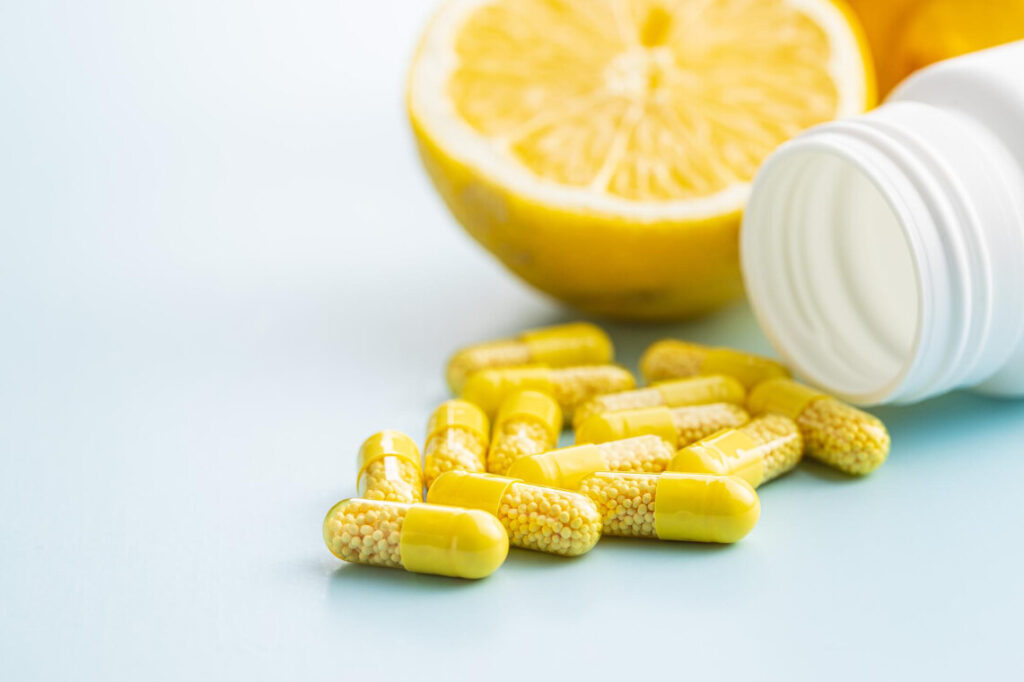
Learn why some shoppers choose liposomal vitamin C and what to consider when comparing formulas.
Where does your vitamin C really come from?
Many vitamin C products don’t clearly disclose origin on the label. If sourcing matters to you, check the package details and brand information.
How Did China Become a Major Vitamin C Producer?
Since the 1990s, much of global ascorbic acid production has shifted to China because it can be made at scale and at lower cost. Today, a relatively small number of large manufacturers supply much of the market.
Why Might This Be a Concern?
Although synthetic vitamin C is chemically the same molecule as natural ascorbic acid, quality can vary by manufacturer. It’s smart to check where it’s made, how it’s manufactured, and what’s on the label.
Synthetic Vitamin C: What It Means
Most vitamin C products sold in drugstores, pharmacies, or grocery stores use synthetic ascorbic acid. That doesn’t make them bad choices, but some shoppers prefer other formats based on tolerance or preference.
Fast Elimination and Lower Bioavailability
One drawback of traditional synthetic vitamin C is that the body clears it relatively quickly. In some cases, a large dose may be used up within a few hours.
Digestive issues
High doses of traditional ascorbic acid can be hard to tolerate for some people and may cause digestive discomfort such as heartburn, bloating, or diarrhea.
Instability and oxidation
Regular ascorbic acid can be sensitive to heat, light, and moisture, which may affect product stability during manufacturing, shipping, and storage.
Is there a better solution?
Yes. Liposomal formulation is one option that may address some of the concerns mentioned above. But what exactly is a liposome, and why choose this form?
What Makes Liposomal Vitamin C Different?
Liposomal technology is an innovative option that may support vitamin C absorption and may be easier on the stomach for some people.
What is a liposome?
A liposome is a tiny sphere made from fat-like substances called phospholipids that can help protect vitamin C as it moves through the digestive tract. It’s often used in products designed to support absorption.
Potential Differences in Absorption and Bioavailability
Some clinical studies have reported higher blood levels and longer retention with liposomal vitamin C compared with traditional ascorbic acid. In some cases, that may allow lower doses.
Digestive Comfort
The liposome shell is designed to help protect the vitamin as it moves through the digestive tract and may be easier to tolerate for some people.
Stable, reliable quality
Liposomal technology can help vitamin C stay more stable during production and storage.
PureWay-C™ – patented quality
PureWay-C™ is a vitamin C formula that contains natural bioflavonoids and phospholipids.
How to Choose a Reliable Vitamin C Supplement: Key Factors Before You Buy
If absorption and stomach comfort matter to you, consider a few key factors before choosing vitamin C. Here’s a practical buyer’s checklist:
✔ Country of origin: If it matters to you, look for products that clearly state where they are manufactured.
✔ Technology: The liposomal form (e.g., PureWay-C™) is designed to support absorption and may stay in the body longer than standard vitamin C.
✔ Additives: If you prefer simpler formulas, choose products without artificial colors, preservatives, or flavor enhancers.
✔ Lifestyle considerations: If important to you, look for formulas that fit your dietary needs, such as vegan or GMO-free options, and check allergen information carefully.
Some clinical studies suggest certain liposomal vitamin C formulas, such as PureWay-C™, may have different pharmacokinetic profiles than standard ascorbic acid. It may be worth considering if you prefer a vitamin C format that feels easier to take.
If you want to learn more about how liposomal vitamin C works, see the guide below.
References and Scientific Sources- https://finetechitg.com/what-drives-the-global-ascorbic-acid-market/
- https://themoderatevoice.com/china-has-near-monopoly-on-world-vitamin-c-production/
- https://en.wikipedia.org/wiki/Vitamin_C
- https://link.springer.com/article/10.1007/s00394-024-03487-8
- Przemysław Żmuda,Barbara Khaidakov, Maria Krasowska, Katarzyna Czapska,Michał Dobkowski,Julian Guzowski,Paulina Kowalczyk,Krzysztof Lemke, Marcin Folwarski,Aleksander Foryś, Ewa Domian and Marek Postuła (2024): Bioavailability of Liposomal Vitamin C in Powder Form: A Randomized, Double-Blind, Cross-Over Trial
- https://www.ncbi.nlm.nih.gov/pmc/articles/PMC5707683/
- https://medicine.osu.edu/news/vitamin-c-promotes-immune-cell-differentiation
- https://link.springer.com/chapter/10.1007/978-3-030-16073-9_5
- https://journals.sagepub.com/doi/10.1177/1533210110392951
- https://www.ncbi.nlm.nih.gov/books/NBK279544/
- https://www.ncbi.nlm.nih.gov/pmc/articles/PMC6204628/
- https://pubmed.ncbi.nlm.nih.gov/7518857/
- https://www.sciencedirect.com/science/article/pii/S0022202X94976635
- https://pubmed.ncbi.nlm.nih.gov/34808597/
- http://vetjournal.ankara.edu.tr/en/pub/issue/78151/1019201
- https://www.ncbi.nlm.nih.gov/pmc/articles/PMC296476/
- https://www.ncbi.nlm.nih.gov/pmc/articles/PMC2649700/
- https://pubmed.ncbi.nlm.nih.gov/19640959/
- https://pubmed.ncbi.nlm.nih.gov/7393218/
- https://pubmed.ncbi.nlm.nih.gov/14578579/
- https://pubmed.ncbi.nlm.nih.gov/20446114/
- https://pubmed.ncbi.nlm.nih.gov/12668679/