
Itchy Scalp: Causes, Symptoms, and Care Tips

An itchy scalp can be uncomfortable and may have many possible causes. The American Academy of Dermatology notes that it is common, and frequent scratching can irritate the skin and make things worse.
This article covers the most common causes of an itchy scalp, at-home care options for dry or dandruff-prone scalp, and how nutrition may support scalp and hair health.
What Can Cause an Itchy Scalp?
An itchy scalp can have many causes, from dandruff to irritation or infection. Symptoms can range from mild flaking to ongoing discomfort, so persistent issues are worth paying attention to. What can cause an itchy scalp?
Dandruff
Dandruff is a common scalp concern and is often linked to an overgrowth of the Malassezia fungus that naturally lives on the scalp, along with excess oil and a weakened skin barrier. It usually shows up as dry or oily flakes. Common anti-dandruff shampoos may contain ingredients such as zinc pyrithione, selenium sulfide, or ketoconazole.
Infections
Infections and certain autoimmune conditions can contribute to an itchy scalp. If you notice red, flaky, blistered patches or open sores on the scalp, it is a good idea to see a dermatologist for an evaluation.
Allergies
Scalp irritation can sometimes be triggered by an allergic reaction to ingredients in hair dye or cosmetics, such as PPD. If that happens, stop using the product and choose formulas made for sensitive skin.
Stress
Stress can make scalp symptoms feel worse. If no clear infection or allergy is present, it may be worth considering whether stress is playing a role. Rest, regular exercise, and relaxation techniques can support overall well-being.
Lack of Hydration
The skin’s natural barrier is closely linked to hydration. Dry indoor air, frequent shampooing, and not drinking enough fluids can contribute to a dry, itchy scalp. Essential fatty acids and nutrients such as vitamins C and B, copper, and zinc support overall skin and hair health.
At-Home Care for Dry, Itchy Scalp
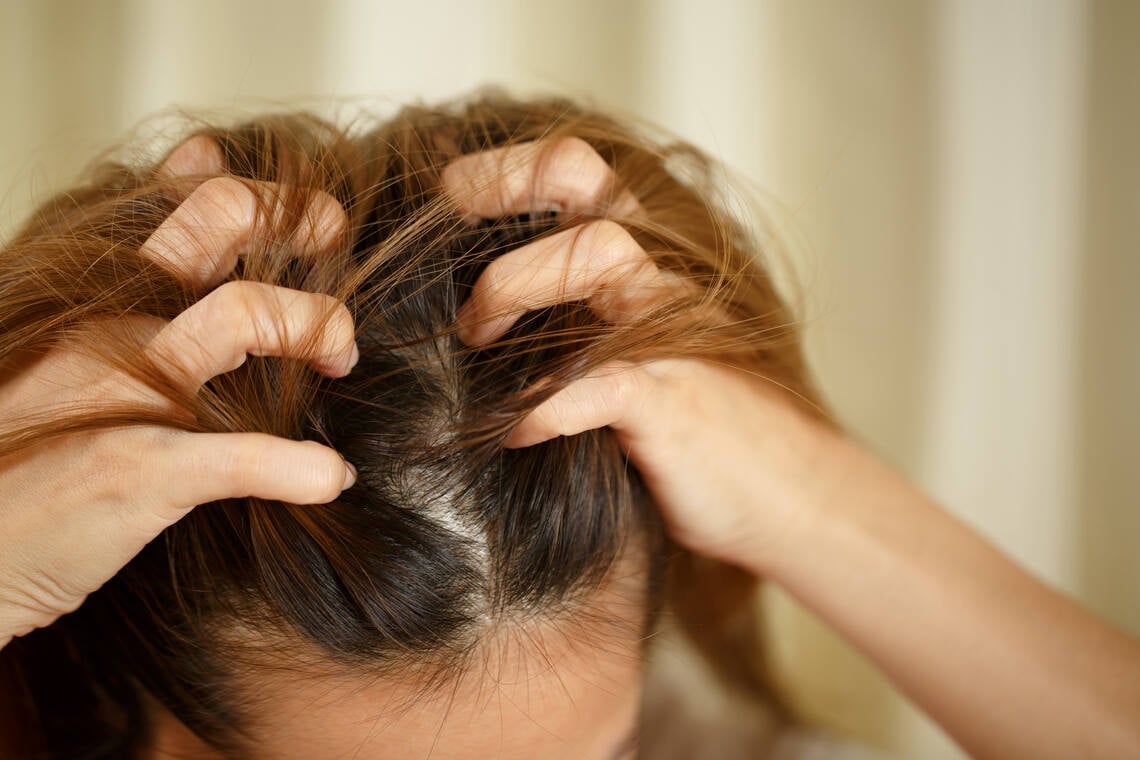
When caring for a dry, itchy scalp at home, it helps to look at a few factors. A steady hair care routine, a healthy scalp barrier, and overall habits like diet and stress management can all play a role. Let’s look at a few scalp care basics.
Avoid washing your hair with hot water.
Why is this important? Water that is too hot can wash away the natural oils on the scalp that help keep skin hydrated. Washing your hair with lukewarm water helps maintain moisture and can reduce dryness.
Choose a gentle, moisturizing shampoo
What to look for on the label: Dermatologists often recommend shampoos without sulfates (SLS, SLES) or strong fragrance, and with pH-balanced formulas.
Natural Oils for Scalp Care
Coconut oil and jojoba oil are often used to help moisturize a dry scalp. Jojoba oil can also help support a balanced, comfortable feel.
Tea tree oil is sometimes used in scalp care. If you try it, use only a small amount and always dilute it with a carrier oil such as almond or coconut oil to help avoid irritation.
Scalp massage and gentle hair drying
Scalp massage: Try gentle circular motions with your fingertips a few times a week. It can feel relaxing and help spread natural oils.
Hair drying: Excessively hot air can irritate dry skin and make it feel worse. If possible, dry your hair on a lower heat setting or let it air dry.
Nutrition and Dietary Support
Fluid intake: General recommendations suggest adults drink about 2 to 3 liters of fluids a day, depending on individual needs. Staying hydrated can support overall skin health.
Antioxidants and healthy fats: Berries, avocado, nuts, and fish (such as salmon) contribute to maintaining the skin’s protective barrier.
Collagen supplements: Some studies suggest collagen may support skin hydration and elasticity, though scalp-specific research is still limited.
Explore USA Medical scalp care products
If dandruff or dry scalp keeps coming back, it can help to look beyond topical care. Good nutrition is part of healthy skin function, including the scalp.
How Can Collagen Help?
Collagen is a major protein in the skin’s structure. Some research suggests hydrolyzed collagen peptides, especially when paired with vitamin C, may help support skin hydration and overall structure.
Key Benefits of USA Medical Collagen Products
Our collagen products are selected with quality and consistency in mind.
Extra support with vitamin C and hyaluronic acid: Selected formulas include vitamin C and hyaluronic acid to support skin hydration and a healthy-looking appearance.
Purity and gentleness: USA Medical collagen powders contain no artificial additives, flavor enhancers, preservatives, or sweeteners. They’re a simple option for everyday use.
✔ Easy to use, neutral taste
Our hydrolyzed collagen powders dissolve excellently in liquids and have no overpowering taste. You can simply add the collagen powder to coffee, juice, yogurt, smoothies, or even your morning porridge.
⇒ Click here and browse our range of premium quality collagen products!
Dietary supplements are not a substitute for a varied, balanced diet or a healthy lifestyle.