

Collagen Types: A Guide to the Different Kinds of Collagen
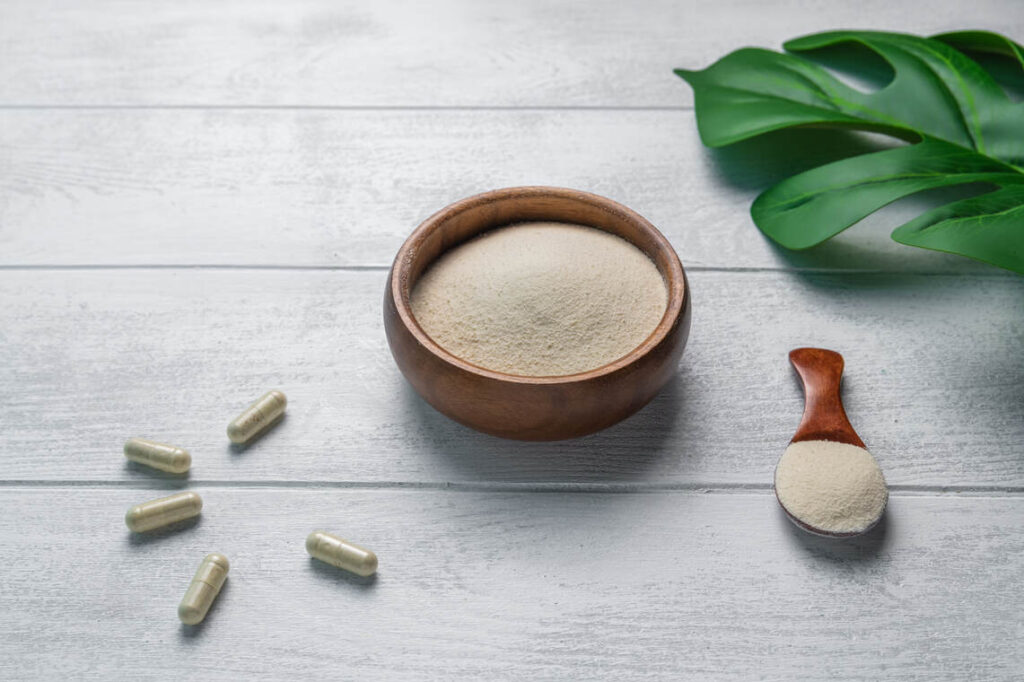
Have you heard of collagen but aren’t sure what it does in the body? You’re in the right place. In this article, we cover the main types of collagen and what each one does.
What is collagen?
Collagen is often called the body’s “glue.” It’s a key protein that adds strength and elasticity to many tissues, including skin, cartilage, and bone. The word collagen comes from the Greek “kolla,” meaning “glue” or “adhesion.” Collagen makes up about 30% of the body’s total protein, and more than 20 types have been identified. As we age, collagen levels naturally decline, which is why different types are often discussed for different needs.
The extracellular matrix and the role of collagen
To understand how collagen works, it helps to start with the extracellular matrix (ECM). The ECM is a network around connective tissue cells made up of proteins like collagen and elastin, carbohydrates, and fluid. Collagen fibers give the ECM its structure and flexibility.
- Collagen fibers create a stable framework and help hold tissues together.
- Responsible for tissue strength and elasticity , skin firmness, tendon and ligament support, and cartilage cushioning all depend on collagen structure.
- Supports tissue structure and flexibility in the body’s connective tissues, including skin and joints.
Types and forms of collagen: hydrolyzed or native collagen?
A common question about collagen is whether hydrolyzed collagen or natural collagen is the better choice. Research suggests the two forms work differently.
Hydrolyzed collagen: easier to mix and use
One of the main reasons people choose hydrolyzed collagen is that the protein chains are broken down into smaller peptides, which makes it easy to mix into drinks and use in powder or capsule form. Many formulas also include hyaluronic acid, vitamins, and minerals. Another advantage is that hydrolyzed collagen dissolves quickly in drinks, making it a practical choice any time of day.
Native collagen: intact structure, more complex to process
Natural collagen keeps its triple-helix structure, which can make it less easy to mix or digest than hydrolyzed forms. It’s found in foods like bone broth, aspic, and cooked meats with tendons, skin, or cartilage. Some people prefer hydrolyzed collagen supplements because they’re more convenient to use.
Different types of collagen and their roles
After a quick overview of the main collagen types, let’s look at how the most common types help support different tissues in the body.
Type I Collagen
Type I collagen is the most abundant form in the human body and is a key structural protein in skin, bones, and tendons. It is commonly found in beauty and skincare products and is often sourced from fish or cattle.
Type II Collagen
Type II collagen is a major component of cartilage, joints, and the discs between vertebrae. Its hydrolyzed form is widely used in dietary supplements and is usually sourced from chicken cartilage or fish cartilage.
Type III Collagen
Type III collagen helps provide structure and flexibility in tissues such as skin, blood vessels, and organs. Its hydrolyzed form is often sourced from beef connective tissue.
Type V Collagen
Type V collagen is less widely known but is studied for its role in organizing collagen fibers and supporting tissue structure. In supplements, it is often sourced from eggshell membranes.
Type X Collagen
Type X collagen plays a role in cartilage and bone development. It is most commonly sourced from chicken cartilage, but cartilage from cattle or fish can also be used. Research on this collagen type is still evolving.
In brief: what does each collagen type do?
The different collagen types (I, II, III, V, and X) play different roles in skin, joints, bones, and the cardiovascular system. If you’re considering a collagen supplement, it helps to think about which areas matter most to you and which type may fit your goals. Many supplements, especially hydrolyzed collagen products, include multiple collagen types. The table below summarizes the key information about the collagen types we’ve discussed:
| Collagen Type | Where It’s Found | Main Function | Recommended For |
| Type I Collagen | Skin, bones, tendons, ligaments, teeth | Supports skin elasticity and firmness, plus the structure of bones and tendons | Those looking to support skin hydration and firmness or maintain healthy bones and ligaments |
| Type II Collagen | Cartilage (joints, spinal discs) |
Supports cartilage elasticity and resilience | Athletes, active adults, or people looking for joint support |
| Type III Collagen | Blood vessel walls, internal organs (e.g., heart, liver, spleen), deeper skin layers |
Provides stability and flexibility in organs and vessels and helps support tissue structure | Those especially interested in skin and blood vessel support |
| Type V Collagen | Cell surfaces, developing tissues, and joint fluid | Responsible for proper fiber arrangement and for helping stabilize the extracellular matrix during development | Primarily for people looking for a multi-collagen supplement with broader skin and joint support |
| Type X Collagen | Tissues involved in bone formation and cartilage development | Supports the normal development and maintenance of bones and cartilage, especially during growth | Important during growth phases, as well as for adults interested in general collagen support |
Collagen products from USA Medical
If you’re looking for a high-quality hydrolyzed collagen product, you’ve come to the right place!
✔ Easy to use, neutral taste Our hydrolyzed collagen powders mix easily into liquids and have a neutral flavor. You can add the collagen powder to coffee, juice, yogurt, smoothies, or even your morning cereal.
✔ Purity and gentleness USA Medical’s collagen powder and capsule products contain no artificial additives, flavor enhancers, preservatives, or sweeteners.
✔ Collagen sources studied in clinical research When developing our products, we chose collagen sources that have been studied in clinical research.
✔ Extra support with vitamin C and hyaluronic acid: Our formulas include vitamin C, and some products also contain hyaluronic acid to support hydration and skin elasticity.
⇒ Click here to browse our selection of premium-quality collagen products!
Dietary supplements are meant to complement a healthy lifestyle and balanced diet, not replace them.