
CBD Oil and Skin Health: Research and Insights

Brief overview of the article:
- We take a closer look at CBD oil and skin health.
- We review research on CBD and skin health.
- We look at different types of CBD oils and creams, plus how they’re commonly used.
- Additionally, we answer common questions about topical use of CBD products.
Skin conditions can vary widely in how they show up and how they affect daily life. Some are mild and short-lived, while others can be more persistent. In this article, we look at common skin concerns and explore what research says about CBD and topical skin care.
Common skin conditions
Chronic skin conditions include:
- Acne-related breakouts, including pimples, blackheads, and closed comedones;
- Rosacea, a condition that can lead to redness and visible irritation;
- Psoriasis, a condition that can lead to scaly, itchy, dry patches;
- Eczema, a condition that can cause flaky, itchy, inflamed skin;
- Vitiligo, a condition that can cause patchy loss of skin color.
Some skin conditions can flare up from time to time and include:
- Hives with itchy blisters;
- Warts, which are caused by viral infections; and
- Herpes: red, painful, fluid-filled blisters that usually appear around the mouth and lips.
CBD oil for skin: What does the research say?
CBD is one of many cannabinoids found in the cannabis plant, along with THC, or delta-9-tetrahydrocannabinol. THC is the compound associated with the psychoactive “high,” while CBD is non-intoxicating. CBD is also used in many cosmetics, including creams, lotions, balms, oils, face masks, and shampoos. The endocannabinoid system (ECS) is a network of receptors and signaling molecules in the body. Researchers suggest cannabinoids and the ECS may play a role in normal bodily processes. Some studies are looking at CBD’s possible anti-inflammatory potential. Let’s take a look at some of that research.
Topical CBD Oil: Dryness, Itching, and Skin Aging
- A 2019 study explored how CBD might relate to common skin concerns such as dryness and itching. The study reported encouraging early findings.
- Another study published in 2017 examined CBD’s possible antioxidant properties and explored potential anti-inflammatory activity. The authors also compared CBD with vitamins C and E, but research on skin-related uses is still limited.
CBD Cream: What the Research Says
A 2019 study followed 20 participants who applied a CBD cream to the skin twice daily for 3 months to observe hydration. The researchers reported encouraging early findings.
CBD buying guide: what to know first
- Not sure how CBD oil works? Learn the basics here.
- Learn what CBD oil is and how people commonly use it.
- Want help choosing the right product? We’ll walk you through the options so you can find a CBD oil that fits your needs.
-
And when you’re ready to try, browse our full CBD Oils collection, carefully curated and lab-tested.
CBD Oil for Skin: What the Research Is Looking At
CBD and Skin: Common Questions About Breakouts
Acne is a common skin concern, and many people look for ingredients that can help support the look and feel of healthy skin. Acne can develop when pores become clogged with oil and dead skin cells. Bacteria naturally present on the skin can contribute to inflammation. It often appears on the face, chest, and back and can affect confidence, especially in the teen years.
- A 2014 scientific article examined CBD’s potential effects on sebocytes, the cells that produce sebum, the skin’s natural oil. The study suggested CBD may influence sebum production.
- A 2019 study looked at local use of a CBD-enriched ointment and reported encouraging early changes in skin appearance.
Researchers around the world are continuing to study CBD and CBD oil. Early findings are interesting, and more research is still needed to understand how CBD may relate to common skin concerns.
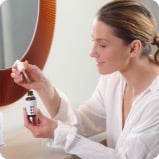
Explore CBD Oil Products
Browse here: CBD OIL ONLINE STORE
CBD Oil and Skin Health: Research Overview
The Effects of CBD Oil on the Skin
CBD may interact with the skin’s endocannabinoid system, and researchers are still studying how it may influence normal skin function.
CBD and Skin Health: What Research Says
Research suggests CBD may have anti-inflammatory potential, and researchers are studying its possible role in common skin concerns.
|
Skin conditions |
Potential Effects of CBD |
|
Acne |
May help support balanced oil production and overall skin comfort, based on early research |
|
Psoriasis |
May help support skin comfort |
|
Eczema |
Helps support skin hydration and comfort |
|
Atopic dermatitis |
May help support hydration and a comfortable skin feel |
Now that we’ve reviewed CBD’s possible uses for skin care, let’s take a closer look at the types of CBD oils and products available, along with the ways they’re commonly used.
CBD oil for skin: Product types, uses, and how to apply them
CBD beauty products are generally applied directly to the skin. For every CBD-containing product, follow the usage instructions on the label and packaging.
CBD Balm and CBD Cream: Gentle Care for Dry Skin
Topical CBD products, combined with plant extracts and other nourishing ingredients, can offer gentle care for dry skin. When buying, look for THC-free, tested CBD balms or creams and check that the label clearly states the amount of active ingredient.
How to Apply CBD Oil to Skin
CBD oil can also be applied topically. Here are a few practical tips if you’re considering a topical CBD product:
- You can mix CBD oil into facial creams and body lotions.
- Use CBD oil as a massage oil.
- Apply it directly to the targeted area.
|
How to Apply CBD Oil |
Potential benefits |
Suggested use |
|
Mix it into a cream or lotion. |
Spread evenly |
1–2 times daily |
|
Used as massage oil |
Absorption |
Apply 2–3 times per week |
|
Apply directly to the skin. |
Targeted local application |
As needed |

What is CBD?
All the essential information in one place!
CBD oil for skin: Safety and possible side effects
Now that we’ve covered a few ways to use CBD oil, it’s important to talk about safety and possible side effects. Even topical CBD may cause side effects in some people, including:
- Skin irritation
- Allergic reactions
- Dry skin
To help avoid skin irritation, consider doing a patch test before using CBD oil or balm over a larger area. Apply a small amount to a patch of skin and watch for any reaction. If there’s no reaction after a few hours, you can usually use it more broadly.
Buying CBD Oil: How to Choose Quality Products
Buying CBD oil from a reliable source can help you choose a quality product. Here are some important points to keep in mind when selecting CBD:
✔ Broad-spectrum, rich in terpenes and phytocannabinoids, but contains no THC.
✔ Made from organic hemp and free from heavy metals and pesticides.
✔ Made from American hemp.
THC-free.
✔ Backed by fast, dependable customer service.
✔ Includes lab test results showing purity and active ingredient levels.
✔ Supported by customer feedback and experiences.
⇒ Access our high-purity, guaranteed active ingredient, 100% THC-free CBD products here.
Summary
CBD oil is being studied for its potential role in skin care. Some early research has explored its possible effects on common skin concerns. If you buy CBD skin products, choose a trusted source and follow the usage directions.
The CBD studies and research mentioned in this article are accessible in their original language via the embedded links in the “Sources” section.
References and Scientific Sources
- Kinga Fanni Tóth, Dorottya Ádám, Tamás Bíró, Attila Oláh (2019): Cannabinoid Signaling in the Skin: Therapeutic Potential of the “C(ut)annabinoid” System
- Kerstin Iffland, Franjo Grotenhermen (2017): An Update on Safety and Side Effects of Cannabidiol: A Review of Clinical Data and Relevant Animal Studies
- B. Palmieri, C. Laurino, M. Vadalà (2019): A therapeutic effect of cbd-enriched ointment in inflammatory skin diseases and cutaneous scars
- Attila Oláh, Balázs I. Tóth, István Borbíró, Koji Sugawara, Attila G. Szöllõsi, Gabriella Czifra, Balázs Pál, Lídia Ambrus, Jennifer Kloepper, Emanuela Camera, Matteo Ludovici, Mauro Picardo, Thomas Voets, Christos C Zouboulis, Ralf Paus, Tamás Bíró (2014): Cannabidiol exerts sebostatic and antiinflammatory effects on human sebocytes
- Shenglong Zou and Ujendra Kumar (2018): Cannabinoid Receptors and the Endocannabinoid System: Signaling and Function in the Central Nervous System