
What Is Coenzyme Q10 Good For?

Coenzyme Q10 supports cellular energy production. Here’s what to know about how it works and what to keep in mind about dosage.
What is Q10, and what does the term coenzyme mean?
A coenzyme is an organic compound that binds to an enzyme and helps drive a reaction. Coenzymes are often vitamins or vitamin derivatives and play a key role in how many enzymes work. Coenzyme Q10 is a fat-soluble, vitamin-like compound made by the body and stored in the mitochondria of cells. Mitochondria help cells produce energy and protect them from oxidative stress.
CoQ10 exists in two different forms within the body:
- ubiquinone, and
- ubiquinol.
Ubiquinone converts to ubiquinol, a form the body can use.
Low Coenzyme Q10 Levels
CoQ10 production declines with age, so levels may be lower in older adults.
Other reasons CoQ10 levels may be lower include:
- nutritional deficiencies, such as vitamin B6 deficiency;
- rare genetic conditions that affect how the body makes or uses Q10;
- higher tissue demands during illness;
- mitochondrial function; and
- oxidative stress associated with aging.
What Research Says About CoQ10
CoQ10 plays a role in energy production and acts as an antioxidant.
In cases of cardiovascular diseases, such as heart failure, the effects of CoQ10 supplementation have been studied. A review of 13 studies Learn More how taking 100 mg of CoQ10 daily for 12 weeks affects heart blood flow.
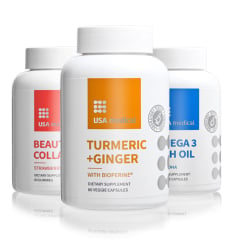
Vitamins from
USA Medical
A wide range of multivitamins and minerals all in one place
Coenzyme Q10: What Research Has Looked At
A three-month study with 45 women comparison daily intake of 400 mg of coenzyme Q10 with a placebo to see how participants responded.
Coenzyme Q10 levels tend to decline with age, so researchers have also research it in older adults.
Some people prefer to take coenzyme Q10 earlier in the day. If you notice side effects or have questions about timing, check the label or ask your healthcare professional.
Sources of coenzyme Q10
The amount of coenzyme Q10 naturally present in foods is much lower than the levels found in dietary supplements. Natural sources of Q10 include:
- cold-water fish, such as tuna, salmon, mackerel, and sardines;
- plant oils; and
- various types of meat.
How to Take CoQ10 Capsules
Research suggests that Q10 is absorbed similarly in capsule form as it is through food. Since it is fat-soluble, it’s best to take it with a meal containing fat. The ideal CoQ10 dose is not firmly established, but typical daily doses range between 100 and 200 milligrams. Follow the instructions on the packaging or consult your doctor, and remember that different supplement brands may contain varying ingredients and amounts of active substance.
If you’d like to browse premium-quality vitamins, minerals, and plant extracts, explore the USA Medical dietary supplements collection.
Dietary supplements are not a substitute for a healthy lifestyle and a varied, balanced diet.