
What magnesium does in the body
The NIH overview covers magnesium’s established roles in normal muscle and nerve function, energy production, and hundreds of enzyme systems.
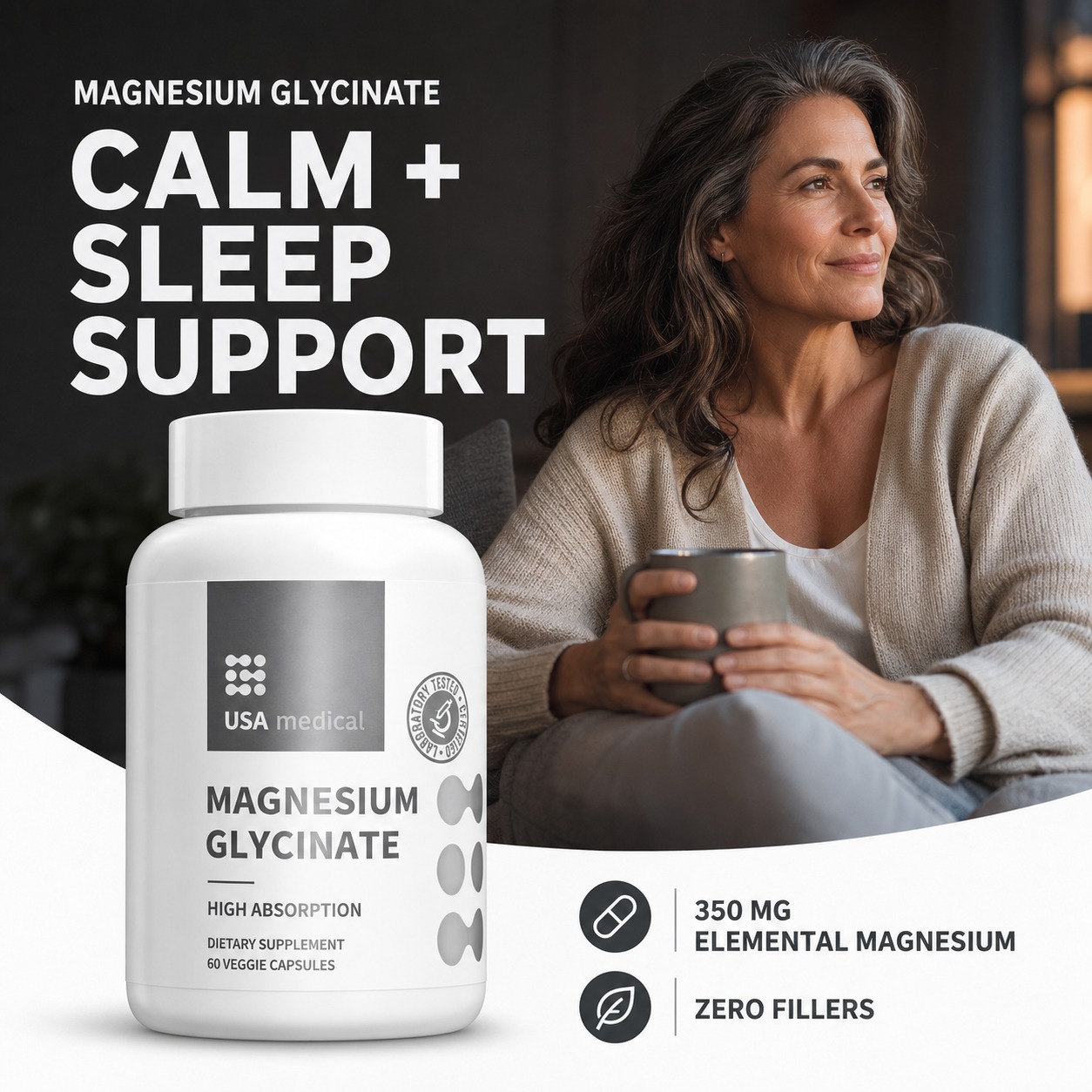
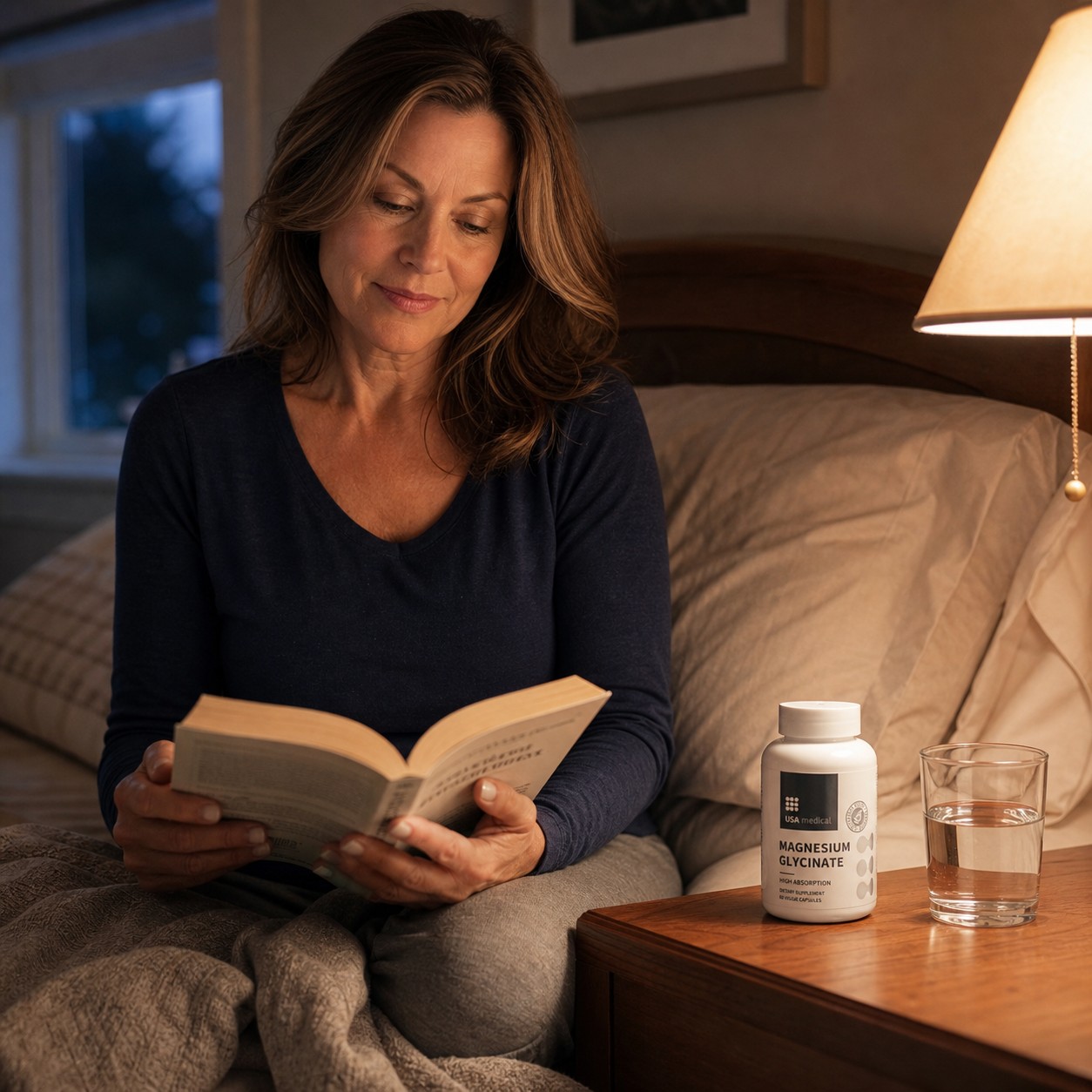
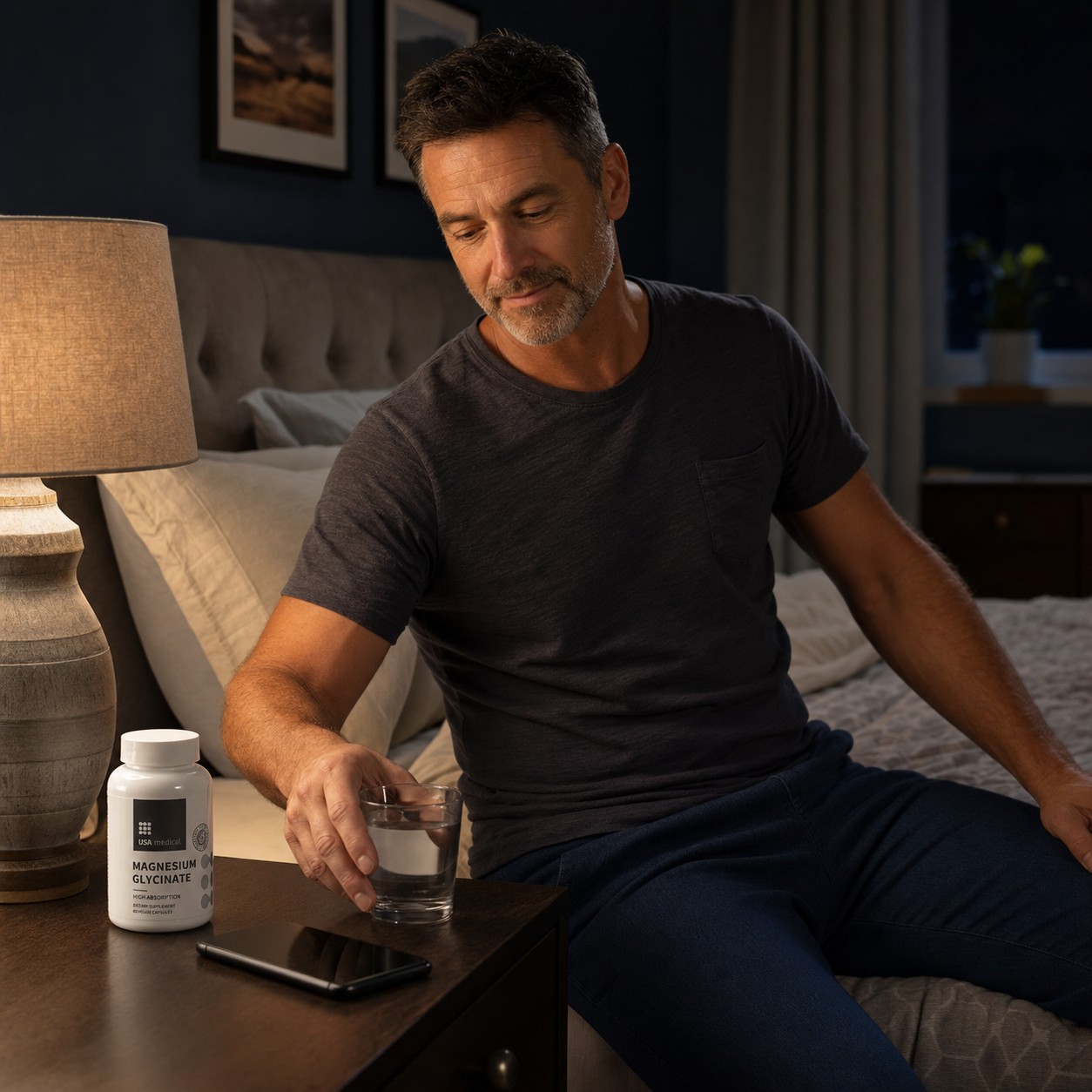
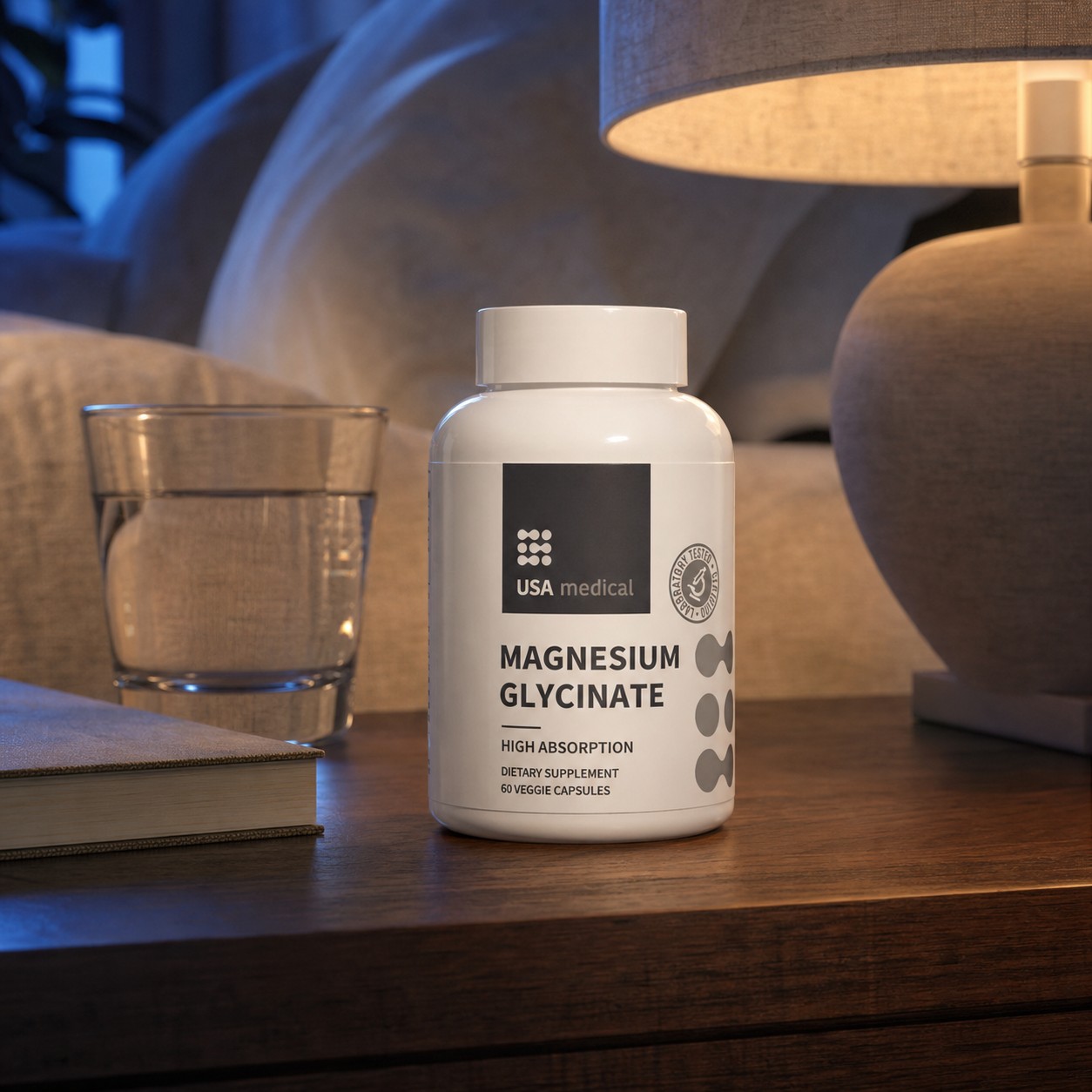
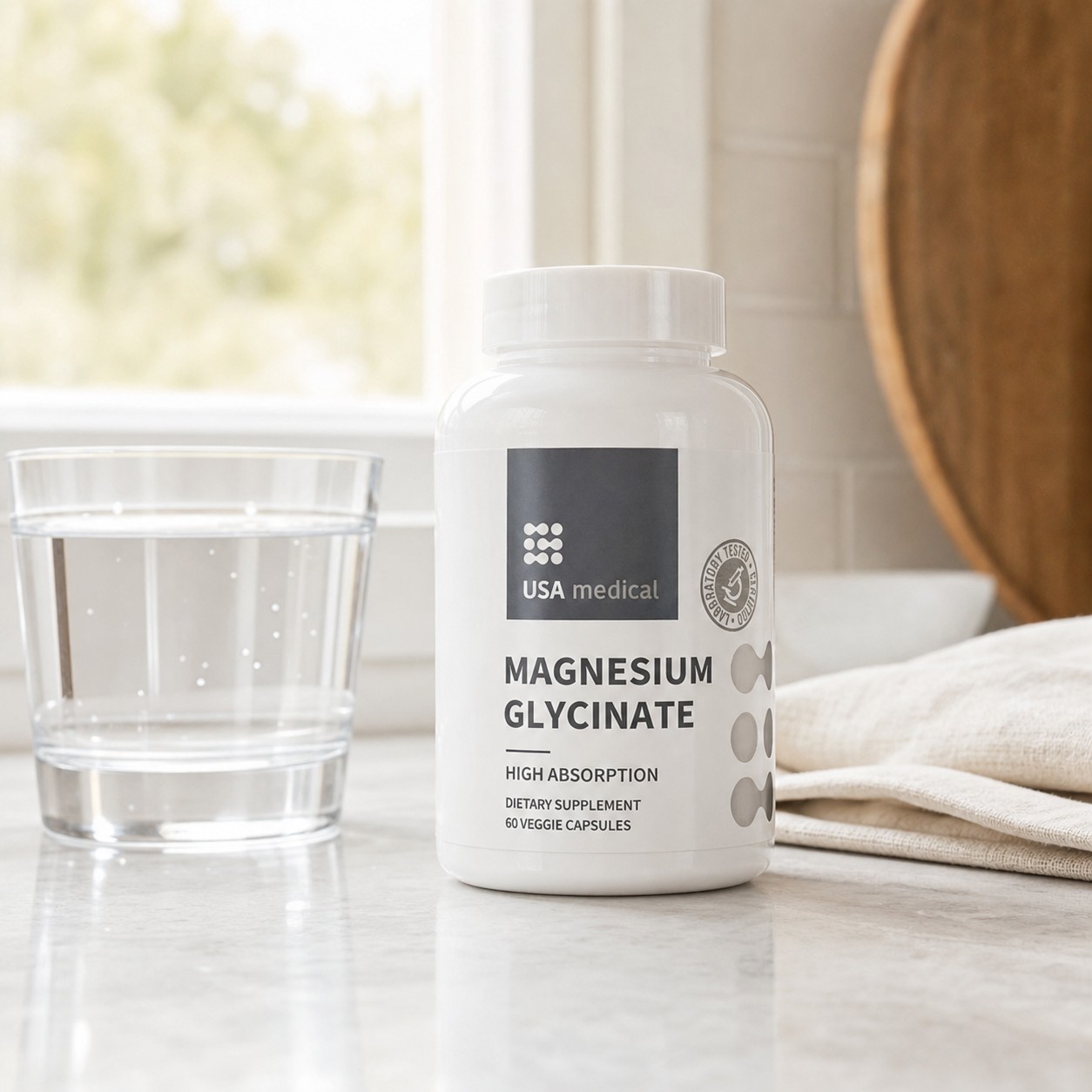
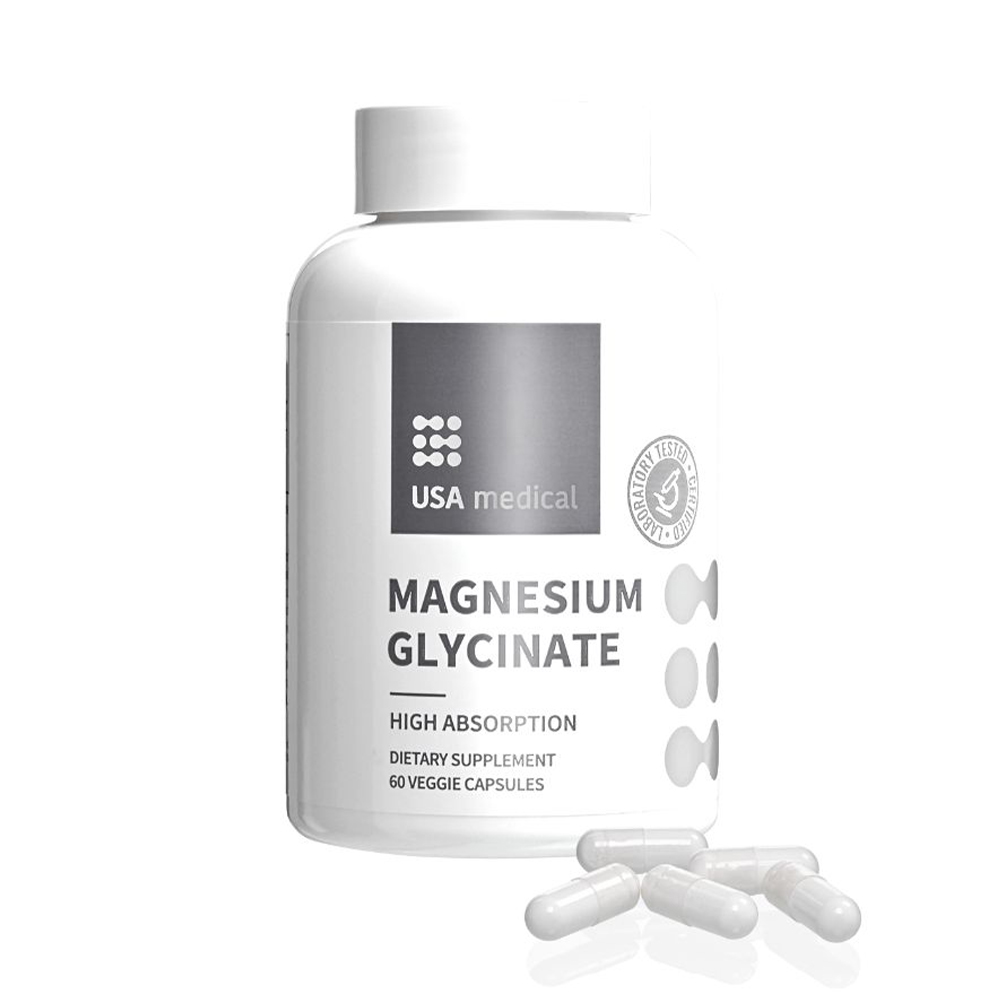
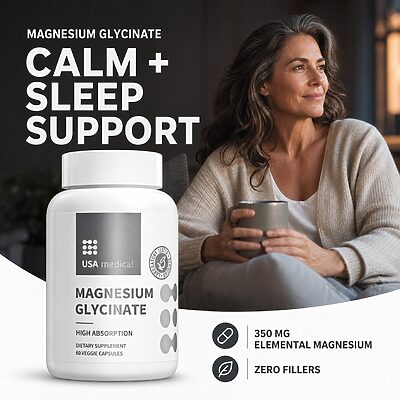

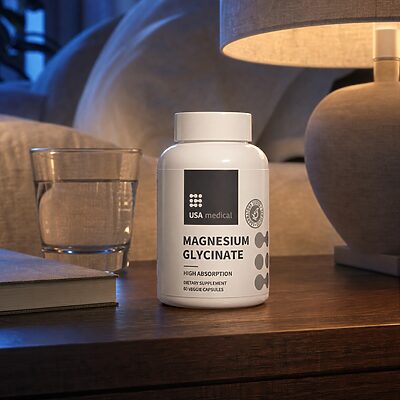
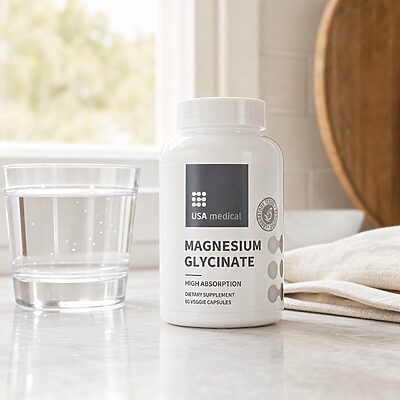
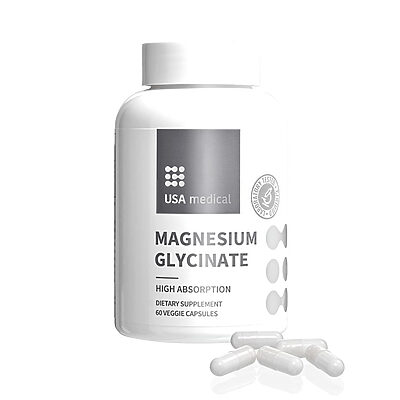
Build a calmer close to the day. This bedtime-focused magnesium gives you 350 mg of elemental magnesium in a gentle glycinate chelate, with zero fillers and a public certificate of analysis. Magnesium supports normal muscle and nerve function and helps the body produce energy.[1]
Take 2 capsules with water about 30 minutes before bed, with or without food.
Product details
$30.00
In stock
The goal is not another complicated wellness project. It is a repeatable signal that the day is ending: 350 mg elemental magnesium in two capsules, a gentle glycinate chelate, zero fillers, and a public certificate of analysis.
A 2025 randomized, placebo-controlled trial of magnesium bisglycinate, not this specific product, found a modest improvement in self-reported insomnia severity after four weeks.[2] Earlier trials also reported improvements in some sleep measures,[4] but a systematic review rated the overall evidence low to very low quality and called for better research.[3]
Our honest read: magnesium can be a sensible part of a nighttime routine, especially when magnesium intake is low, but it is not a guaranteed fix or a treatment for insomnia.
Two capsules about 30 minutes before bed turn “I should relax” into one easy, repeatable step.
Clinical research on magnesium and sleep is promising but not conclusive. We show you both the findings and the limits.[2][3]
Magnesium is essential for normal muscle function and nerve signaling.[1]
Your body requires magnesium for energy production, including glycolysis and oxidative phosphorylation.[1]
We lead with elemental magnesium, the amount that counts toward Daily Value, not the heavier compound weight.
Glycinate chelate, a plant-based capsule, zero fillers, no magnesium oxide, and a public COA.
Magnesium compounds have both a total compound weight and an elemental magnesium amount. The elemental amount is the magnesium counted toward the U.S. Daily Value. This label clearly shows 350 mg elemental magnesium, equal to 83% DV.
Take 2 capsules with water about 30 minutes before bed, with or without food. Pair it with the same simple cues each night, dim the lights, put the phone down, and let the routine do less work.
Research is promising, not definitive. A 2025 randomized trial of magnesium bisglycinate found a small improvement in self-reported insomnia severity, while a 2021 review judged the wider evidence low to very low quality.[2][3]
That is why we position this as nutritional support for a calmer nighttime routine, not as a sleeping pill or an insomnia treatment. The Sleep Foundation offers a plain-language overview of the current evidence.[5]
Magnesium glycinate is magnesium paired with glycine in a chelated form. This product provides 350 mg elemental magnesium per serving.
Elemental magnesium is the actual magnesium amount counted on the Supplement Facts label. It is the clearest number to compare between products.
Take 2 capsules with water about 30 minutes before bed, with or without food. Follow the label unless your healthcare professional advises otherwise.
HPMC stands for hydroxypropyl methylcellulose. It is a plant-based capsule material and a common alternative to gelatin.
No. It uses magnesium glycinate chelate in a plant-based capsule, without magnesium oxide, fillers, or anti-caking agents.
Yes. The certificate of analysis is publicly available so you can review the testing documentation before deciding.
The NIH overview covers magnesium’s established roles in normal muscle and nerve function, energy production, and hundreds of enzyme systems.
Schuster and colleagues studied magnesium bisglycinate in 155 adults reporting poor sleep. The improvement was statistically significant, but small.
Mah and Pitre found encouraging signals in older adults, while rating the overall evidence low to very low quality.
Abbasi and colleagues studied 46 older adults and reported improvements in several subjective sleep measures. The small sample limits certainty.
Sleep Foundation translates the current research into a practical consumer overview, including evidence limits and safety considerations.
These statements have not been evaluated by the Food and Drug Administration. This product is not intended to diagnose, treat, cure, or prevent any disease.
The elemental magnesium amount is 350 mg per serving, equal to 83% of the U.S. Daily Value. The magnesium form is magnesium glycinate chelate.
%DV means Percent Daily Value. The FDA Daily Value for magnesium is 420 mg. **Daily Value not established.
A useful report should help you match the document to your bottle and see what was tested. FDA quality guidance centers on identity, purity, strength, composition, and limits on contaminants. Read the FDA quality guidance
The report identifier should match the lot or batch printed on your bottle.
Look for the named product or material and the test or examination method used.
When potency is tested, compare the actual result with the specification or labeled amount.
Look for contaminant or microbial limits, actual results, and a clear pass or specification.
Compare the batch on the report with the lot or batch printed on your bottle. Page 1 covers identity and physical testing; page 2 covers assay, purity, and safety.
Certificates are lot-specific. A report for one lot does not automatically describe a later production run, and a certificate evaluates product specifications – not clinical effectiveness.
Start with the product label, then compare it with public guidance. Label directions, nutrient targets, and research doses answer different questions.
The current label says adults take 2 capsules daily with water. It does not require bedtime or food.
Per capsule: 175 mg elemental magnesium
NIH adult RDAs range from 310 to 420 mg daily, depending on age and sex, and count magnesium from food, drinks, supplements, and medications. The adult upper limit is 350 mg daily from supplements and medications unless a healthcare professional recommends otherwise.
This product supplies 350 mg supplemental magnesium in the two-capsule serving. The RDA includes every source; the supplemental upper limit does not include magnesium naturally present in food. Evening timing is an optional routine choice, not the label direction.
Use the complete label serving once daily.
The label calls for water and does not require food.
Morning or evening can work. If a wind-down routine is your goal, evening is a practical choice rather than a dosage requirement.
Use the label as the default. The NIH numbers explain total nutritional needs and the supplemental upper limit; they are not instructions to stack this product with other magnesium supplements.
Ask a healthcare professional before use if you are pregnant, nursing, taking medication, have kidney disease, or manage a medical condition.

 Verified customer
This supplement is wonderful I’ve using it for about 2 years it helps me sleep and keeps my anxiety down!!! Love it
 Verified customer
This magnesium works great! Easy on the digestive system!
 Verified customer
Great to take 1 hour before bed. Relaxes your mind and makes for a good nights sleep
Product updates, wellness education, and customer experiences.
Dietary supplements and cosmetic products are not a substitute for a varied, balanced diet or a healthy lifestyle. Do not exceed the recommended daily serving. If you are pregnant, nursing, have a medical condition, or take prescription medication, ask a healthcare professional before use. Our products are not intended to diagnose, treat, cure, or prevent any disease. By using this website, you agree to our Privacy Policy and Terms and Conditions. In the USA medical® brand name, the word “medical” does not mean that we provide medical care or healthcare services.
★★★★★ 5.0 74 reviews
Great to take 1 hour before bed. Relaxes your mind and makes for a good nights sleep
Excellent products. Legit quality & wont buy anywhere else! Delivery is extremely prompt every time! Highly recommend.
This magnesium helps us sleep and soothes our 12-year-old's nerves. Magnesium supplements today can have heavy metal contaminants, but USA Medical posts independent lab tests of their magnesium showing its purity.