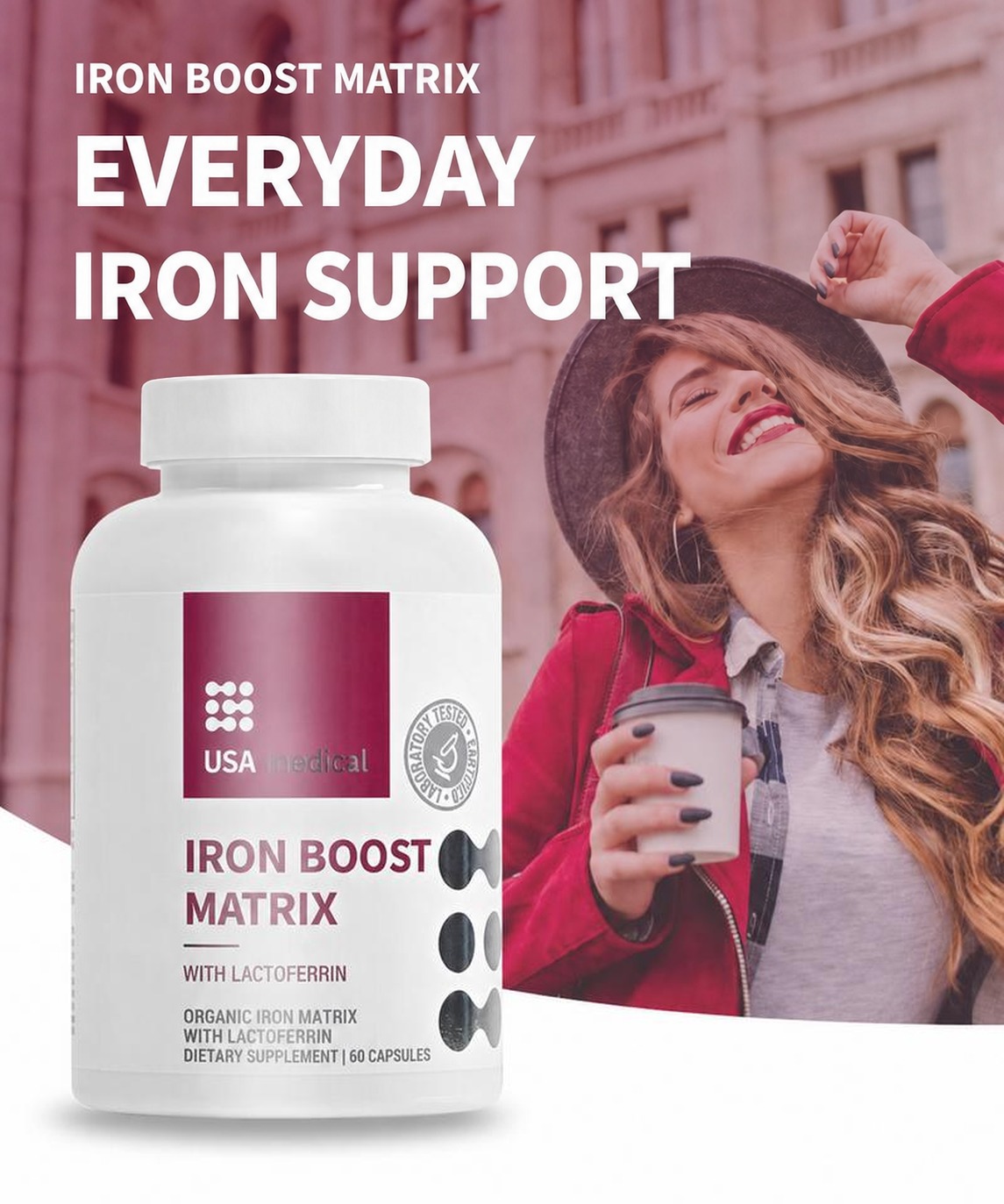
Iron Matrix , gentle, multi-ingredient support for iron absorption
Iron Matrix is designed to support normal iron absorption, oxygen transport, and blood formation with four complementary ingredients: organic iron bisglycinate, lactoferrin, vitamin C, and folate. Together, they support the body’s natural iron-related processes.
Why is iron so important?
Iron is an essential trace mineral. It helps form hemoglobin, which carries oxygen to cells, and supports enzymes involved in energy production, cell division, and cognitive function.
The body can’t make iron, so it has to come from food or supplements. How well iron is absorbed depends in part on its form. Because absorption is tightly regulated, choosing a well-tolerated, well-absorbed form can be a smart choice.
Active Ingredients in Iron Matrix
Iron bisglycinate , a modern form of iron
Iron bisglycinate is a chelated form of iron that is often chosen for its gentler profile. Iron helps support hemoglobin, red blood cell production, oxygen transport, and energy production. For people who prefer a gentler iron form, bisglycinate may be a good option.
Lactoferrin – iron’s natural companion
Lactoferrin is a milk-derived protein that binds iron and helps keep it stable. It’s naturally found in the gut, mucous membranes, and other tissues, where it plays a role in iron handling. Iron Matrix includes lactoferrin in its native form to help preserve its natural properties.
Vitamin C , helps the body absorb iron
Vitamin C helps keep iron in a form the body can absorb more easily. It also supports iron absorption in the gut.
Folate , supports normal blood formation
Folate helps the body make red blood cells and supports cell division. It’s indirectly related to iron metabolism and supports the body’s natural blood-forming process.
Who is Iron Matrix for?
• Adults who want to support iron absorption and utilization • People who prefer a gentler iron supplement • People who are sensitive to standard iron supplements • People who want to support normal blood formation • People who want a multi-ingredient formula that supports iron metabolism • People who value lactoferrin in an iron-support formula
Scientific background
We share up-to-date, research-based information about vitamins, minerals, trace elements, and plant extracts for educational purposes. Our articles cite independent and official sources to help explain the science.
The studies below are provided for general information only and may not apply directly to this product. They are not a substitute for medical advice, diagnosis, or treatment. Dietary supplements are not intended to diagnose, treat, cure, or prevent any disease. Do not exceed the recommended daily serving. Keep out of reach of children.
1. The effect of iron bisglycinate on iron status in humans (2000) – American Journal of Clinical Nutrition
A published study examined the absorption and use of amino acid chelated iron, especially iron bisglycinate, and discussed how it compared with iron sulfate. Source: https://pubmed.ncbi.nlm.nih.gov/36728680/
2. Nutrients (2022) – Comparative Effects between Oral Lactoferrin and Ferrous Sulfate on Iron Absorption, Iron Storage and Erythropoiesis
This clinical trial compared lactoferrin and iron sulfate and looked at hemoglobin, ferritin, and iron-binding markers. It offers background on how lactoferrin relates to iron metabolism. Source: https://www.mdpi.com/2072-6643/14/3/543
3. Frontiers in Nutrition (2022) – Lactoferrin: a glycoprotein involved in iron regulation and mucosal function
A review article on lactoferrin’s iron-binding properties, its role in gut function, and how it affects iron availability. Source: Frontiers in Nutrition: https://www.frontiersin.org/articles/10.3389/fnut.2022.1018336/full
4. Journal of Nutrition (2000) – Ascorbic acid and iron absorption: biochemical and physiological aspects
This study explains how vitamin C helps keep iron in its reduced form and may support non-heme iron absorption. Source: PubMed (PMID: 15743017): https://pubmed.ncbi.nlm.nih.gov/15743017/
Ingredients: beetroot powder, HPMC plant cellulose (capsule shell), L-ascorbic acid, lactoferrin, iron bisglycinate, calcium L-methylfolate
Active ingredients per daily dose (2 capsules):
[table “81” not found /]
*%DV: Percent Daily Value.
** Daily Value not established.
Recommended dosage:
Take 2 capsules once a day. For best results, take the capsules 20–30 minutes before meals with a glass of water, or follow your doctor’s instructions.
Warnings: Do not exceed the recommended daily dose. Remember, this supplement is not a substitute for a balanced diet and a healthy lifestyle. Consult your doctor before use, especially if you are pregnant, breastfeeding, have a serious medical condition, or are taking prescription medication.
Stop taking the supplement immediately if you experience any unwanted symptoms. This product is strongly not recommended for those with milk or lactose intolerance due to its dairy content.
It is important to take iron supplements at least two hours before other medications, as some drugs can affect iron absorption or interact with it. Do not take this product with dairy products, calcium supplements, antacids, high-fiber foods, or caffeine.
Allergen information: Manufactured in a facility that processes fish, shellfish, peanuts, and tree nuts.