
What research says—and what it does not
Does CBD Help You Sleep? What the Evidence Shows
About this guide
Publisher: USA Medical. Editorial owner: Jake Crossman, NASM-CNC. Updated
Jake Crossman is responsible for the company’s editorial standards. NASM-CNC is a nutrition-coaching credential, not a medical or clinical license. This guide has not received independent scientific or clinical review.
How we develop and correct educational content · Independent review process
CBD is widely discussed for sleep, but evidence for treating insomnia remains limited. Here is a clear look at the available research, the unknowns and the safety questions worth asking.
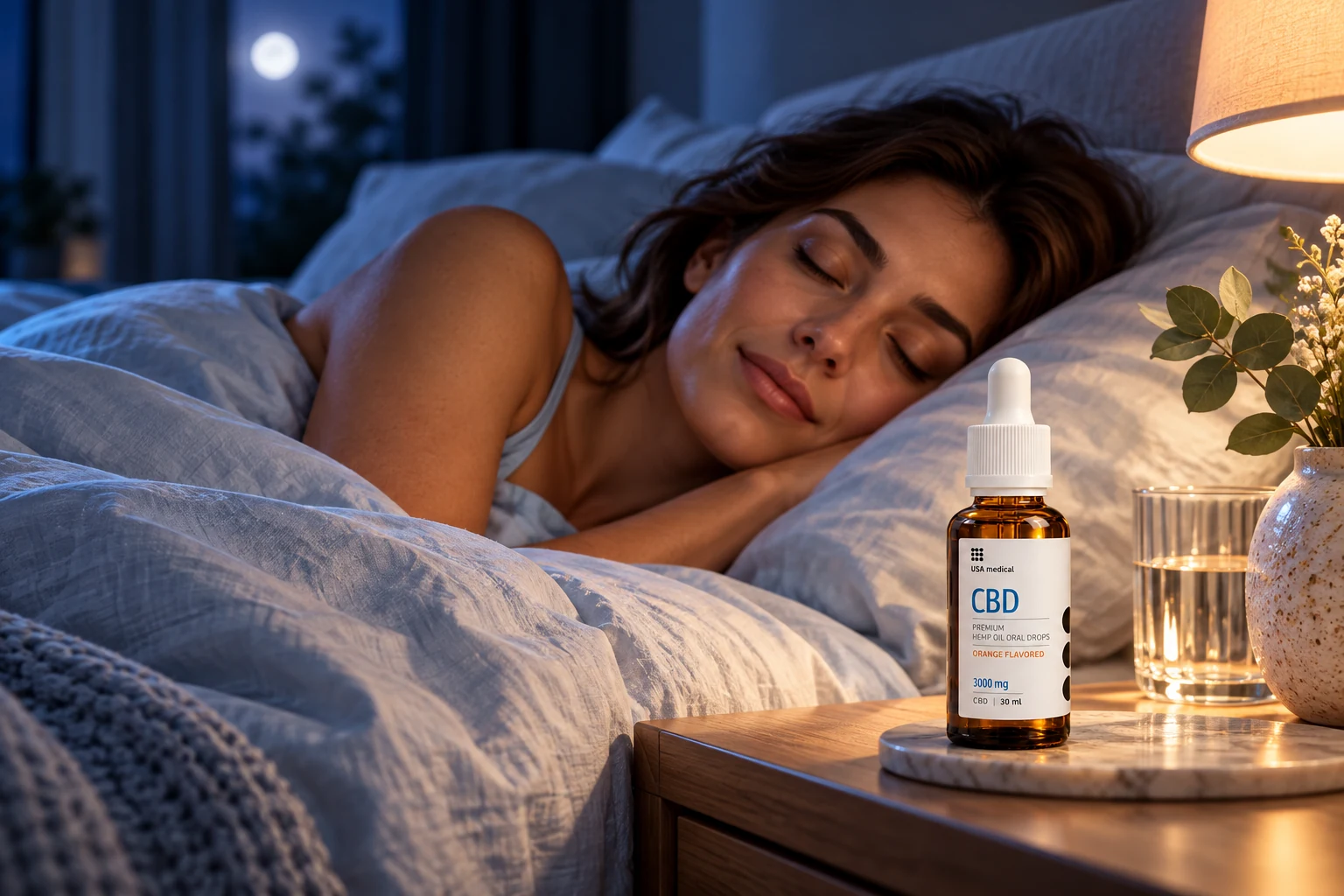
The short answer
Current evidence does not establish CBD as an insomnia treatment
Research is still developing. A small CBD pilot reported a positive change in one objective sleep measure and wellbeing, while most sleep outcomes were similar to placebo; larger studies are needed before drawing conclusions about CBD generally or any retail oil.
A 2020 evidence review covering 12 studies and 250 people found insufficient evidence to support cannabinoid therapies for sleep disorders. A later small CBD-only pilot trial found greater wellbeing and higher objective sleep efficiency on one measure after two weeks, while most insomnia and self-reported sleep outcomes did not differ from placebo. Results from a specific study dose cannot be translated into a retail product recommendation.
A closer look
What the studies actually measured
Limited and mixed research
The U.S. National Center for Complementary and Integrative Health summarizes a 2020 review of 12 studies with 250 participants. It found too little reliable evidence to support cannabinoid therapies, including CBD, for any sleep disorder; the studies were few and often at moderate-to-high risk of bias.
One 30-person pilot is not a product verdict
In a 2024 randomized pilot, 15 people received 150 mg CBD nightly and 15 received placebo for two weeks. Most measured insomnia and self-reported sleep outcomes did not differ between groups. The CBD group did show higher wellbeing scores and higher objective sleep efficiency on one measure at week two. Those are positive signals from a small, short pilot; the authors called for larger studies with different durations and doses.
Why caution matters
A study dose is not a serving suggestion
The pilot used a defined 150 mg dose in a research setting. It does not establish a suitable amount for another person or show that a retail oil has the same contents, formulation or effect. We do not translate clinical-study doses into product directions.
CBD may cause sleepiness, diarrhea or appetite changes, and it can affect how some medicines work. Combining CBD with alcohol or medicines that slow brain activity can increase drowsiness. Talk with a clinician or pharmacist before using CBD, especially if you take medicines or have a health condition.
When sleep stays difficult
Get help with the cause, not just the product choice
Persistent insomnia, loud snoring, gasping during sleep or daytime sleepiness deserve a conversation with a health professional. A clinician can assess causes and discuss evidence-based care options.
A useful place to begin
Build a steady sleep routine
These everyday habits do not depend on CBD. NIH guidance recommends keeping a regular sleep and wake schedule, making the room cool, dark and quiet, and setting aside a relaxing wind-down routine.
- 01
Keep a consistent schedule
Choose a regular time to go to bed and wake up, including on weekends when possible.
- 02
Make the room sleep-ready
Reduce light and noise and keep the room comfortably cool.
- 03
Leave room to wind down
Try a quiet activity such as reading or listening to calm music as part of a repeatable bedtime routine.
See the NIH Healthy Sleep guide for additional habits. If sleep problems continue, talk with a health professional.
Clear answers
CBD and sleep FAQ
Is CBD proven to treat insomnia?
No. Available studies are limited and mixed, and authoritative health guidance says there is insufficient evidence to support cannabinoid therapies for sleep disorders.
Does a higher CBD amount work better for sleep?
That has not been established. This page does not recommend an amount or schedule. Research doses are not personal or retail-product directions.
Can CBD make me sleepy?
Drowsiness or sleepiness is a reported possible side effect. CBD may also interact with medicines, including some that affect alertness. Discuss your situation with a health professional.
Can I use CBD with a sleep medicine or alcohol?
Ask your clinician or pharmacist first. The FDA warns that combining CBD with alcohol or other central nervous system depressants can increase sedation and drowsiness.